
Why Your Nonprofit’s Digital Presence Matters More Than Ever
Nonprofit website design is the foundation of your digital success, impacting your ability to attract donors, recruit volunteers, and amplify your mission. With 55% of visitors spending less than 15 seconds on a webpage, your site must immediately capture attention and inspire action.
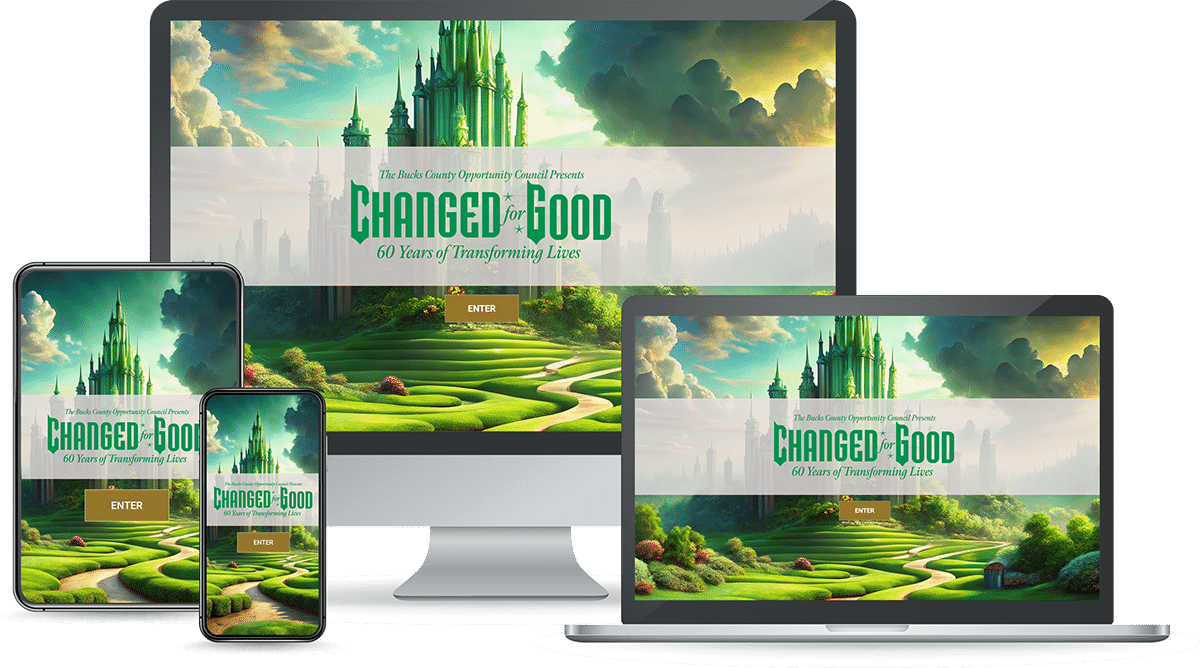
Visit https://BCOCEvents.org to see our most recent nonprofit website design.
Core Elements of Effective Nonprofit Website Design:
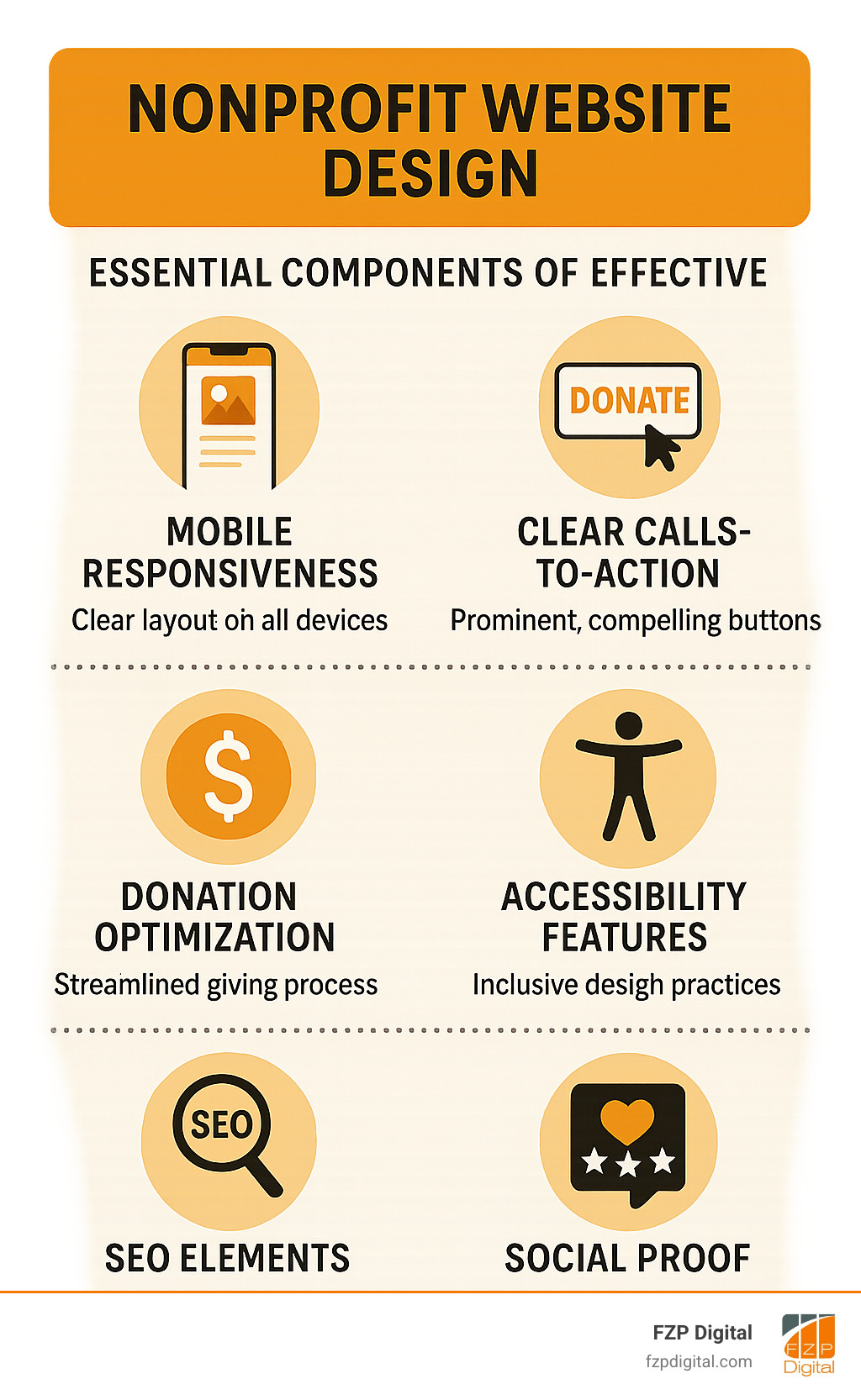
- Clear mission communication – Compelling storytelling that connects emotionally
- User-friendly navigation – Simple menus that guide visitors to key actions
- Mobile optimization – Responsive design for 50%+ mobile traffic
- Prominent donation buttons – Easy giving with multiple payment options
- Accessibility features – Inclusive design for all users
- SEO optimization – Higher visibility with 44% organic traffic potential
Your website is your most powerful fundraising and engagement tool. A poorly designed site can hurt your cause, but a strategic one becomes a 24/7 advocate, driving donations, volunteer sign-ups, and community engagement.
I’m Fred Z. Poritsky, founder of FZP Digital. After decades in nonprofit financial management, I now combine that operational expertise with nonprofit website design to help mission-driven organizations like yours succeed online.
The Core Pillars of an Effective Nonprofit Website
Building a successful nonprofit website design is about creating a digital home that tells your story and makes it easy for people to support your cause.
Communicating Your Mission Through Storytelling
Your website’s success hinges on how well it tells your story. People connect with stories that move them. Your site must show why your work matters.
Clear messaging starts with a mission statement that visitors understand immediately. Your value proposition—what makes you unique—should be evident on every page. Instead of talking about yourself, show your impact. Impact proof, like real numbers and results, builds trust far more than fancy design.
Testimonials from those you’ve helped, volunteers, or community leaders bring your work to life. Pair these stories with high-quality photos and videos. Your “About Us” section is a chance to introduce the passionate people behind the mission, making your cause more personal and trustworthy.

Every design choice should serve your story. For help crafting your message, check out more info about our branding services.
Creating an Intuitive User Experience (UX)
A beautiful but confusing website is a liability. Intuitive user experience means visitors can find what they need without thinking.
Simplified navigation with clear menus keeps visitors engaged and prevents overwhelm. Prominent calls-to-action (CTAs) should stand out visually, guiding users to donate, volunteer, or learn more.
Speed is critical: websites that load in one second see conversion rates around 40%. At three seconds, that rate drops significantly. We optimize every element for speed. A logical site flow anticipates visitor needs, creating clear pathways from information to action. Learn more about modern approaches in our guide to Top Web Design Trends of 2023.
Ensuring Mobile-First Design and Accessibility
Over half of your visitors will use mobile devices. Mobile-first design means building your site for smartphones first, then adapting it for larger screens.
Responsive design ensures your site automatically adjusts to any screen size, from a phone to a desktop. Touch-friendly elements, like large buttons and properly spaced menu items, are essential for a smooth mobile experience.
Web accessibility ensures everyone can engage with your mission, regardless of ability. This is about inclusivity and meeting legal requirements. Key features include:
- Alt text for images to describe visuals for screen readers.
- Keyboard navigation for users who cannot use a mouse.
- High-contrast colors for readability.
Following the Web Content Accessibility Guidelines 2.1 is the standard for creating inclusive websites. For some organizations, safety features like “hide site” buttons are also critical. Learn more about What is Web Accessibility? and explore the detailed Web Content Accessibility Guidelines 2.1.
Driving Impact: Fundraising, Engagement, and Visibility
A great website is your 24/7 fundraising team, community builder, and impact amplifier. This section covers how to turn your site into an action-generating machine.
Optimizing Your Site for Online Fundraising
Your website is often a potential donor’s first impression, so optimizing it for fundraising is crucial for your nonprofit website design.
Prominent donation buttons should be visible on every page, typically in the header. Your donation forms must be user-friendly—simple, secure, and asking only for essential information. Since 63% of donors prefer credit/debit cards, ensure your forms support popular payment methods like PayPal and digital wallets.
Recurring donations provide predictable income, so make monthly giving options clear and appealing. Also, integrate corporate matching gift tools directly into your donation page to help donors double their impact, as many employers offer these programs.
Offer multiple ways to give, such as ethical gift-giving eCards or fund finders that let donors personalize their contributions. Most importantly, showcase the impact of donations. Clearly explain how money will be used to give donors a sense of purpose and connection.
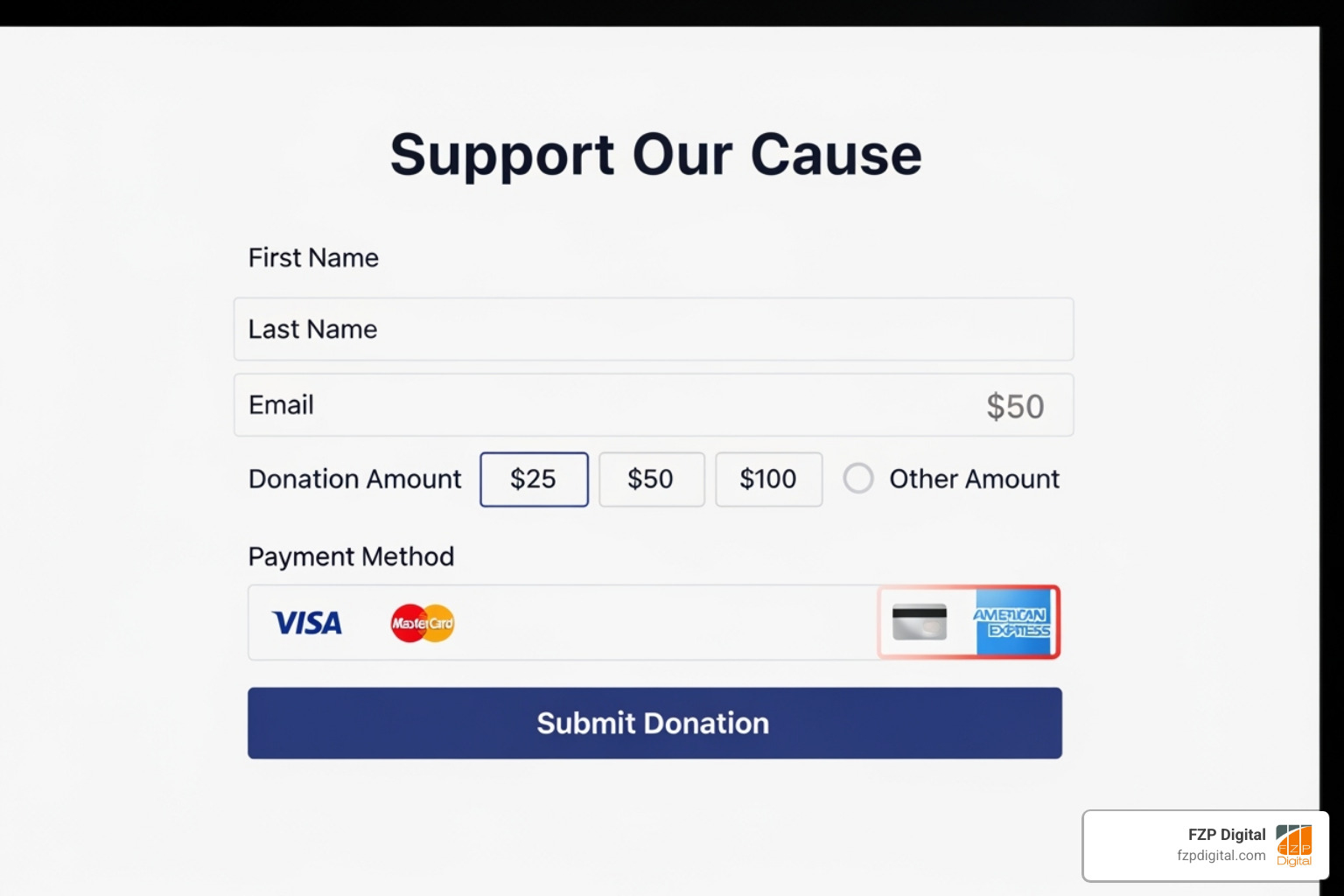
Our FZP Digital’s Donor Tool Integration Services help you manage donations efficiently while providing a seamless donor experience.
Boosting Visibility with an Effective Nonprofit Website Design
An amazing website is useless if no one can find it. Search engine optimization (SEO) is your secret weapon for expanding reach.
Keyword research is the foundation. We identify the terms potential supporters use on Google to find organizations like yours. Then, we create quality content—blog posts, impact stories, and educational resources—that your audience craves and Google rewards.
Technical SEO involves optimizing your site’s backend, including fast load speeds, mobile-friendliness, and a clean site architecture. Since 44% of nonprofit website traffic comes from organic search, investing in SEO offers incredible long-term value.
Eligible nonprofits can also receive up to $10,000 monthly in free advertising through Google Ad Grants. This program can dramatically boost visibility but requires a well-optimized site to be effective. Our Search Engine Optimization strategies work with the Google Ad Grants program overview to attract your ideal audience.
Building Community and Showcasing Impact
Your website should be a dynamic hub where supporters connect with your mission.
- Social media integration creates a seamless link between your site and online conversations. Add share buttons and social feeds to multiply your reach.
- Volunteer portals turn interest into action with dedicated spaces for sign-ups, scheduling, and resources.
- Event calendars with easy registration make it simple for people to participate in fundraisers and community gatherings.
- Data visualization, like interactive maps or dashboards, transforms complex stats into compelling stories of need and impact.
- Impact reports and success stories build trust by providing tangible proof of how support creates change.
- Transparency is key. Clearly stating how donations are used and providing access to financial reports builds lasting relationships.
Explore our More info about social media marketing resources for more community-building strategies. When your website becomes a gathering place, supporters become champions for your cause.
The Strategic Process of Nonprofit Website Design
Building an impactful nonprofit website design is a journey that requires careful planning, execution, and ongoing attention. At FZP Digital, we’ve refined a process that treats your website as a fundraising platform, volunteer hub, and community center all in one.
Key Steps in the Design and Development Journey
We follow a proven, collaborative process to ensure your website meets your unique goals.
- Findy and Strategy: We dive deep into your mission, audience, and objectives. We analyze your fundraising efforts and identify key engagement opportunities to create a strategic blueprint for success.
- Content and Wireframing: We help craft compelling narratives and design intuitive user paths. We develop sitemaps and wireframes—the architectural plans for your site—to ensure visitors can easily find what they need.
- Visual Design: We create design concepts that capture your brand’s spirit and look stunning on all devices. The goal is a welcoming, trustworthy, and fast-loading platform that connects emotionally with your audience.
- Development: Our team transforms the designs into a fully functional website, integrating essential tools like donation portals and volunteer systems while implementing SEO best practices.
- Quality Assurance: We rigorously test everything across different browsers and devices, optimizing load speeds and ensuring all forms and features work perfectly.
- Launch: We execute a detailed launch plan, including setting up performance tracking tools and ensuring a smooth transition to your live site.
- Ongoing Support: Launching is just the beginning. We provide training for your team and remain available for technical support and strategic guidance.
Explore our approach further in Our Web Design & Development Process.
Choosing the Right CMS for Your Nonprofit
A Content Management System (CMS) is the software that lets you manage your website without needing a developer for every update. We typically recommend WordPress for nonprofits.
WordPress offers:
- Flexibility: It grows with your organization, handling everything from simple pages to complex event or membership portals.
- User-Friendly Dashboard: Your team can confidently update content, publish blog posts, and manage basic site features after initial training.
- Extensive Plugins: Thousands of plugins allow you to add functionality like donor management integration or volunteer forms as your needs evolve.
- Scalability: It can handle increased traffic during fundraising campaigns and accommodate new content as your programs grow.
- Cost-Effectiveness: As open-source software, WordPress has no licensing fees, aligning well with nonprofit budgets.

Ongoing Website Maintenance and Sustainability
Your website needs regular care to stay secure, perform well, and serve your mission.
- Regular Backups: Automated backups are your digital safety net, allowing for quick restoration if anything goes wrong.
- Plugin and Theme Updates: Keeping your site’s components updated is crucial for security and functionality.
- Security Monitoring: We implement ongoing scans to detect and prevent potential threats.
- Performance Monitoring: We continuously track and optimize your site’s speed to keep users engaged and improve search rankings.
- Content Freshness: Regularly updating content keeps your audience engaged and signals relevance to search engines.
- Accessibility Maintenance: We periodically review your site to ensure it remains inclusive for all users as it evolves.
Our maintenance and Website Audit and SEO Analysis services help you manage these tasks, ensuring your site continues to achieve your goals.
Choosing the Right Web Design Partner
Choosing the right partner for your nonprofit website design is critical. You need a team that understands your mission and has the skills to translate it into a digital experience that inspires action.
What to Look for in a Nonprofit Website Design Company
When evaluating agencies, look beyond a pretty portfolio.
- Experience with Nonprofits: A specialized agency understands the unique needs of fundraising, volunteer management, and impact storytelling.
- Portfolio and Results: Review their case studies. Can they show concrete improvements in donations, sign-ups, or engagement for past clients?
- Client Testimonials: What do past clients say about communication, deadlines, and problem-solving? You want a partner who can gracefully manage stakeholder dynamics.
- Understanding of Your Mission: Do they ask thoughtful questions about your cause? The best partners will challenge you to think strategically about your site.
- Range of Services: Your website doesn’t exist in a vacuum. Look for partners who can help with content strategy, UX design, and ongoing SEO.
- Transparency: A reputable agency provides clear methodologies, timelines, and detailed proposals. You should understand what drives costs and how scope can be adjusted to fit your budget.
- Commitment to Accessibility: An agency that prioritizes accessibility likely shares your organization’s commitment to inclusion.
Take a look at Our Work to see how we approach nonprofit website design projects.
Preparing to Work with an Agency
Successful projects begin with thorough preparation.
- Define Your Goals: Be specific. Instead of “we need a new website,” aim for measurable goals like “increase online donations by 25%.” This helps your agency recommend the right features.
- Set a Realistic Budget: Consider upfront costs as well as ongoing expenses for hosting and maintenance. Also, factor in the staff time required for content creation and feedback.
- Prepare a Request for Proposal (RFP): For larger projects, an RFP helps you get accurate proposals. Include your organization’s background, project requirements, timeline, and evaluation criteria. You can Submit an RFP to start the conversation.
- Assemble Key Content: Gather your mission statement, program descriptions, staff bios, high-quality photos, and brand guidelines. Having testimonials, impact data, and success stories ready will save time and money.
- Identify Stakeholders: Designate a primary point of contact and decision-maker to keep the project moving smoothly.
This preparation sets the foundation for a partnership that will amplify your mission’s impact.
Frequently Asked Questions about Nonprofit Website Design
Starting a nonprofit website design project can feel overwhelming. Here are answers to the most common questions we hear from organizations like yours.
How much does a nonprofit website cost?
The cost depends entirely on your needs.
- DIY Website Builders (Wix, Squarespace): These can start under $50/month and are an option for extremely tight budgets, but you may quickly outgrow their limitations.
- Freelancers: Costs typically range from a few thousand dollars to around $10,000. This can be a good fit for smaller organizations, but quality and support can vary.
- Professional Agency: A quality, custom nonprofit website design from an agency typically starts around $5,000 and can range up to $30,000 or more for complex builds with advanced features.
The primary cost drivers are scope and complexity. A simple informational site costs far less than a platform with member portals and custom integrations. A well-built website is a 24/7 fundraising tool with a remarkable potential return on investment.
How long does the design process take?
The timeline depends on the project’s complexity and your team’s preparedness.
- Simple Sites: A straightforward informational website can often be completed in 4 to 8 weeks.
- Custom, Feature-Rich Sites: Plan for 3 to 6 months for a comprehensive build with custom functionality and extensive content.
Content readiness is crucial. Delays in providing text, images, or feedback will extend the project timeline. A collaborative approach is key to staying on schedule.
Can we update the website ourselves after it’s built?
Absolutely. Empowering your team to manage your content is a core goal.
We build our sites on WordPress because its user-friendly dashboard allows your staff to easily add blog posts, update events, and change text and images. We provide comprehensive training to ensure your team feels confident managing the site day-to-day.
For more complex technical needs, security, and performance optimization, we offer ongoing support packages. This allows you to focus on your mission while we handle the heavy lifting. The goal is a website that works for you, not against you.
Conclusion
Your nonprofit website design is not just a digital checkbox; it’s your hardest-working team member, tirelessly advocating for your cause 24/7.
An effective nonprofit website is built on strategic design, where every element has a purpose. It requires a user-centric approach that makes it effortless for visitors to take action, and it must have goal-oriented features that directly support fundraising, engagement, and visibility.
You have mere moments to capture attention online. When your website gets it right, the results follow: increased donations, more volunteer sign-ups, and an expanded digital reach.
At FZP Digital, we specialize in creating premium responsive WordPress websites that deliver real results for organizations in Philadelphia, Bucks County, and beyond. Our collaborative “Develop . Design . Deliver” process ensures your website becomes the powerful tool your mission deserves.
Your cause is too important for a mediocre website. Ready to transform your digital presence? Get started on your new nonprofit website design today and let’s build something amazing together.