

Why Your Business Needs Strategic Brand Identity Design

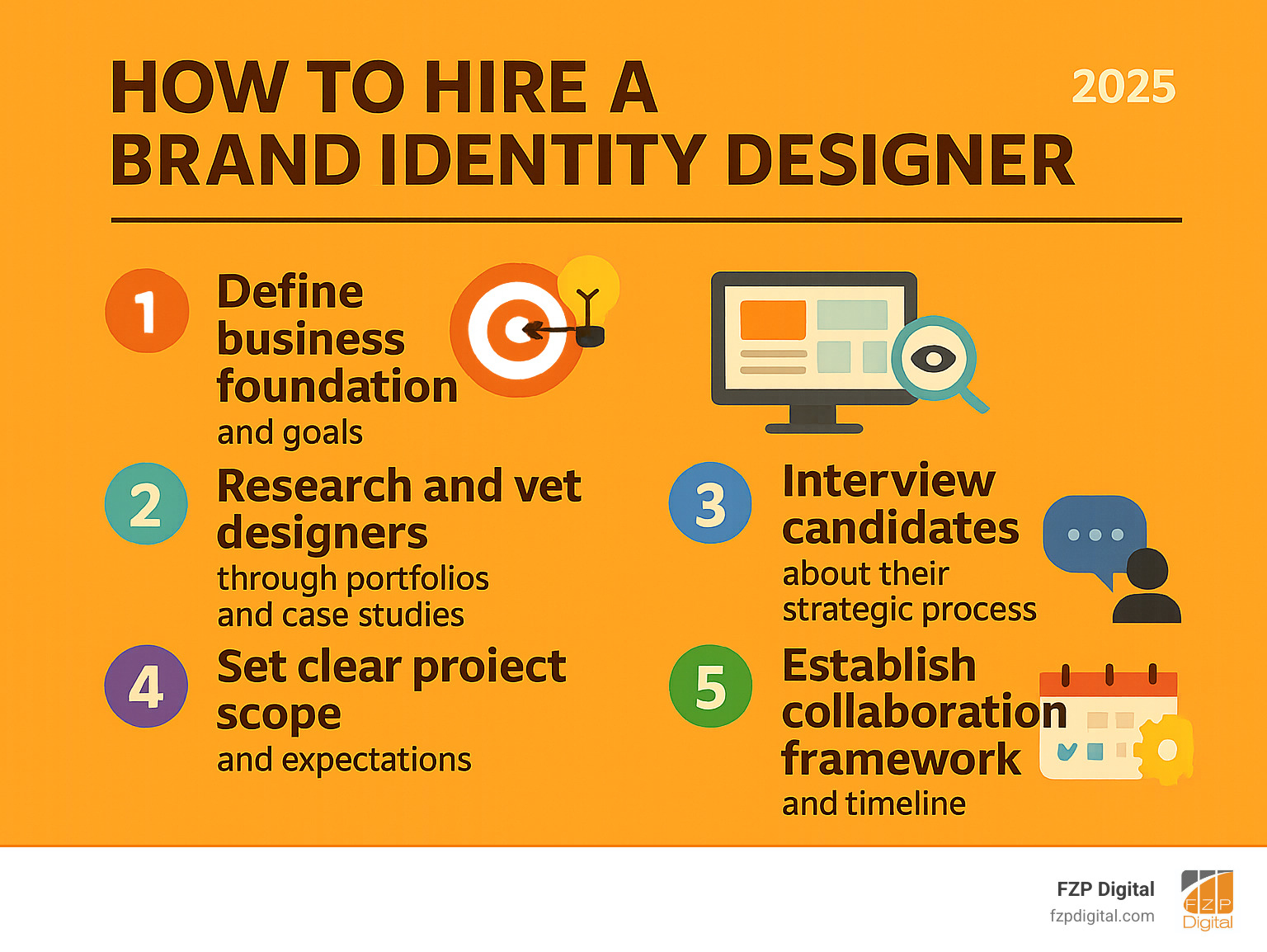
When you’re ready to how to hire a brand identity designer, you’re making one of the most important strategic decisions for your business. Here’s your quick guide to getting it right:
Essential Steps to Hire a Brand Identity Designer:
- Define your business foundation – Know your audience, goals, and brand positioning before you start
- Look beyond pretty portfolios – Seek designers who show strategic thinking and problem-solving
- Ask about their process – Great designers research, strategize, then design
- Set clear expectations – Define deliverables, timelines, and revision rounds upfront
- Check references and case studies – Look for proven results, not just visual appeal
The stakes couldn’t be higher. Research shows that 94% of first impressions are design-related, and businesses with consistent brand presentation can increase revenue by up to 23%. Yet many business owners treat hiring a brand designer like an afterthought, shopping for a logo on a budget marketplace.
Your brand identity isn’t just about looking professional—it’s about connecting with your ideal customers before your competitors do. In today’s crowded marketplace, especially for small businesses in competitive areas like Philadelphia, your visual identity often determines whether someone trusts you enough to pick up the phone.
The difference between hiring the right designer and the wrong one? The right designer asks about your business goals before they ask about your color preferences. They understand that effective branding starts with strategy, not aesthetics.
At FZP Digital, led by founder Fred Z. Poritsky, we’ve seen firsthand how strategic branding transforms businesses. Your brand identity isn’t just about looking professional—it’s about connecting with your ideal customers before your competitors do.
Laying the Foundation: What to Do Before You Hire
The truth about how to hire a brand identity designer is that the real work starts before you look at a single portfolio. Think of it like renovating a kitchen – you wouldn’t call a contractor without knowing your desired style. Your brand identity is the visual handshake with your customers, and since 94% of first impressions are design-related, this foundation is crucial.
The biggest mistake is jumping into hiring without doing your homework, which can result in a beautiful logo that doesn’t connect with your customers or reflect your business goals.
First, conduct an internal brand audit. What assets do you have? Are they cohesive and representative of your business? This is also when you decide if you need a complete rebrand or just a refresh. Knowing this helps you target the right designer for your needs.
To learn more about how these pieces fit together, explore our What is Branding? resources.

What is a Brand Identity Designer (and What Aren’t They)?
A brand identity designer is an architect for your brand’s visual world, not just someone who makes your business card prettier. They are visual storytellers who translate your business values into colors, fonts, and imagery that make people feel something.
They are brand strategists first, artists second. Before designing, they ask deep questions about your business goals, ideal customers, and market perception. As Dan Pallotta puts it: “A brand is a result—it’s a customer’s gut feeling about a product.” A skilled designer shapes that feeling intentionally.
They are not just logo makers or graphic designers who create one-off materials. The difference is significant:
| Feature | Brand Identity Designer | Graphic Designer |
|---|---|---|
| Primary Focus | Strategic creation of a cohesive visual system that tells your brand story | Creation of specific marketing materials and visual assets |
| Scope | Defines your entire brand personality, values, and visual guidelines | Works within existing brand guidelines to create individual pieces |
| Deliverables | Logo systems, color palettes, typography, comprehensive brand guidelines | Brochures, social media graphics, ads, website layouts |
| Strategic Involvement | Deep dive into business goals, target audience, and market positioning | Focuses on executing specific creative briefs effectively |
| End Goal | Build a recognizable, emotionally resonant brand experience | Communicate specific messages through compelling visuals |
Preparing Your Brief: Information to Share with a Designer
To prepare for your first conversation, create a brief that invites the designer into your business’s inner circle. The more they understand, the better they can represent you visually.
- Company mission and values: What drives you? A great designer translates these into authentic visuals.
- Ideal client profile: Go beyond demographics. What are their hopes, frustrations, and decision-making processes? This helps create visuals that resonate.
- Competitor analysis: Who are your competitors? What do you like or dislike about their branding? How will you stand out?
- Project goals: Are you attracting a new demographic, positioning as premium, or expanding? These objectives guide design decisions.
- Budget and timeline: Be upfront about your investment and deadlines. This is respectful and sets realistic expectations.
The key is defining your scope of work before interviewing. Do you need a logo or a complete brand system with guidelines? For a deeper dive, check out our guide: How to Develop a Unique Brand Identity: The 9-Step Guide.
Investing time in this foundation leads to better proposals, smoother collaboration, and a brand identity that works for your business.
The Step-by-Step Process of How to Hire a Brand Identity Designer
Now that you’ve laid the groundwork, let’s dive into the how to hire a brand identity designer process. The modern creative hiring landscape makes finding great talent easier than ever. Remote collaboration tools mean you can work with the best designer for your project, regardless of location.
You’ll need to decide between a freelancer or an agency. Freelancers are great for focused projects, offering affordability, flexibility, and direct access. Agencies bring comprehensive resources, including strategists and project managers, but at a higher price.
The investment varies. Basic logo platforms are cheap, but a comprehensive agency project can be a significant investment. Most freelancers charge between $2,000-$8,000 for a full brand identity package. The cheapest option might cost you more in the long run if it fails to connect with your audience.

Where to Find Top-Tier Talent
Knowing where to look for creative talent makes all the difference.
- Portfolio platforms like Behance and Dribbble are the creative industry’s showcase windows. You can browse styles and find contact information directly on designer profiles.
- Professional networks, especially LinkedIn, are goldmines for finding designers. You can filter by location (perfect for finding someone local to Philadelphia or Bucks County), read recommendations, and find mutual connections.
- Personal referrals remain incredibly valuable. Ask other business owners in your network for their recommendations. A trusted referral can save you weeks of research.
- Vetted freelance marketplaces offer a more curated experience by screening talent for you. These platforms connect businesses with pre-qualified designers for various project types, from one-off tasks to ongoing support.
How to hire a brand identity designer: Vetting Candidates
Finding designers is easy; separating the strategic thinkers from the pretty-picture makers takes effort. You’re hiring a partner who understands your business goals.
Start with their portfolio, but look deeper. Can they adapt their style? Do they show complete brand systems, not just logos? Do their case studies explain the problem they solved, not just the design they created? Check out Our Work to see what comprehensive case studies look like.
Communication skills are crucial. A talented designer who can’t understand your vision is a liability. Note their responsiveness, the thoughtfulness of their questions, and whether they listen more than they talk.
Look for evidence of strategic thinking. Great designers see design as a business tool. Their work should show consistency and consideration for your target audience, market position, and goals.
Technical proficiency in tools like Adobe Creative Suite and Figma is non-negotiable. Professionalism, indicated by proper contracts and insurance, is also a good sign. Most importantly, gauge their genuine interest in your project.
The Interview: Questions You Must Ask
The interview is about finding the right creative partner who gets your vision.
- Ask about their design process. A solid designer will walk you through their approach, from research to delivery, revealing if they prioritize strategy.
- Understand how they handle feedback. You want a collaborator who sees feedback as constructive, not critical.
- Dig into their problem-solving abilities. Ask about a challenging project to see their resilience and creativity.
- Explore their strategic thinking. Questions like “What makes a brand identity successful?” separate artists from business-minded designers.
- Discuss their typical deliverables to ensure alignment. Will you get logo variations, brand guidelines, and templates?
- Ask about post-project support. Knowing your designer is available for guidance after launch adds tremendous value.
The goal is to find someone who understands the strategic Power of Persuasion in Marketing that great branding provides.
Making It Official: Budget, Scope, and Collaboration
You’ve found your ideal designer; now it’s time to make it official. This stage transforms your connection into a solid partnership that protects your investment and ensures success. Getting these details right upfront saves headaches later.
Designers typically use project-based fees (a fixed price), hourly rates (flexible for evolving projects), or retainer arrangements (for ongoing work). Your contract must be crystal clear on deliverables, timelines, and payment schedules. Expect a deposit (usually 25-50%) to start. Crucially, ensure the contract grants you full intellectual property rights and ownership of the final source files.
Modern tools like Figma, Notion, or Loom make remote collaboration smooth, allowing you to stay involved throughout the process.
How Much Does a Brand Identity Designer Cost?
The cost to hire a brand identity designer varies based on several factors. Understanding them helps you make a smart investment.
- Experience Level: A seasoned designer with a strong portfolio will charge more than a novice, but their results often justify the cost.
- Project Complexity: A simple logo refresh is less expensive than a complete brand overhaul with guidelines and templates.
- Geographic Location: Rates in major cities like Philadelphia may be higher, but you gain access to a competitive market with specialized expertise.
Expect to invest: Freelancers typically charge $2,000 to $8,000 for a comprehensive project. Agencies handle full-service branding from $10,000 to $50,000+. This is an investment in your customer perception. A cheap logo can damage credibility, while the right brand identity pays for itself by connecting with customers and differentiating you from competitors.
How to hire a brand identity designer: Defining the Scope of Work
A detailed scope of work prevents misunderstandings and keeps the project on track. Your deliverables list should be specific. A comprehensive project typically includes:
- Logo variations: Primary, secondary, and simplified marks in vector and raster formats.
- Color palette: Primary, secondary, and accent colors with codes for print (CMYK), digital (RGB), and web (Hex).
- Typography guidelines: Rules for using specific fonts for headlines, body text, and accents.
- Brand guidelines document: An instruction manual for using all brand elements consistently. This is invaluable for maintaining a professional look.
- Additional assets: This may include stationery design (business cards, letterhead) and social media templates. Web design elements can also be created to ensure a cohesive digital presence, connecting perfectly with Web Design Development services.
Finally, clarify the number of revisions included. Most designers offer 2-3 rounds, which is usually sufficient with a good brief. This prevents scope creep and keeps the project on budget.
Frequently Asked Questions about Hiring a Brand Designer
Here are answers to common questions about how to hire a brand identity designer.
What’s the difference between a brand designer and a graphic designer?
Think of a brand designer as the architect of your brand’s visual system and a graphic designer as the interior decorator.
A brand designer focuses on strategy, asking who your audience is and how you want them to feel. They create the entire visual system: logos, colors, typography, and brand guidelines. A graphic designer then uses that system to create specific marketing materials like social media posts or brochures.
Both are valuable. For a new brand or rebrand, start with a brand designer. If you have guidelines and need marketing assets, a graphic designer is a great choice.
How long does a typical brand identity project take?
Timelines depend on project scope and collaboration. A simple logo might take 1-2 weeks, but a comprehensive brand identity package usually takes 4-8 weeks. This includes research, strategy, design, and revisions.
More complex projects, like a full rebrand for an established company, can take 12 weeks or more. Your ability to provide timely feedback is key to keeping the project moving. This strategic work takes time but is a worthwhile investment.
What should I look for in a brand designer’s portfolio?
Look beyond pretty logos for strategic thinking. A strong portfolio should include:
- Case studies that tell a story: They should explain the client’s problem and how the design solved it.
- Versatility: The designer should demonstrate the ability to adapt their style to different industries.
- Comprehensive brand systems: Look for examples of color palettes, typography, and other assets applied across different materials, not just standalone logos.
- Consistent quality: Every project should reflect a high standard of professionalism and creativity.
A great portfolio gives you confidence that the designer understands both the creative and business sides of branding.
Conclusion: Your Brand’s Future Starts with the Right Partner
Figuring out how to hire a brand identity designer isn’t about buying pretty pictures; it’s about choosing a strategic partner to tell your story effectively. Every day, potential customers make split-second judgments based on your visual identity. It can either build trust or send them looking elsewhere.
The process—from defining your foundation to vetting candidates and setting expectations—is designed to find a partner who creates a genuine connection with your audience. This investment pays dividends long after the project ends through brand recognition, customer confidence, and easier sales conversations.
At FZP Digital, we’ve seen how the right brand identity transforms businesses. Our collaborative “Develop . Design . Deliver” process helps companies in Philadelphia, Bucks County, and beyond build digital presences that work. We don’t just make things look good; we make them work for your business.
Ready to stand out? Your brand’s future starts with the right partner. Contact us today to get started, or explore our branding services to see our approach to brand identity design. The best time to invest in your brand is now.