


Why Your Online Store Must Work Perfectly on Every Device

A responsive ecommerce website automatically adjusts its layout and functionality to provide an optimal shopping experience across all devices – from desktop computers to smartphones and tablets. Here’s what makes an ecommerce site truly responsive:
Key Features of Responsive Ecommerce:
- Fluid layouts that adapt to any screen size
- Touch-friendly navigation and buttons for mobile users
- Fast loading times optimized for mobile networks
- Readable text without zooming required
- Easy checkout process that works on small screens
- High-quality images that scale properly
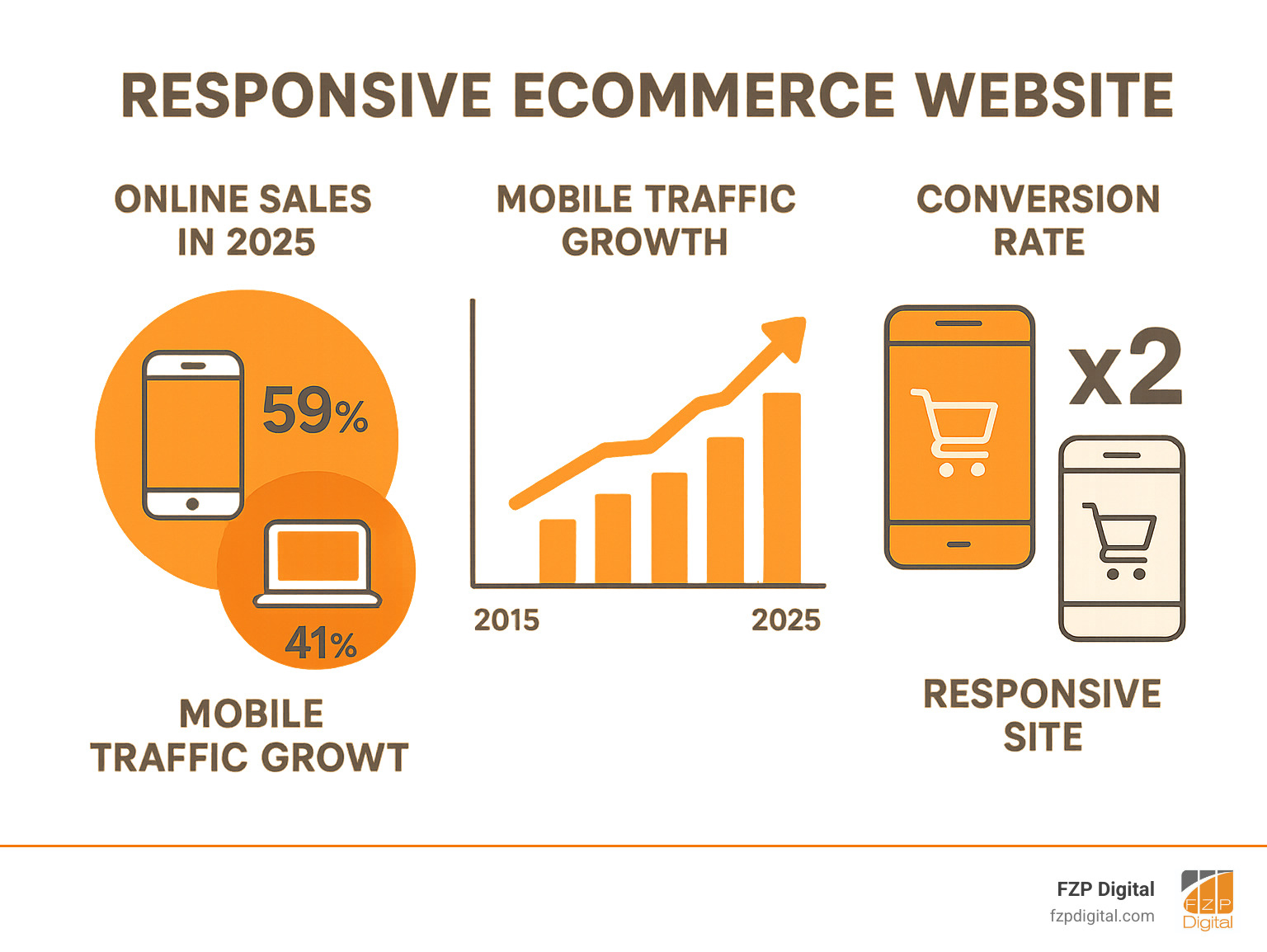
The numbers tell the story: more than half of all internet shopping traffic comes from mobile devices, and mobile shoppers generated 33% of $9.2 billion in online revenue during a recent Cyber Monday. Yet many businesses still struggle with sites that frustrate mobile users.
When your ecommerce site isn’t responsive, you’re essentially telling mobile customers to shop elsewhere. Customers who use site search have conversion rates that are 50 percent higher than the average shopper – but only if they can actually use your search function on their phone.
Google has made its preference clear: responsive design helps their algorithms assign indexing properties to pages more accurately. With a single URL and HTML code, a single Googlebot user-agent needs to crawl your website only once instead of maintaining separate mobile and desktop versions.
The stakes are high. If your website takes longer than two to three seconds to load, visitors will blame your business, not their internet provider. In today’s competitive landscape, a responsive design isn’t just nice to have – it’s essential for survival.
Why Your Business Needs a Responsive Ecommerce Website
Picture this: a potential customer finds your online store while scrolling through their phone during lunch break. They’re genuinely interested in your product, but your website forces them to pinch and zoom just to read the product description. Frustrated, they bounce to another site that works seamlessly on their mobile device. You’ve just lost a sale – and possibly a customer for life.
This scenario plays out millions of times every day. In today’s mobile-first world, having a responsive ecommerce website isn’t just smart business – it’s survival. Your online store needs to work flawlessly whether someone visits from their smartphone, tablet, or desktop computer.
Mobile-first indexing has fundamentally changed how Google evaluates websites. Since most people now shop on mobile devices, Google primarily uses the mobile version of your site for ranking purposes. If your mobile experience is poor, your search rankings will suffer across all devices.
The impact on your bottom line is immediate and measurable. Responsive design directly improves conversion rates by removing the friction that drives customers away. When shopping feels effortless, people buy more. It’s that simple.
Beyond sales, there’s the cost-effectiveness factor. Managing one responsive site costs significantly less than maintaining separate mobile and desktop versions. You save money on development, updates, and ongoing maintenance while delivering a superior experience.
How Responsive Design Boosts SEO and Google Rankings
Google has made their position crystal clear: they love responsive websites, and they’re not shy about rewarding them with better rankings. Understanding why helps explain the dramatic SEO benefits you’ll see.
The magic starts with having a single URL for each page. When your product page has one web address that works perfectly on every device, Google’s job becomes much easier. The Googlebot only needs to crawl your site once instead of juggling multiple versions.
This efficient crawling means Google can spend more time understanding your content instead of figuring out which version to index. The result? Better rankings and more organic traffic to your store.
Duplicate content issues disappear entirely with responsive design. When you have separate mobile and desktop sites, Google sometimes gets confused about which version to show in search results. A responsive site eliminates this confusion completely.
Google explicitly recommends responsive design as the best way to help their algorithms assign indexing properties to your content accurately. Following Google’s recommendation isn’t just good practice – it’s a competitive advantage.
The improved user signals from responsive design create a positive feedback loop. When visitors stay longer, click more pages, and complete purchases, Google interprets these behaviors as quality indicators. Your site climbs higher in search results, attracting even more qualified traffic.
Want to maximize these SEO benefits? Our comprehensive Search Engine Optimization services can help you dominate search rankings while ensuring your responsive design works perfectly.
Improving User Experience and Driving Sales
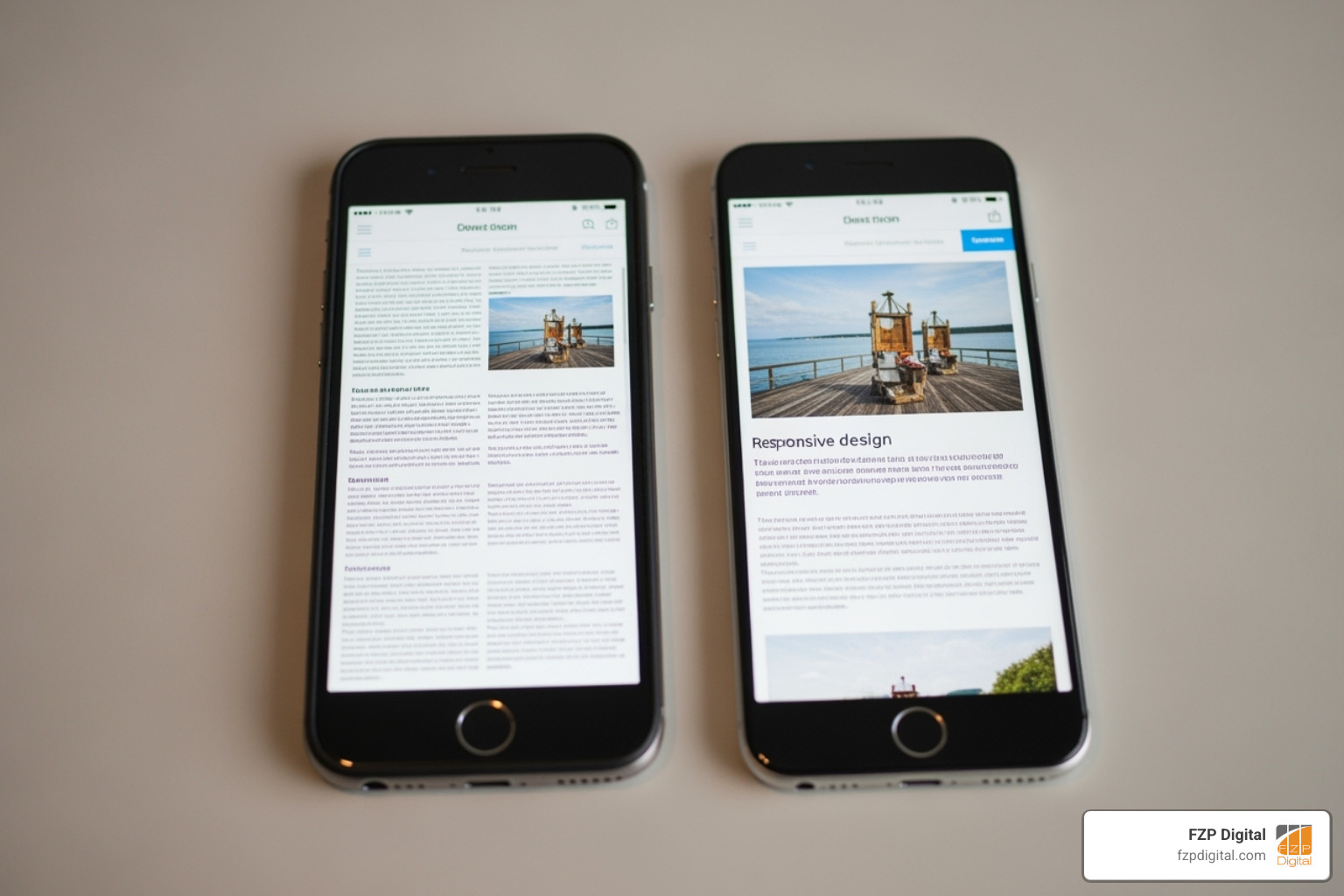
We’ve all experienced the frustration of trying to shop on a non-responsive website. Tiny text that requires zooming. Buttons too small for fingers. Menus that don’t work properly. It’s like trying to shop through a keyhole – technically possible, but nobody wants to do it.
A responsive ecommerce website transforms this painful experience into something delightful. Seamless navigation means customers can easily browse your products, read descriptions, and make purchases without fighting your website. Touch-friendly buttons actually work when tapped. Text is readable without squinting.
This reduced friction in the shopping experience directly translates to more sales. When customers don’t have to struggle with your website, they focus on what matters – your products. Every obstacle you remove increases the likelihood someone will complete their purchase.
The impact on customer satisfaction extends far beyond a single visit. When shopping is easy and enjoyable, customers remember that positive experience. They return for future purchases and recommend your store to friends.
Higher conversion rates are the natural result of better user experience. Customers who can easily search your site convert 50% more often than average shoppers. But they can only use your search function if it actually works on their device.
Your competitive advantage grows stronger with every frustrated customer who leaves a non-responsive competitor’s site and finds yours. When consumers instantly recognize the difference between good and poor mobile experiences, responsive design becomes a powerful differentiator.
Most importantly, a professional, user-friendly site builds brand trust. When customers see that you’ve invested in their experience, they feel confident investing in your products. This trust translates into customer loyalty, positive reviews, and word-of-mouth referrals that money can’t buy.
The Blueprint: Essential Features for a High-Converting Site
Building a responsive ecommerce website that truly converts isn’t just about making it look good on different screens. It’s about designing a seamless, intuitive experience that guides your customers from browsing to buying. Here, we’ll dive into the “how” and “what” of creating such a powerful online store.
The Technical Foundation: How Responsive Design Works
At its heart, responsive web design is a clever blend of techniques that allow your website to “respond” to the user’s environment. The process that responsive web design service providers follow includes using a blend of flexible layouts, grids, and imagery, along with using CSS media queries in the right manner.
Here’s a simplified breakdown:
- Fluid Grids: Instead of fixed pixel widths, responsive designs use fluid grids, which are based on percentages. For example, a column might take up 50% of the page width, rather than a fixed 300 pixels. This allows elements to stretch and shrink proportionally with the screen size.
- Flexible Images: Images are set to scale within their containers, often using
max-width: 100%. This ensures they never overflow their parent element and distort the layout, automatically resizing without losing their aspect ratio or quality. - Relative Units vs. Pixels: We use relative units like
emorremfor font sizes and spacing, rather than fixed pixels. This allows text and elements to scale relative to the user’s default settings or the viewport size, ensuring readability on any device. - CSS Media Queries: These are the magic behind the responsiveness. Media queries allow us to apply different CSS styles based on device characteristics, such as screen width, height, resolution, and orientation. For instance, we can tell the browser: “If the screen is smaller than 768 pixels, make this navigation menu collapse into a hamburger icon.” This allows for distinct layouts and element behaviors custom to specific breakpoints.
- Viewport Settings: A crucial meta tag in the HTML (
<meta name="viewport" content="width=device-width, initial-scale=1.0">) tells the browser to set the width of the page to the width of the device’s screen and to set the initial zoom level. Without this, mobile browsers might render the page at a desktop width, then shrink it down, making it unreadable. - Mobile-First Approach: While responsive design adapts to all screens, a “mobile-first” approach means we design and develop for the smallest screens first, then progressively improve for larger ones. This ensures that the core functionality and content are optimized for mobile users from the outset, leading to a leaner, faster, and more effective experience for everyone.
Essential Features of a Responsive Ecommerce Website
Beyond the technical backbone, a truly effective responsive ecommerce website integrates specific features designed to optimize the shopping experience and boost conversions.
Here’s a list of essential features we prioritize:
- Fast Load Times: If a website takes longer than the usual two to three seconds to load, visitors might blame the content provider. Responsive design contributes to faster loading by optimizing imagery and code for different devices, minimizing HTTP requests, and reducing plugins.
- Simple Navigation & Menus: Clutter is the enemy of conversions. A clean, intuitive navigation system that adapts beautifully to smaller screens is vital. This often means a prominent hamburger menu on mobile, clear categories, and easy-to-tap buttons.
- High-Quality Product Photos/Videos: Since customers can’t physically interact with products online, high-quality visuals are paramount. Your photos and videos are the only way for them to “see” what they’re buying. Ensure images are optimized for fast loading while maintaining clarity and offer zoom functionality and multiple views.
- Prominent Site Search: Customers who use site search have conversion rates that are 50 percent higher than the average shopper. A visible, easy-to-use search bar helps users quickly find what they’re looking for, reducing frustration and speeding up the purchasing process.
- Clear Calls-to-Action (CTAs): Buttons like “Add to Cart,” “Buy Now,” or “Checkout” need to be easily tappable and stand out, regardless of screen size. Their placement and design should guide the user seamlessly through the buying journey.
- Guest Checkout Option: A significant percentage of abandoned carts happen because users are forced to create an account. Offering a guest checkout option, while still incentivizing account creation (e.g., for faster future checkouts), removes a major barrier to purchase.
Best Practices in Action
Let’s look at some shining examples of how these best practices come to life on successful responsive ecommerce websites:
- Nike’s Sleek Design: Nike showcases a minimalist design that aims to create a positive customer experience across both desktop and mobile. Their clean interface and intuitive navigation make browsing and purchasing a breeze, regardless of the device.
- Patagonia’s Product Transparency: Patagonia masterfully provides color options, pricing, and multiple views of each product before the user even clicks on an item. This upfront information streamlines the shopping process and improves user confidence.
- West Elm’s Visual Appeal: West Elm excels at providing high-quality photos and videos of their products for easy viewing. Their visuals are crisp, detailed, and truly allow the product to shine, which is crucial when customers can’t physically inspect items.
- Carvana’s Immersive Experience: Carvana lets their images do the talking with impressive 360-degree exterior and interior tours of vehicles. This level of visual detail builds immense trust and helps overcome the barrier of not being able to see a car in person.
- Warby Parker’s Proactive FAQs: Warby Parker features an organized FAQ list, often with holiday shipping-specific questions at the top. Answering questions before they’re asked reduces purchasing anxiety and makes the customer journey smoother.
- Lululemon’s Smart Checkout: Lululemon understands the power of choice. They allow customers to checkout as guests but strategically incentivize account signup with the promise of a faster and easier checkout process for future purchases. This balances convenience with customer retention.
These examples demonstrate that a well-designed responsive ecommerce website isn’t just about scaling content; it’s about optimizing the entire user flow for every screen size, making the shopping experience as effortless and enjoyable as possible.
From Plan to Launch: Implementing Your Responsive Design
Making the leap to a responsive ecommerce website can feel overwhelming, especially when you’re already juggling the daily demands of running your business. But here’s the thing – it doesn’t have to be a nightmare. With the right approach and guidance, this change becomes an exciting opportunity to lift your online presence.
As a Philadelphia and Bucks County digital marketing agency, we’ve walked countless businesses through this journey using our collaborative “Develop . Design . Deliver” approach. The key is breaking it down into manageable steps and understanding what you’re getting into from the start.
Challenges and Key Considerations
Let’s be honest about what you’re facing. Every business owner considering this transition has the same concerns running through their mind, and they’re all valid.
The initial investment versus long-term ROI is usually the first worry. Yes, building a robust responsive ecommerce website requires money upfront. But think of it like renovating your physical store – the initial cost quickly pays for itself through increased foot traffic and sales. You’ll save money in the long run too, since you’re maintaining one site instead of juggling separate mobile and desktop versions.
Testing across multiple devices is where many businesses underestimate the complexity. It’s not enough to check your site on your phone and call it good. Your customers are using everything from ancient Android tablets to the latest iPhones, and your site needs to work flawlessly on all of them.
Performance optimization deserves special attention because responsive doesn’t automatically mean fast. Heavy images and bloated code can still make your site crawl, especially on mobile networks. When visitors are shopping on their lunch break with spotty cell service, every second counts.
Maintaining a clear content hierarchy becomes crucial when you’re condensing a desktop experience onto a smartphone screen. What looks perfect spread across a large monitor can become overwhelming clutter on a 5-inch display. You need to prioritize ruthlessly and guide users efficiently through their journey.
Finally, ensuring a consistent brand experience across all devices means your brand’s personality should shine through whether someone’s shopping on their laptop at home or their phone while waiting for the bus. The layout adapts, but your brand identity stays rock solid.
How to Switch to a Responsive Ecommerce Website
The actual transition follows a logical progression that takes the guesswork out of the process. We’ve refined this approach through years of helping businesses make the switch successfully.

Step 1: Audit your current site before touching anything else. This comprehensive evaluation reveals what’s working, what’s broken, and what content deserves to make the journey to your new site. Think of it as a thorough health check-up for your digital presence. Our detailed Website Audit and SEO Analysis gives you the complete picture of where you stand today.
Step 2: Plan your mobile user journey by putting yourself in your customers’ shoes. When someone visits your site on their phone, what do they want to accomplish? How can you make that path as smooth as possible? This step involves mapping out the flow, sketching layouts, and identifying which content gets priority on smaller screens.
Step 3: Choose a responsive platform or developer who truly understands ecommerce needs. As specialists in premium responsive WordPress website design, we leverage this powerful platform to create highly adaptable solutions custom to your specific business requirements, whether you’re based in Richboro, Newtown, Philadelphia, or anywhere in our service area.
Step 4: Design with a mobile-first mindset instead of trying to squeeze a desktop design onto a phone screen. We start with the smallest screen and focus on the core content and functionality mobile users need most. Then we progressively improve the experience for tablets and desktops. This approach ensures everyone gets a lean, fast, and user-friendly experience.
Step 5: Test, test, test until you’re confident everything works perfectly. Once development wraps up, the real validation begins. We test across dozens of devices, operating systems, and browsers to catch any issues before your customers do. Performance testing ensures fast load times regardless of connection quality. This thorough process guarantees your responsive ecommerce website is ready to handle whatever your customers throw at it.
The transition might seem complex, but each step builds naturally on the last. With the right partner guiding you through the process, you’ll wonder why you waited so long to make the switch.
Looking Ahead: Future-Proofing Your Ecommerce Store
The digital world never stands still, and your responsive ecommerce website needs to be ready for whatever comes next. While responsive design brilliantly handles today’s smartphones, tablets, and desktops, new technologies are already reshaping how customers shop online. As a Philadelphia and Bucks County digital marketing agency, we stay ahead of these changes to keep our clients’ websites competitive.
Think about how much shopping has changed in just the past five years. What seemed futuristic then – like buying groceries with a few taps on your phone – is now completely normal. The next wave of changes will be just as dramatic.
Voice search optimization is already changing how people find products. Instead of typing “red running shoes,” customers now ask their smart speakers, “What are the best running shoes for someone with flat feet?” Your responsive site needs to understand and respond to these natural, conversational searches. This means writing product descriptions and content that sound like real conversations, not keyword-stuffed marketing copy.
AI-powered personalization will make every shopping experience feel custom-made. Imagine your website learning that a customer always shops for outdoor gear in March and automatically featuring hiking boots and camping equipment when they visit. This isn’t science fiction – it’s happening right now. Your site will adapt not just to different screen sizes, but to individual preferences and shopping patterns.
Augmented Reality (AR) for “try-before-you-buy” experiences are solving one of online shopping’s biggest problems: uncertainty. Customers can already point their phone camera at their living room and see how that new couch would look. They can virtually try on glasses or see how paint colors would look on their walls. This technology works seamlessly with responsive design, giving mobile shoppers superpowers.
Headless commerce architecture might sound technical, but it’s actually about freedom and speed. By separating what customers see from how orders get processed, your site can load lightning-fast and adapt to new devices instantly. When the next big thing after smartphones arrives, your site will be ready.
Progressive Web Apps (PWAs) represent the best of both worlds – the convenience of a website with the smooth performance of a mobile app. Customers get app-like speed and features without downloading anything from an app store. Your responsive ecommerce website can evolve into a PWA, offering features like offline browsing and push notifications.
The key to staying ahead isn’t just knowing about these trends – it’s building a foundation that can grow with them. That’s why responsive design matters so much. It’s not just about today’s devices; it’s about being ready for tomorrow’s innovations.
For deeper insights into what’s coming next, we encourage you to Read about 10 Actionable Digital Marketing Trends for 2025. The future of ecommerce is exciting, and with the right foundation, your business will be ready to accept every opportunity.
Conclusion
In today’s mobile-first world, a responsive ecommerce website isn’t just a nice-to-have feature – it’s the difference between thriving and barely surviving online. Think about it: when was the last time you stayed on a website that looked broken on your phone? Exactly.
We’ve walked through the compelling reasons why responsive design matters. Google loves it because it makes their job easier with single URLs and efficient crawling. Your customers love it because they can actually use your site without squinting or getting frustrated. Your bottom line loves it because happy customers who can easily steer and purchase become repeat customers.
The technical foundation we discussed – fluid grids, flexible images, and CSS media queries – might sound complex, but it’s really about one simple goal: making your website work beautifully for everyone, everywhere. Whether someone’s browsing on their morning commute using a smartphone or researching products on their laptop at home, the experience should feel seamless.
The future is mobile, and it’s happening faster than many businesses realize. Voice search, AI personalization, and augmented reality aren’t science fiction – they’re already reshaping how people shop online. A responsive foundation prepares your business for these innovations while solving today’s immediate challenges.
At FZP Digital, we’ve seen how a well-designed responsive ecommerce website transforms businesses. Our clients in Philadelphia and Bucks County consistently report higher conversion rates, improved customer satisfaction, and better search rankings after making the switch. It’s not magic – it’s simply giving your customers what they expect in 2024.
The cost of waiting is higher than the cost of acting. Every day your website frustrates mobile users is another day your competitors gain ground. Every potential customer who abandons your site because it’s hard to use on their phone is revenue walking out the door.
Ready to give your customers the smooth, professional shopping experience they deserve? Our collaborative “Develop . Design . Deliver” process takes the complexity out of going responsive. We handle the technical details while you focus on running your business.
Don’t let an outdated website hold back your success. Partner with us for expert Web Design Development and let’s build a responsive ecommerce website that works as hard as you do.