
Why Your Nonprofit Website Design Best Practices Matter More Than Ever
_compressed.png?alt=media&token=c56ca91d-0b84-404c-bff3-a4672f665421 "Bcoc.org is design by FZP Digital nonprofit website design - nonprofit website design best practices")
Nonprofit website design best practices are the foundation for a digital presence that builds trust, drives donations, and amplifies your mission. Your website is your organization’s digital front door, and since 75% of consumers judge credibility based on website design alone, that first impression is critical. A strong design directly impacts whether potential donors, volunteers, and beneficiaries will engage with your cause.
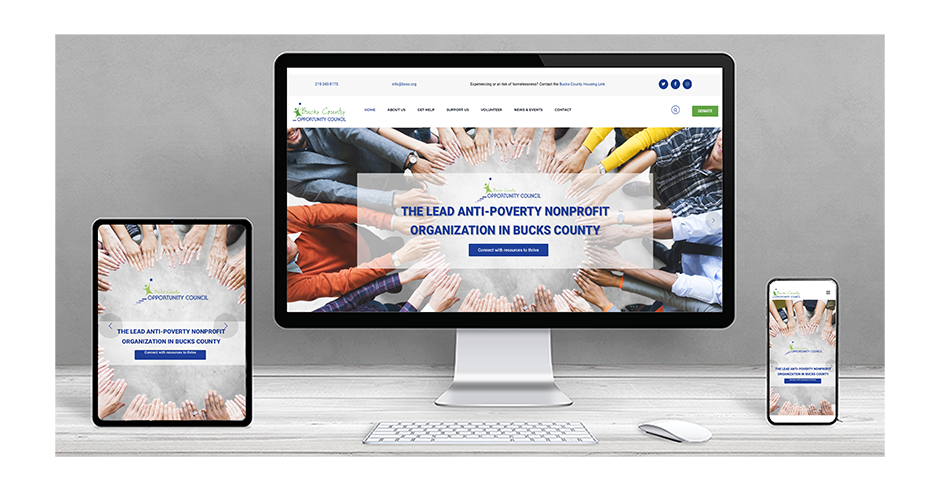
Read our case study of our long-time client, Bucks County Opportunity Council and see how our team at FZP Digital built a new digital presence for this incredible nonprofit.
Yet many nonprofits struggle with outdated sites. Only 22% are designed for users with disabilities, and 27% have faced cyberattacks due to poor security. This guide will walk you through proven strategies to avoid these pitfalls and create a website that truly serves your community.
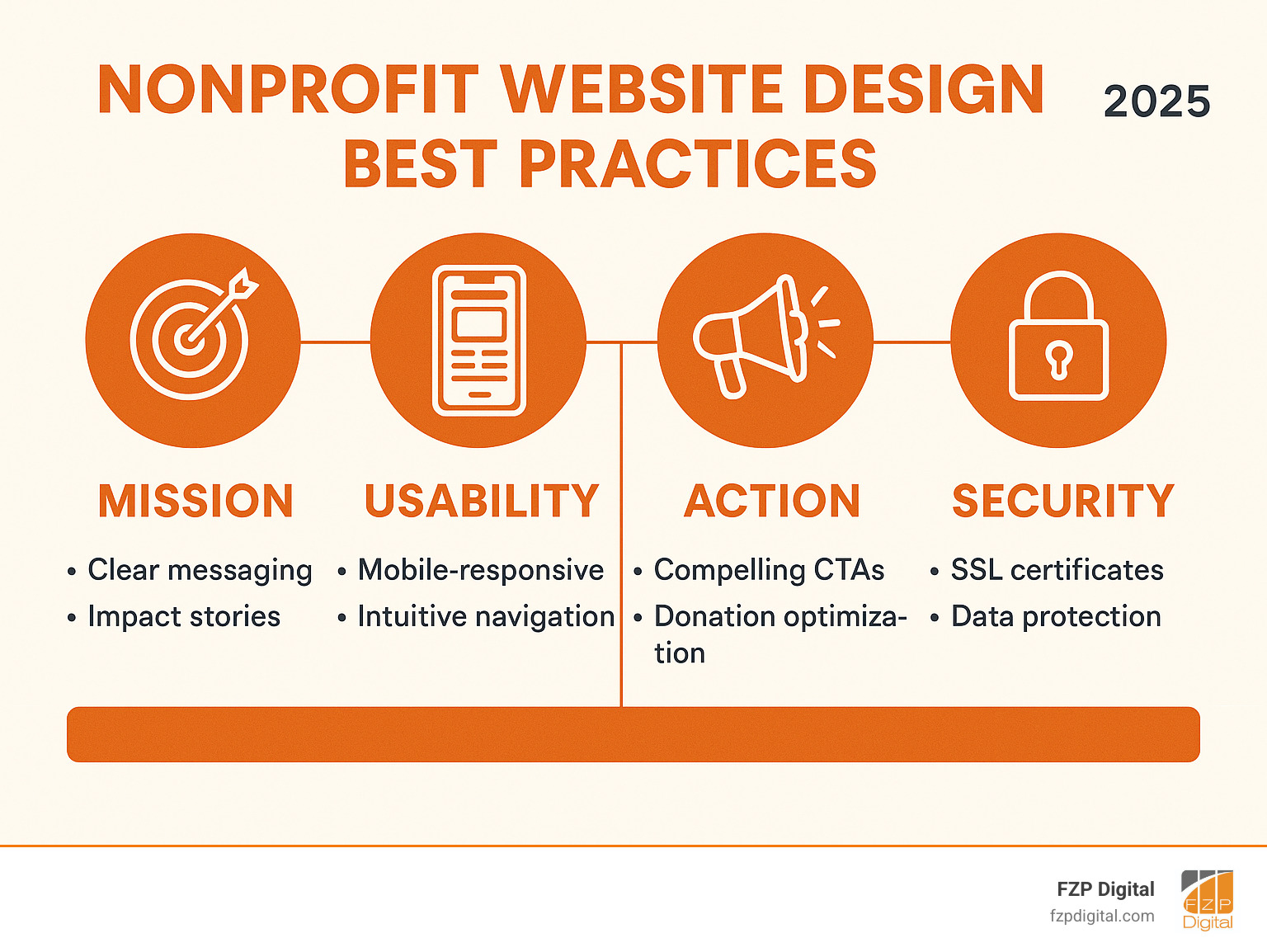
Essential practices we’ll cover include:
- Clear mission messaging and compelling calls-to-action
- Mobile-responsive, accessible, and secure design
- Intuitive navigation and fast loading times
- SEO to increase visibility and connect with supporters
Your website isn’t a digital brochure; it’s your most powerful tool for building relationships and driving action. Let’s ensure it’s working as hard as you do.
Building a Foundation of Trust and Usability
Your nonprofit website is your digital handshake—you have seconds to make a positive impression that builds trust. Nonprofit website design best practices focus on creating that immediate connection through clear messaging, consistent branding, and an intuitive design that makes visitors feel confident in your cause.
Showcase Your Mission and Impact
Every visitor should instantly understand what you do and why it matters. The most effective way to achieve this is through storytelling that creates an emotional connection. While statistics are impressive, the story of a single life you’ve changed creates a more lasting impact.
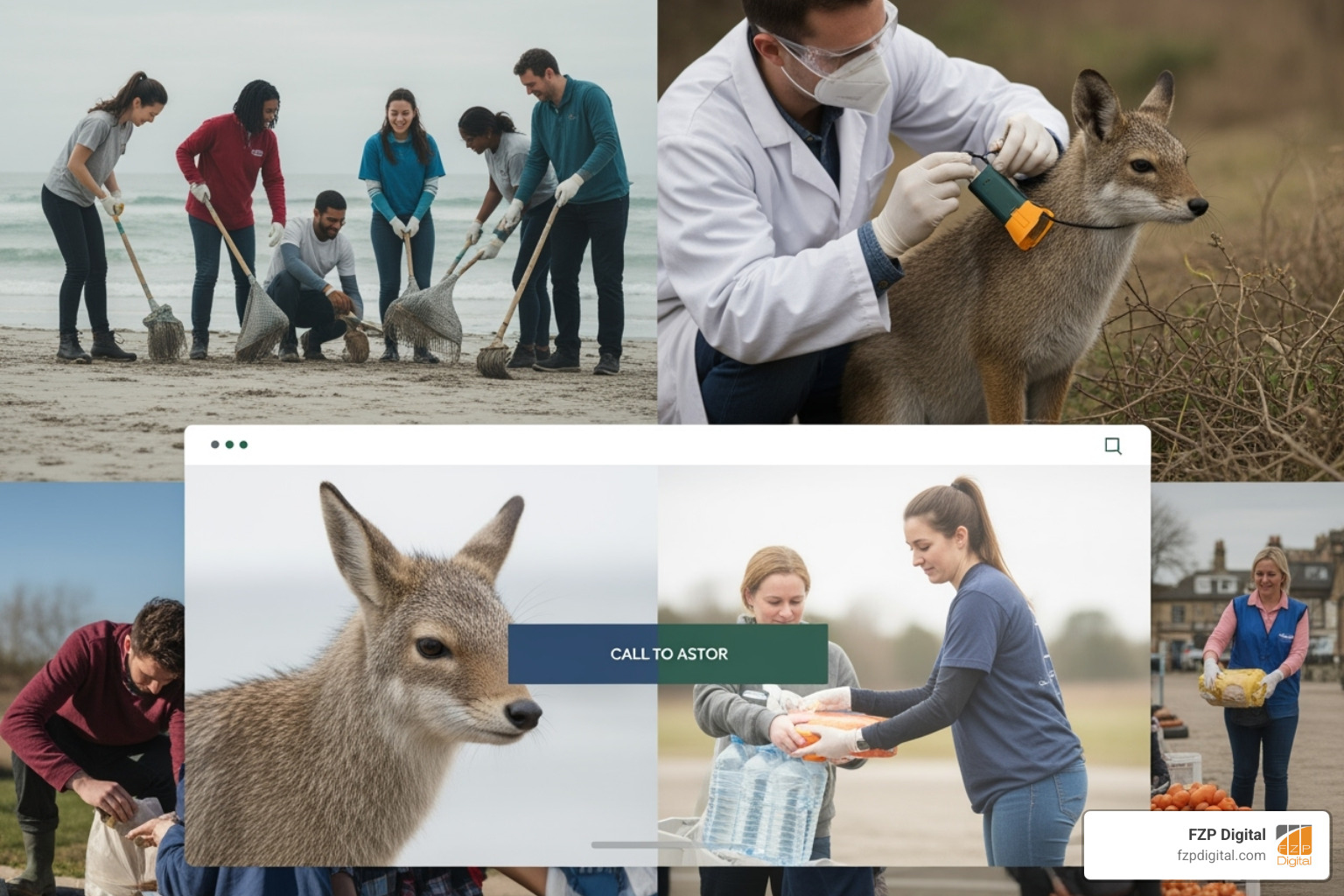
High-quality images and authentic videos are your most powerful tools here, as the brain processes visuals 60,000 times faster than text. Show real people, volunteers in action, and the communities you serve. Since 57% of people who watch nonprofit videos go on to donate, authentic visual storytelling is key. Back up these stories with impact statistics and testimonials to show that support for your work yields measurable results.

Need help crafting your organization’s story? Our Content services can help you find the perfect words and visuals.
Solidify Your Brand for Instant Recognition
Consistent branding makes your organization feel professional and reliable.
- Logo Placement: Place your logo in the top-left corner, linking back to the homepage. It’s a familiar convention that builds trust.
- Color Scheme: Your color scheme communicates emotion. Choose three or four primary colors that reflect your mission and use them consistently.
- Typography: Use clean, simple fonts like Arial or Helvetica for readability across all devices. Consistency is more important than creativity here.
A brand style guide is an instruction manual that ensures everyone on your team uses these elements cohesively across all platforms.
For a deeper dive, check out our guide: How to Develop a Unique Brand Identity: The 9-Step Guide.
Create a User-Friendly and Mobile-Responsive Design
With 62% of global website traffic occurring on mobile devices, a site that isn’t mobile-friendly is turning away more than half its audience.
Intuitive navigation is essential. Keep your main menu simple with clear, jargon-free language like “Get Involved.” A mobile-first approach, where you design for phones first, ensures the core experience is solid for the majority of users. Use white space to give your content breathing room, making it easier to read. Finally, fast load times are crucial, as visitors will leave a slow site and Google ranks faster sites higher.
Our Web Design Development services focus on creating websites that work beautifully on every device.
Driving Supporter Action and Engagement
A trustworthy website is the first step; the next is inspiring action. This is where nonprofit website design best practices guide visitors from curious observers to passionate supporters who donate, volunteer, and champion your cause.
Essential Website Functionalities
Your website is your 24/7 team member, so it must be organized logically. Clear information architecture ensures visitors can easily find what they need. Every nonprofit site should include these essential pages:
- About Us
- Our Impact
- Programs/Services
- Donate
- Volunteer
- Contact Us
Intuitive navigation ties it all together. Use simple, everyday language in your menu to avoid confusion. We apply proven web design best practices to make your site a powerful tool for your mission.
Crafting Compelling Calls-to-Action (CTAs)
A great CTA tells visitors exactly what to do next. Use action-oriented language like “Donate Now” or “Volunteer Today” to create urgency. Make your CTAs stand out with contrasting colors that draw the eye.
Strategic placement is also key. Your header should feature a prominent “Donate” button on every page. Integrate other CTAs naturally within your content, footer, and sidebar to guide users toward engagement. A/B testing different colors, text, and placements can reveal what resonates most with your audience.
Designing a High-Converting Donation Page
Your donation page is where good intentions become tangible support. Simplicity is your secret weapon. A donor should be able to complete their gift in under two minutes.
- Minimize form fields to only what is absolutely necessary.
- Feature recurring donation options prominently to build sustainable funding.
- Display trust signals like security badges and SSL encryption to reassure donors.
- Ensure mobile optimization for a flawless experience on any device.
- Maintain branding consistency to reinforce legitimacy.
- Include a brief impact reminder to motivate giving.
Following these donation page best practices helps turn more visitors into committed supporters.
Fostering Community and Interaction
Your website can be the digital heart of your community. Use it to keep supporters engaged year-round.
- Event calendars promote fundraisers, workshops, and volunteer days.
- Volunteer sign-up forms should be simple, with clear descriptions of roles and commitments.
- Social media feeds show your organization’s personality and active community engagement.
- A blog with comment capabilities creates space for dialogue and deeper connection.
- Newsletter opt-ins are crucial for building direct relationships, as email is a top channel for fundraising.
We specialize in designing interactive features for engagement that transform your website into a thriving community hub.
Core Pillars of Nonprofit Website Design Best Practices
A great website must be findable, informative, and welcoming to everyone. This requires a strategic approach to SEO, content, and accessibility.
Optimizing for Search Engines (SEO) to Increase Visibility
Since 75% of people never scroll past the first page of search results, a solid SEO foundation is non-negotiable.
- Keyword Research: We help you find the exact terms people use to find organizations like yours, shaping your entire content strategy.
- On-Page SEO: We optimize titles, headers, and meta descriptions with relevant keywords to improve your ranking in search results.
- Local SEO: For community-based nonprofits, we optimize your Google My Business listing to ensure you appear in local searches like “food bank near me.”
- Technical SEO: We focus on critical ranking factors like site speed and SSL certificates. Optimizing these elements can dramatically improve performance.
Good SEO also positions you for emerging traffic sources like ChatGPT Search. We track performance with tools like Google Analytics to provide clear insights. Our Search Engine Optimization services focus on boosting your visibility where it matters most.
The Strategic Value of a Nonprofit Blog
Your blog is a powerful engine for connection and growth. Use it to share deeper stories that create emotional connections, establish thought leadership by publishing expert insights, and improve SEO with fresh content. Each new post is an opportunity to rank for keywords and signal to search engines that your site is active. A blog can also become a valuable resource for your community by answering common supporter questions.
Visit Our Blog to see how we use content to build relationships and share insights.
Applying nonprofit website design best practices for internal linking
Internal linking guides visitors through your site, improving user experience and SEO. When a user reads about a program, a link to the sign-up form makes their next step obvious. Use descriptive anchor text (e.g., “learn about our volunteer opportunities” instead of “click here”) to help both users and search engines understand the destination. This practice spreads authority between pages and keeps users engaged longer.
Our internal linking strategies create natural pathways that serve visitors while strengthening your site’s SEO.
Ensuring Web Accessibility for All Abilities
With only 22% of nonprofit websites designed for those with disabilities, most organizations are unintentionally excluding people. Web accessibility is about living your mission of inclusion.
- Alt text for images provides descriptions for screen readers.
- Video captions make your content accessible to deaf or hard-of-hearing users.
- High-contrast colors and keyboard navigation are essential for users with various visual or motor impairments.
We follow the Web Content Accessibility Guidelines (WCAG) to create inclusive websites. Our commitment to What is Web Accessibility? ensures your message reaches everyone.
The Technical Framework: CMS, Security, and Data Privacy
Behind every great nonprofit website is a solid technical foundation. This backend framework keeps your site manageable, secure, and compliant, so you can focus on your mission.
Choosing the Right Content Management System (CMS)
Your Content Management System (CMS) is your website’s control center, determining how easily your team can update content. Getting this choice right is one of the most important nonprofit website design best practices.
WordPress leads the pack, with 58% of nonprofits choosing it as their CMS. It’s free, flexible, and supported by a massive community. Its ease of use allows non-technical team members to manage content, yet it’s scalable enough to grow with your organization. The vast availability of plugins for donation forms, SEO, and event calendars is another key advantage. While other platforms exist, WordPress offers a powerful combination of flexibility and control that serves most nonprofits exceptionally well.
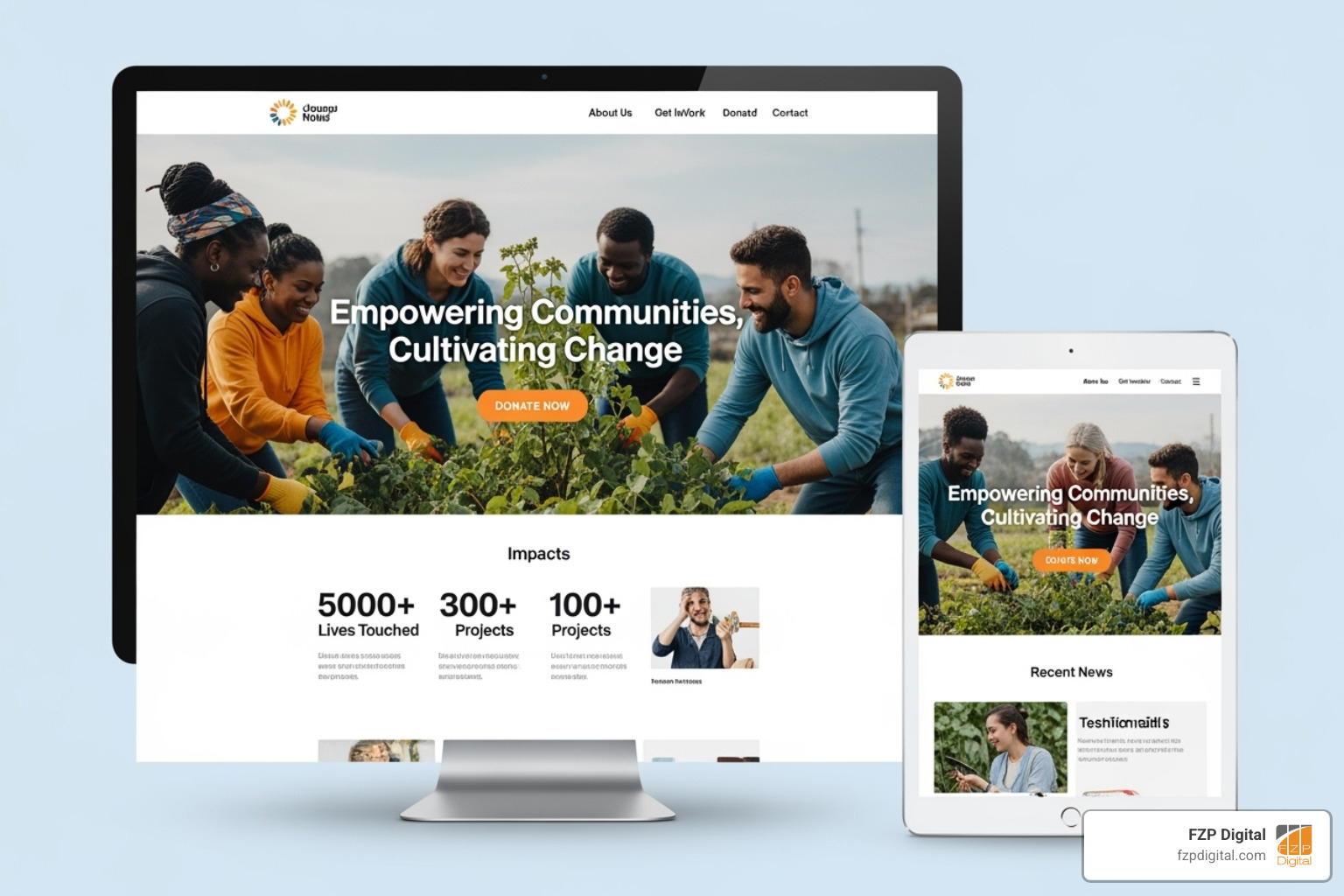
At FZP Digital, we specialize in building premium responsive WordPress websites because it empowers nonprofits to manage their online presence effectively.
Read our Case Study for the website that we created for the Bucks County Opportunity Council.
A guide to nonprofit website design best practices for security
With 27% of nonprofits having experienced a cyberattack, security is critical.
- An SSL certificate is your first line of defense, encrypting data between your site and visitors. Google penalizes sites without one.
- Secure hosting provides automatic backups, security monitoring, and expert support, offering crucial peace of mind.
- Regular software updates for your CMS, theme, and plugins are essential to patch security vulnerabilities.
- Strong passwords and user management are simple but vital practices to protect your site and data.
Protecting User Data with a Privacy Policy
A privacy policy is an essential tool for building trust and ensuring legal compliance. If your site collects any user information (via forms, newsletters, or cookies), you need one.
Transparency builds trust. Your policy should clearly explain what data you collect and how you protect it. A clear privacy and cookie policy makes supporters feel more confident. Cookie consent banners are also a legal requirement in many regions. Your privacy policy is more than a legal document; it’s a promise to your community that you respect their data.
Frequently Asked Questions about Nonprofit Website Design
We understand that a website project can feel overwhelming. Here are answers to the most common questions we hear from nonprofit leaders.
How much does a new nonprofit website typically cost?
The cost varies widely depending on your needs.
- DIY website builders can get you started for a few hundred dollars a year. They are great for new organizations but offer limited customization and may be outgrown quickly.
- Template-based solutions for nonprofits typically cost in the low to mid-thousands, offering more flexibility.
- Custom agency builds are the largest investment, ranging from $5,000 to tens of thousands of dollars. A professionally designed site is a powerful asset that generates donations and volunteers for years, making it a worthwhile investment.
At FZP Digital, we work with nonprofits across Pennsylvania, New Jersey, and Delaware to create websites that fit their mission and budget.
How often should a nonprofit redesign its website?
We typically recommend a major website refresh every two to four years. Technology and design trends move quickly, and an outdated site can harm your credibility. The 2023 Nonprofit Tech for Good report found that 68% of nonprofits had redesigned their websites in the past three years, showing that organizations recognize the need to stay current with nonprofit website design best practices. Regular updates also ensure your site remains secure and mobile-friendly.
What is the single most important element on a nonprofit’s website?
If we had to pick one thing, it would be a clear, concise mission statement paired with an unmissable and easy-to-use “Donate” button.
Your mission statement tells visitors what you do, and the donate button gives them an immediate way to help. A visitor should understand your purpose and know how to support you within seconds. Sadly, only 33% of nonprofits have a strong value proposition that clearly communicates their mission. The donate button should be visible on every page, ideally in the top right corner with a contrasting color.
Conclusion
Your nonprofit’s website is so much more than just a digital business card sitting somewhere on the internet. It’s your most powerful tool for building genuine trust, driving meaningful donations, and growing a community of supporters who truly believe in your cause.
When you thoughtfully apply nonprofit website design best practices – focusing on creating a seamless user experience, telling your story with clarity and heart, and building on a foundation of technical excellence – you’re not just creating a website. You’re crafting a digital presence that genuinely serves your mission and amplifies the impact you’re already making in the world.
Think about it: every visitor who lands on your site could become your next major donor, dedicated volunteer, or passionate advocate. The difference between someone clicking away in confusion and someone becoming a lifelong supporter often comes down to how well your website communicates who you are and why your work matters.
At FZP Digital, we’ve seen how the right website can transform a nonprofit’s ability to connect with their community. We specialize in creating premium responsive WordPress websites that aren’t just beautiful to look at – though they definitely are – but are strategically designed to help nonprofits like yours thrive in the digital world.
Our collaborative “Develop . Design . Deliver” process ensures your website becomes a powerful asset that truly reflects your values and inspires people to take action. We work closely with you every step of the way, making sure your unique mission and personality shine through in every pixel.
The truth is, your cause deserves a website that works as hard as you do. A website that tells your story with the passion it deserves, makes it incredibly easy for supporters to get involved, and grows alongside your organization as you expand your impact.
Ready to transform your digital presence and connect more deeply with the community you serve? Let’s build a website that amplifies your impact and helps you reach even more people who care about the same things you do.