


Cracking the Code: Your Guide to B2B Review Management Success

Why B2B Review Management Is the Growth Strategy You Can’t Ignore
B2B review management is the process of collecting, monitoring, responding to, and leveraging customer reviews across key platforms to build trust, influence purchasing decisions, and drive business growth.
Here’s a quick snapshot of what effective B2B review management involves:
| Stage | What It Means |
|---|---|
| Generate | Ask clients for reviews at the right moment |
| Monitor | Track feedback across platforms like G2, Google, and Trustpilot |
| Respond | Reply to both positive and negative reviews promptly |
| Analyze | Use insights to improve your products, services, and messaging |
| Leverage | Repurpose reviews in marketing, proposals, and sales materials |
Think about the last time you chose a restaurant. You probably checked reviews before you even looked at the menu.
Your B2B buyers? They’re doing exactly the same thing before they sign a contract with you.
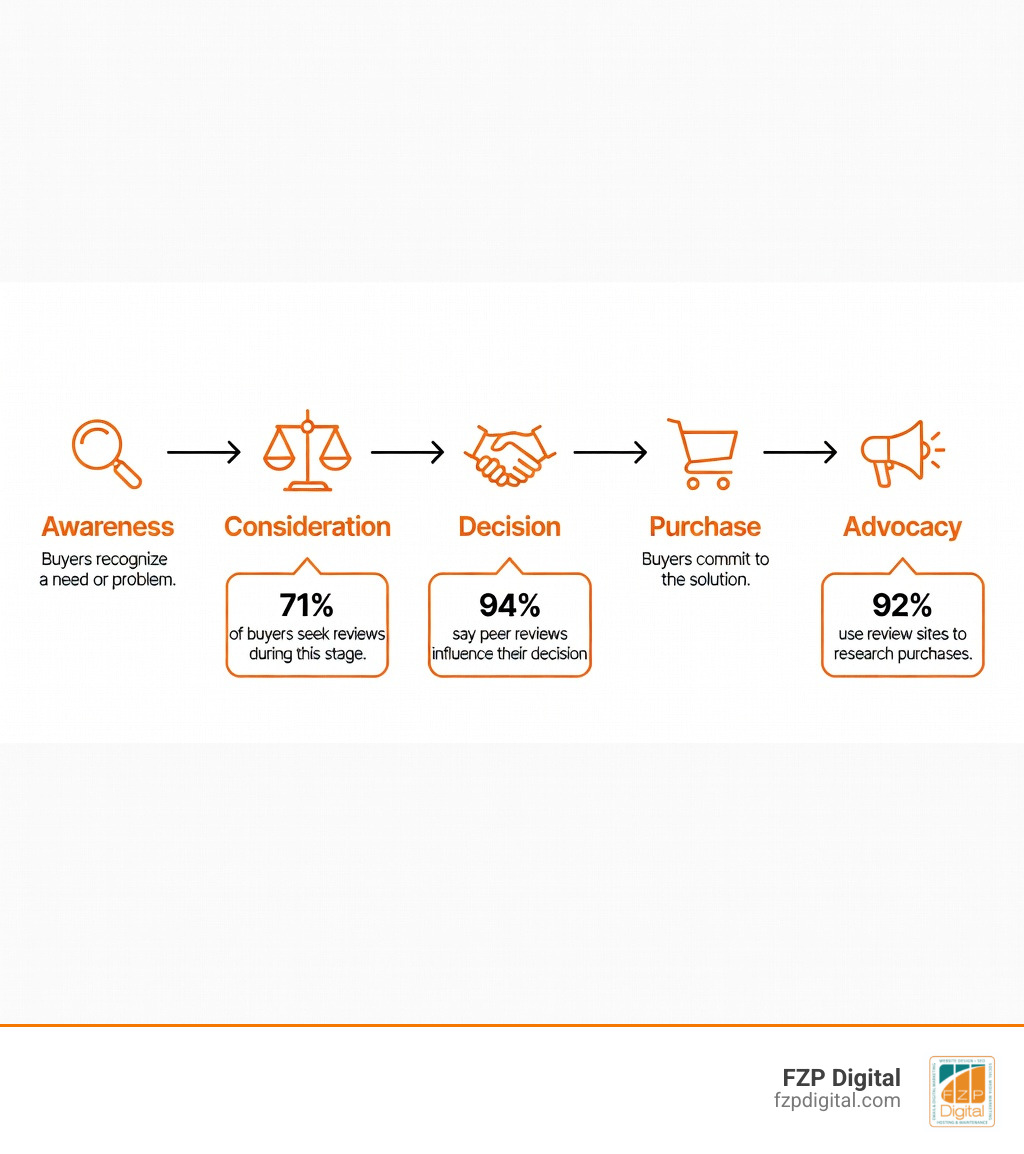
In fact, 94% of B2B buyers say peer reviews are vital when making purchasing decisions. And 92% actively use online review sites to research their options. These aren’t consumers impulse-buying a gadget — these are professionals with real budgets, real accountability, and a lot at stake.
Yet most small and mid-sized B2B companies still treat reviews as an afterthought.
That’s a missed opportunity — and increasingly, it’s a competitive disadvantage.
Whether you’re a CPA firm, a law office, an insurance agency, or a nonprofit in the Philadelphia area, your potential clients are searching for you online right now. What they find — or don’t find — in your reviews could determine whether they call you or your competitor.
I’m Fred Z. Poritsky, founder of FZP Digital, and after years of helping businesses build their digital presence from the ground up, I’ve seen how a smart b2b review management strategy can transform how a company is perceived and how quickly it grows. Let’s break down exactly how to make it work for you.
B2b review management terms you need:
What Exactly is B2B Review Management?
At its heart, b2b review management is about taking the steering wheel of your digital narrative. While B2C (business-to-consumer) reviews are often about quick transactions—like buying a pair of shoes or a pizza—B2B reviews carry the weight of high-ticket items and long-term partnerships.
When we talk about Reputation Experience Management, we’re looking at a strategy that spans months, not minutes. B2B sales cycles typically last between 1 to 6 months. During that time, a prospect isn’t just looking for a “star rating”; they’re looking for proof that you can solve their specific business problems.
Whether you’re looking to improve your Local Business Reputation in Richboro or aiming to dominate the Philadelphia market, you need to understand that your reputation is a financial asset. In fact, Deloitte suggests that more than 25% of a company’s market value is directly tied to its reputation. If you aren’t managing it, you’re leaving your company’s value to chance.
Why B2B feedback differs from consumer reviews
You might be wondering, “Isn’t a review just a review?” Not exactly. In the B2B world, quality beats quantity every single time.
In B2C, a restaurant might need 500 reviews to look popular. In B2B, five deeply detailed reviews from recognizable industry peers can be worth more than a hundred generic “Great service!” comments. Buyers are looking for:
- Author Credibility: Who is leaving the review? Is it a CEO or a Department Head?
- Detailed Use Cases: Does the review explain how the product or service solved a problem?
- Professional Stakes: B2B buyers are often risking their own professional reputation when they recommend a vendor. They need deep reassurance.
Research shows that 92% of B2B buyers use review sites to back up their decisions. They aren’t just looking for the “best” company; they’re performing due diligence to reduce risk.
The Core Pillars of B2B Review Management
To succeed, we need to move past “hoping for the best” and start implementing a structured process. Effective b2b review management rests on three pillars: getting found, getting chosen, and getting better.
First, you need to be where your customers are looking. Second, your reviews need to build enough trust to get you on the shortlist. Finally, you must use the feedback to actually improve your business. If you’re unsure where to start, our guide on How to Manage Online Reputation and Reviews can help you lay the groundwork.
Choosing the right platforms for your industry
You don’t need to be everywhere, but you do need to be in the right places. For B2B companies in Newtown and Philadelphia, these are the heavy hitters:
- G2 & Capterra: The “gold standards” for software and SaaS. G2 alone sees over 5 million visits monthly.
- Google Business Profile: Essential for local SEO. If someone searches “IT services Philadelphia,” your Google reviews are what they’ll see first.
- Trustpilot: A globally recognized label that builds instant credibility. You can Discover Trustpilot for B2B to see how it fits your visibility goals.
- LinkedIn: While not a traditional “review site,” endorsements and recommendations here are the lifeblood of B2B trust.
- Clutch: Specifically designed for agencies and service providers, offering in-depth, verified client interviews.
Generating and Collecting High-Quality Reviews
The biggest challenge most B2B firms face is low review volume. Because you might only have 20 high-value clients instead of 2,000 small customers, every review counts.
Timing is everything. You shouldn’t just ask for a review out of the blue. Ask when the “value” is fresh—right after a successful project launch or when a client hits a major milestone using your service.
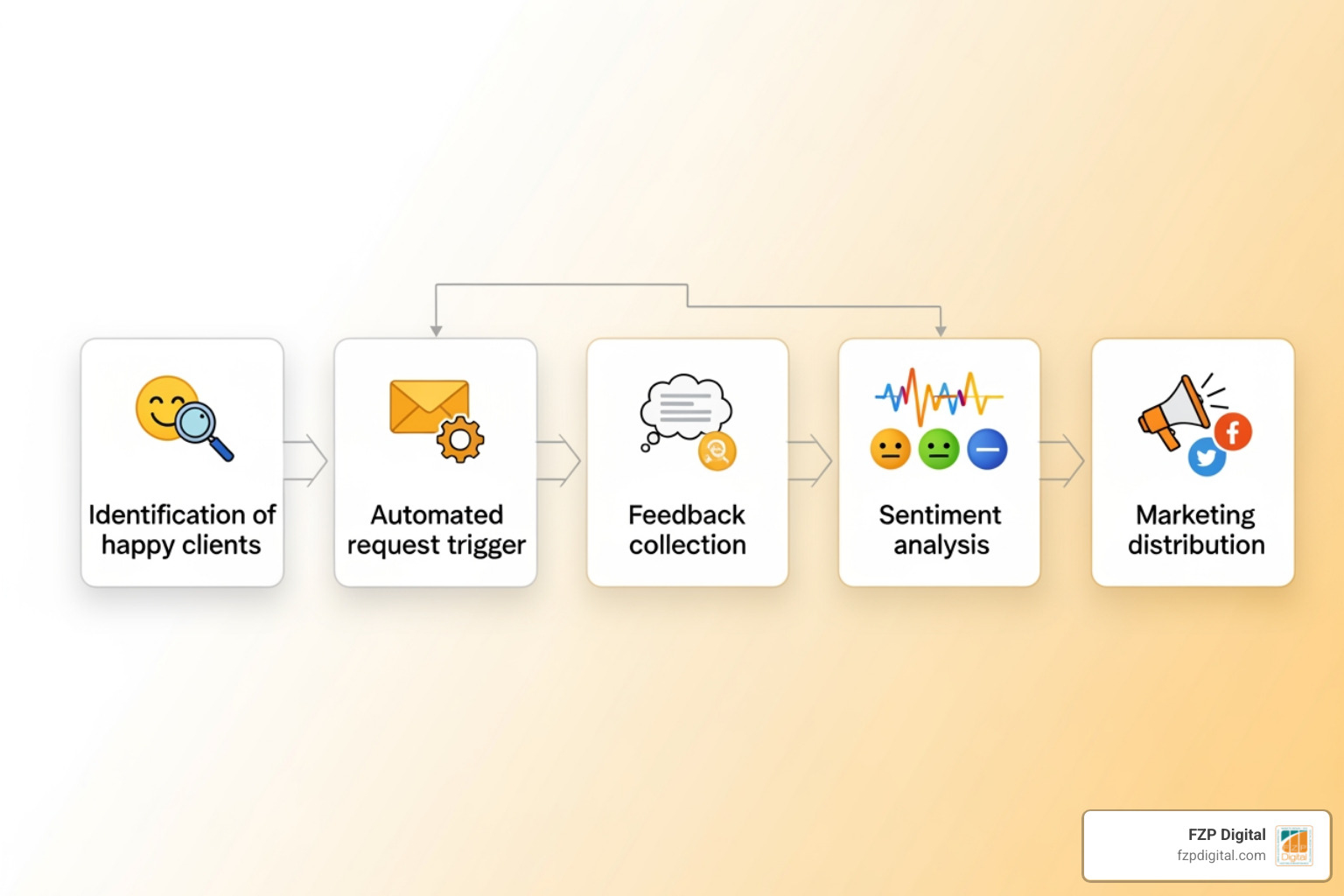
Automation is your best friend here. Some companies have seen an 800% increase in volume simply by implementing automated systems that send requests via email or SMS. At FZP Digital, we always tell our clients: if you don’t ask, you won’t get. You can learn more about how we help Collect Customer Reviews to take the manual labor off your plate.
Mastering the art of the b2b review management request
A generic “Please review us” email usually ends up in the trash. To get a busy executive to spend 10 minutes writing a thoughtful review, you need to make it personal.
| Feature | Manual Collection | Automated Collection |
|---|---|---|
| Effort | High – requires constant follow-up | Low – “set it and forget it” |
| Consistency | Low – often forgotten during busy times | High – every client gets a request |
| Volume | Low – relies on human memory | High – scales with your business |
| Personalization | High – can be very specific | Medium – uses smart templates |
Research from Northwestern University found that displaying five or more reviews increases purchase likelihood by 270%. To get there, try integrating your request into an NPS (Net Promoter Score) survey. If a client gives you a 9 or 10, immediately follow up with a link to your preferred review platform.
Responding to Feedback Like a Pro
Once the reviews start rolling in, your job isn’t done. You have to talk back!
Responding to reviews—both good and bad—shows that there’s a real person behind the brand who cares about customer experience. For positive reviews, a simple “Thank you, we loved working on this project!” goes a long way. But it’s the negative ones that often keep business owners up at night.
Don’t panic. Actually, 72% of buyers value negative reviews because they provide depth and make the overall profile look more credible. A perfect 5.0 rating can actually look “fake” to a savvy B2B buyer. They want to see how you handle a mistake. If you’ve got some stingers on your profile, we have strategies to help you Fix Bad Reviews and regain control.
Turning negative experiences into b2b review management wins
When a negative review hits, speed and empathy are your best tools. About 53% of customers expect a response within a week, but in the high-stakes B2B world, 24-48 hours is better.
- Stay Calm: Never respond while you’re angry.
- Acknowledge and Apologize: Even if you think they’re wrong, apologize for their experience.
- Take it Offline: Provide a direct phone number or email to resolve the issue privately.
- Be Transparent: If you fixed the problem, say so! This shows future prospects that you’re accountable.
Frequently Asked Questions about B2B Reviews
How do I handle fake or malicious reviews?
It happens to the best of us. A competitor or a disgruntled non-client might leave a “one-star” zinger. Most platforms like Google and G2 have flagging tools to report “inappropriate” or “fake” content. Interestingly, 40% of consumers say they’ve seen fake reviews in the last year, so your audience is more skeptical than you think. A professional, factual rebuttal that points out the reviewer isn’t in your client database often does more for your reputation than getting the review deleted.
Which department should own the review process?
In a perfect world, this is a collaboration between Marketing and Customer Success. Marketing knows how to “sell” the brand, but Customer Success knows when the client is happiest. Integrating this into your “RevOps” (Revenue Operations) ensures that review data isn’t just sitting in a silo—it’s being used to detect churn risks and identify brand ambassadors.
Can reviews really help my SEO rankings?
Absolutely! Google loves fresh, user-generated content. Reviews are a major signal for the “Local Pack” (those top 3 map results you see for local searches). By including keywords in your responses—like “We’re glad we could help with your SEO in Philadelphia“—you’re naturally boosting your search visibility. You can see more on how Google reviews act as SEO drivers to get an edge on the competition.
Conclusion
Mastering b2b review management isn’t just about collecting gold stars; it’s about building a sustainable engine for trust and growth. In a digital-first world, your reputation is often the only thing standing between a prospect clicking “Contact Us” or moving on to the next guy.
At FZP Digital, we believe in a collaborative “Develop. Design. Deliver” process. Whether you’re in Richboro, Newtown, or Philadelphia, we’re here to help you navigate the complexities of SEO and reputation management. Fred Z. Poritsky and our entire team specialize in turning these digital challenges into measurable results.
Ready to take the next step? Check out our Reputation Management and Reviews Complete Guide or see What Our Clients Say about working with us. Let’s start building a reputation that works as hard as you do.