
Why Brand Identity Design is Your Business’s Most Strategic Investment
Brand identity design is the strategic process of creating visual and verbal elements that communicate who you are as a company. Here’s what every business owner needs to know:
Quick Definition: Brand identity design encompasses your logo, colors, typography, messaging, and all visual elements that represent your business to the world.
Key Components:
- Logo design – Your brand’s signature mark
- Color palette – Emotional connection with customers
- Typography – Personality and readability
- Voice and tone – How you communicate
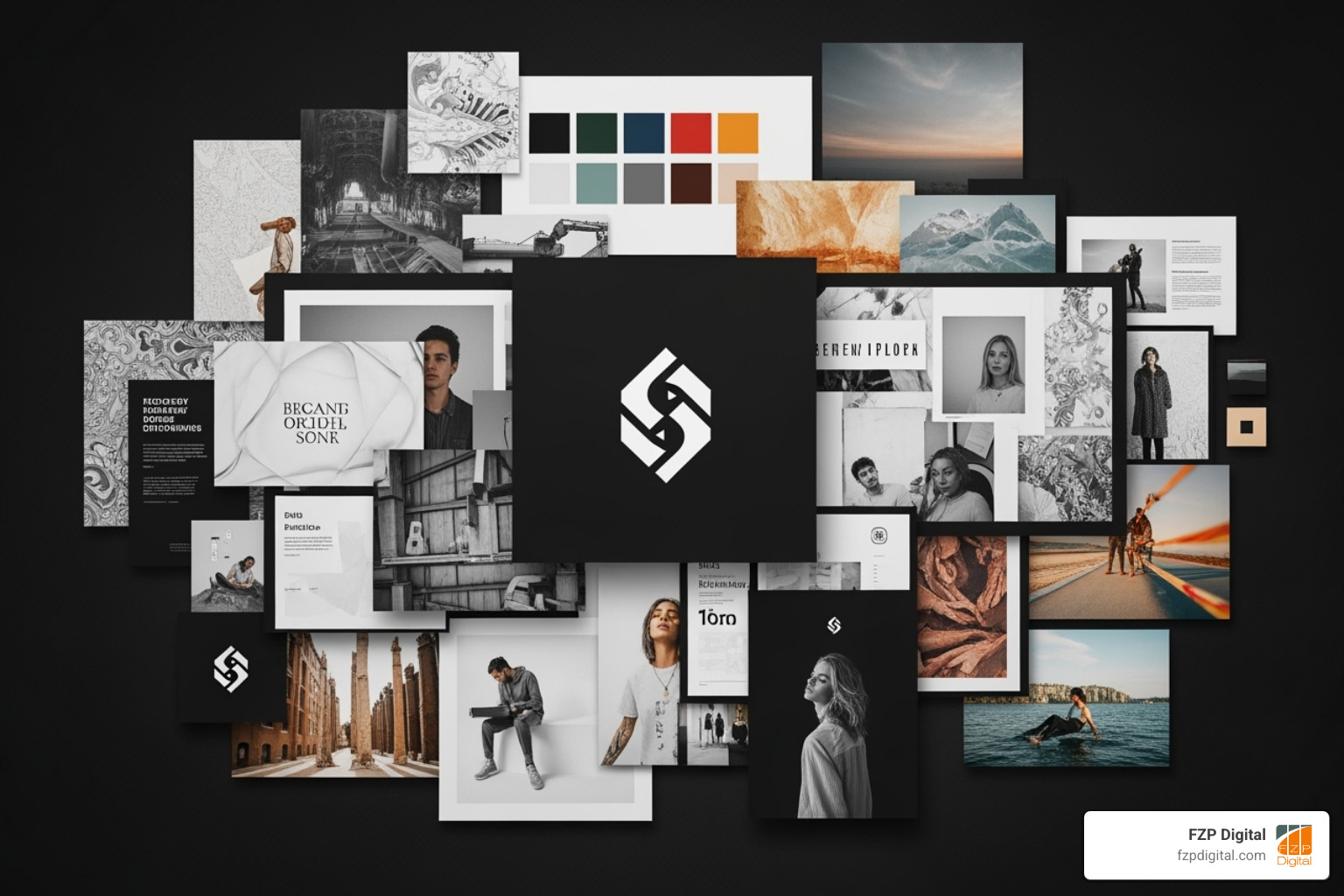
- Visual system – Photography, imagery, and patterns
Why It Matters:
- Presenting your brand consistently across platforms can increase revenue by up to 23%
- Consistently presented brands are 3.5x more likely to enjoy excellent brand visibility
- 59% of consumers prefer buying from brands they recognize
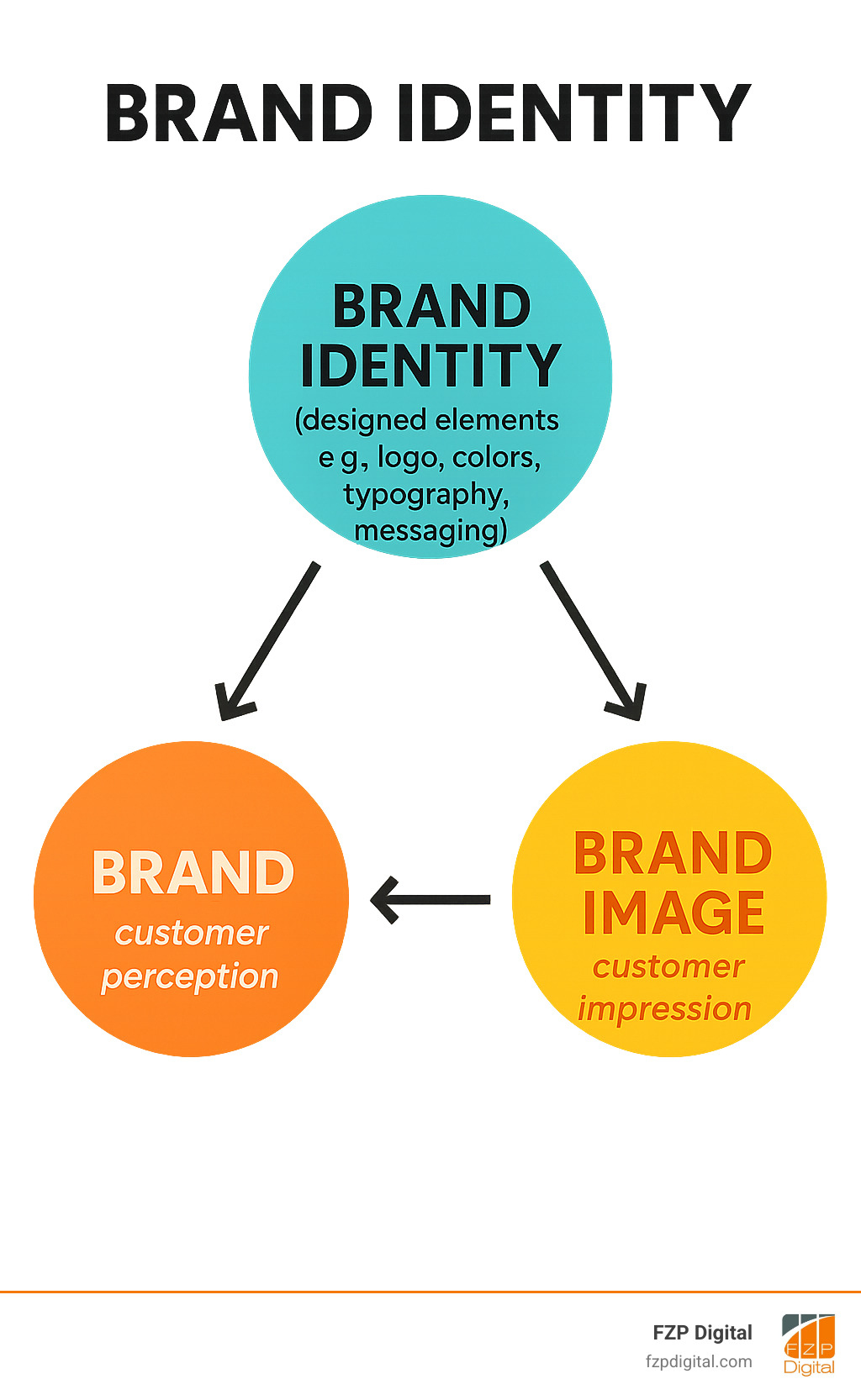
The difference between a brand, brand identity, and brand image is crucial to understand. Your brand is how customers actually perceive you. Your brand identity is how you want to be perceived through deliberate design choices. Your brand image is the impression left in customers’ minds after interacting with your identity.
For small businesses and nonprofits, a strong brand identity isn’t just about looking professional – it’s about building trust, standing out from competitors, and creating emotional connections that drive growth.
I’m Fred Z. Poritsky, and my unique background combining accounting, music, and digital creativity gives me insight into both the business strategy and creative execution needed for effective brand identity design. Through FZP Digital, I help Philadelphia-area businesses develop cohesive brand identities that support their growth goals while expressing their unique “why.”
The Strategic Foundation: Before You Design Anything
The truth about brand identity design is that a pretty logo can’t save a brand that doesn’t know who it is. That’s why we start every project by diving deep into the heart of your business before considering colors or fonts. We explore the soul of your company to find what truly sets you apart.
Your purpose, mission, and vision aren’t just corporate buzzwords; they’re the foundation for everything. Your purpose is your “why”—the problem you solve or the value you bring to the world. Your mission defines what you do to achieve that purpose, while your vision paints a picture of the future you’re creating. This clarity is essential.
Understanding your audience goes beyond basic demographics. We need to know their daily struggles, hopes, and fears. What keeps them up at night? What would make their lives better? This deep understanding of customer personas allows us to craft a brand identity design that connects with real people on an emotional level.
Market research and competitor analysis give us the lay of the land. For those new to this, a beginner’s guide to market research can be helpful. We’re not looking to copy others; we’re studying the landscape to find your unique spot. This research reveals opportunities and helps us understand audience expectations.
Every brand has a personality, intentional or not. Brand archetypes help define it. Is your brand a wise Sage, an adventurous Explorer, or a reliable Caregiver? A clear, consistent personality creates an emotional connection that goes beyond products or services. People buy from brands they like and trust.
Your business goals should drive every design decision. Whether you want to increase brand awareness, build loyalty, or attract talent, a strong brand identity can help—but only if we’re intentional from the start. We’ll set up specific ways to measure success, from brand recall to direct revenue impact.
Your positioning statement and value proposition become your north star. This is your elevator pitch distilled to its essence: who you are, who you serve, and why you’re different. It’s the lens for every creative decision.
During our “Develop” phase at FZP Digital, we get these fundamentals right. With a solid strategic foundation, the logo, colors, and messaging fall into place naturally. That’s when brand identity design becomes truly powerful.
Crafting the Tangible Elements of Your Brand Identity Design
Now we turn your brand’s strategic foundation into something people can see, feel, and connect with. This is where brand identity design transforms from concepts into the visual and verbal elements that represent your business everywhere.
The Logo: Your Brand’s Signature
Your logo is your business’s signature—often the first thing people notice and the last they remember. A great logo works hard in every situation. The best logos are memorable, simple, versatile, and timeless. The world’s most valuable brands according to Kantar often have logos with intentional simplicity.
The type of logo you choose matters, whether it’s a wordmark (like Google), a symbol (like Nike’s swoosh), a monogram, or a combination mark. We test every logo concept rigorously—from tiny favicons to massive billboards—to ensure it looks sharp in color, black and white, and on any background.
Color and Typography: The Voice and Mood
People make up their minds about products within 90 seconds, with up to 90% of that assessment based on color alone. Getting your colors and fonts right is about communicating instantly.
Color is your brand’s emotional language. Color psychology is powerful; blue often conveys trust, while red expresses energy. The specific shade fine-tunes the emotion. We help you select primary and secondary colors that evoke the right feelings and make you stand out.
Accessibility isn’t optional. We ensure your color palette provides enough contrast for everyone by meeting Web Content Accessibility Guidelines (WCAG) standards. You can check your color contrast for accessibility with online tools. This commitment to inclusive design is part of all our work, including our FZP Digital UserWay Web Accessibility Solutions.
Typography conveys personality. The fonts you choose must balance readability with character. We select primary typefaces and harmonious pairings, establishing clear rules for sizes, weights, and spacing to ensure consistency. A good rule is to stick to two font families and prioritize readability.
Building a Complete Visual and Verbal System
A comprehensive brand identity design is a complete system that works seamlessly across all touchpoints.
Your verbal identity is just as important as your visual one. Your brand’s voice is its consistent personality in writing (e.g., authoritative, friendly), while your tone adapts to different situations. We define key messaging pillars and memorable taglines.
Every image tells your story. We establish guidelines for photography, illustration, and iconography to create a cohesive experience. Examples like Google’s Visual Assets Guidelines show how this works in practice.
The details make the difference. We define underlying elements like patterns, grids, and “design tokens” (exact color values, font sizes) to keep everything aligned as your brand grows.
Brand architecture keeps things organized. We determine if you need a masterbrand approach (like Apple) or distinct sub-brands, a decision that affects naming and visual representation. This design phase is where strategy becomes reality.
Implementation and Governance: Ensuring Consistency at Scale
A great brand identity design is only effective when it’s used consistently. This phase is about building the guardrails that keep your brand on track as you grow.
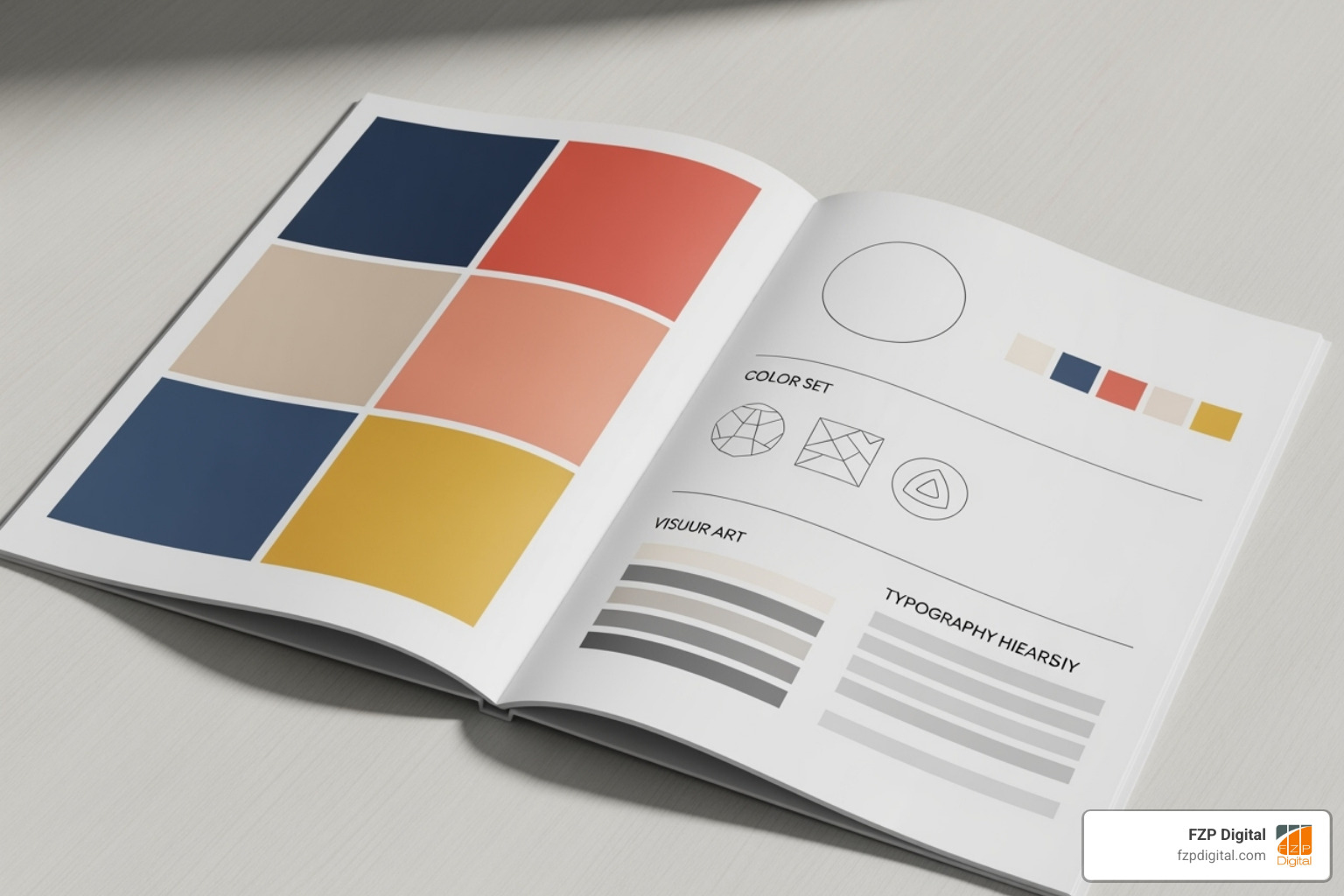
Creating and Using Your Brand Guidelines
A comprehensive brand identity design project provides a toolkit to empower your team. This includes:
- Core Assets: Your logo in all necessary formats (SVG, PNG, AI), plus exact color values (CMYK, RGB, Hex) and approved typefaces.
- Templates: Customizable templates for presentations, social media, business cards, and more to ensure consistency and save time.
- Brand Book: Your north star—a detailed guide answering every “how should this look?” question. Great guidelines, like the Montgomery County Identity Standards and Style Guide, explain the reasoning and show what not to do. A useful brand book includes practical examples for logo usage, color pairings, and typography.
We ensure your brand identity design adapts beautifully to every context, from your responsive WordPress website to social media profiles and print materials. We also provide guidelines for modern elements like motion, sound, and micro-interactions that make a brand memorable.
Managing Your Brand for the Long Term
The right infrastructure makes consistency effortless. A Digital Asset Management (DAM) system or brand portal serves as a central library for current logos, photos, and templates. This ensures everyone—from your designer in Philadelphia to a consultant in Bucks County—works from the same source of truth.
Governance balances control with empowerment. Clear guidelines, available assets, and proper training make it easy for your team to do the right thing. We provide training for internal teams and resources for external partners, turning them into brand advocates.
Legal protection and compliance safeguard your investment. This includes trademark clearance to protect your logo and adhering to accessibility standards. As we explore in our guide on Learn How Website Accessibility Can Help Grow Your Brand, inclusive design leads to better experiences for all users.
This “Deliver” phase ensures your brand identity works hard for your business every day, building recognition and trust.
Launching, Measuring, and Evolving Your Identity
The journey of your brand identity design doesn’t end with delivery. This final stage is about strategically launching your new identity, measuring its impact, and allowing it to grow and adapt.

A Practical Guide to Your Brand Identity Design Project
How should a business choose a branding partner? Choosing the right partner is critical. Look for a team that demonstrates exceptional design skills and a deep understanding of strategy and business outcomes.
- Evaluation Criteria: Assess their portfolio, their process (do they involve you in strategy?), client testimonials, and their ability to articulate how their work drives business results.
- RFP Questions: Ask about their strategic approach, experience in your industry, how they measure success, and post-launch support.
- Case Studies: Review detailed case studies to understand their problem-solving abilities and the tangible impact of their work, such as the MLS Players Association’s rebrand.
What is a realistic budget, scope, and timeline? The cost of brand identity design varies from a few thousand dollars for a startup package to six figures for a comprehensive corporate rebrand. The scope (e.g., logo only vs. full system) and timeline dictate the budget. Work can be phased, starting with a Minimum Viable Product (MVP) identity and building out the full system later.
What common pitfalls should be avoided? Avoid chasing trends in favor of a timeless identity. Simplicity is often more memorable than over-complexity. Ensure good color contrast for accessibility and readability. Finally, a lack of governance after launch leads to inconsistency. Design-driven companies have historically outperformed the S&P 500, showing the long-term value of strategic design.
Rolling Out and Tracking Your New Identity
How will we test and validate concepts? Before a full rollout, we validate concepts with surveys, customer interviews, A/B testing, and usability testing. Pre- and post-launch tracking helps measure the impact.
What does an identity rollout plan look like? A successful rollout requires a detailed change-management plan, including strategic phasing (internal, then external), clear communications explaining the “why,” and a systematic process for migrating all brand assets.
Which brand KPIs will we track? To understand ROI, we track KPIs like brand awareness, recall, customer preference, Net Promoter Score (NPS), and ultimately, revenue impact.
How should a brand identity evolve? A brand identity is not static. Market shifts or business growth may require a brand refresh. We help establish criteria for when a refresh is needed and a governance model for managing changes, ensuring your brand stays relevant.
Frequently Asked Questions about Brand Identity Design
When I talk with business owners about brand identity design, I hear the same questions over and over. Here are the answers to the most common ones, based on my experience helping Philadelphia and Bucks County businesses build stronger brands.
What is the difference between a brand and a brand identity?
This is a common point of confusion. Simply put: your brand is your reputation—what people think and feel about your company. Your brand identity is the collection of tangible elements (logo, colors, messaging) you create to influence that perception.
In short: brand identity is what you say you are; your brand is what customers believe you are.
What are the most critical elements of a brand identity?
Four elements form the foundation of any strong brand identity design:
- Logo: Your memorable and versatile signature.
- Color Palette: Creates an instant emotional connection.
- Typography: Conveys personality while ensuring readability.
- Voice and Tone: Ensures you sound like the same company everywhere.
When these are in harmony, you create a cohesive experience that builds trust and recognition.
How much does a professional brand identity design cost?
The honest answer is “it depends,” as the cost is driven by the scope of the project.
- Basic Package (Startups): A foundational logo, color palette, and typography selection can range from $3,000 to $15,000.
- Comprehensive System (Growing Businesses): A full strategic and visual system with detailed guidelines often falls between $15,000 and $50,000.
- Large-Scale Rebrand (Corporations): These complex projects can easily reach six figures or more.
A simple logo refresh is a smaller investment than a complete brand identity design with strategy and implementation support. However, since a consistent brand can increase revenue by up to 23%, it’s an investment that pays for itself.
Conclusion
Creating a strong brand identity design is like building a bridge between who you are as a business and how your customers see you. Throughout this guide, we’ve walked through the essential journey together – from the strategic “Develop” phase where we dig deep into your brand’s purpose and personality, to the creative “Design” phase where we bring those ideas to life visually, and finally to the practical “Deliver” phase where we make sure everything works consistently across every touchpoint.
This isn’t just about making things look pretty. A well-crafted brand identity design is one of the smartest investments you can make for your business. When you present your brand consistently, you’re 3.5 times more likely to enjoy excellent brand visibility. Even more importantly, 86% of consumers say authenticity matters when they’re deciding which brands to support. Your brand identity becomes your way of sharing your authentic story with the world.
The numbers speak for themselves, but the real magic happens in those moments when a customer instantly recognizes your business, feels connected to what you stand for, and chooses you over the competition. That’s the power of cohesive branding at work.
For businesses throughout Philadelphia and Bucks County, our “Develop . Design . Deliver” approach at FZP Digital ensures your brand identity design does more than just look professional. It actively works to achieve your business goals, strengthen your digital presence, and create genuine connections with the people who matter most to your success.
Your brand is already telling a story – the question is whether you’re intentionally crafting that narrative or leaving it to chance. A strategic brand identity puts you firmly in the driver’s seat.
Explore our branding services and see how we can help build your brand.