

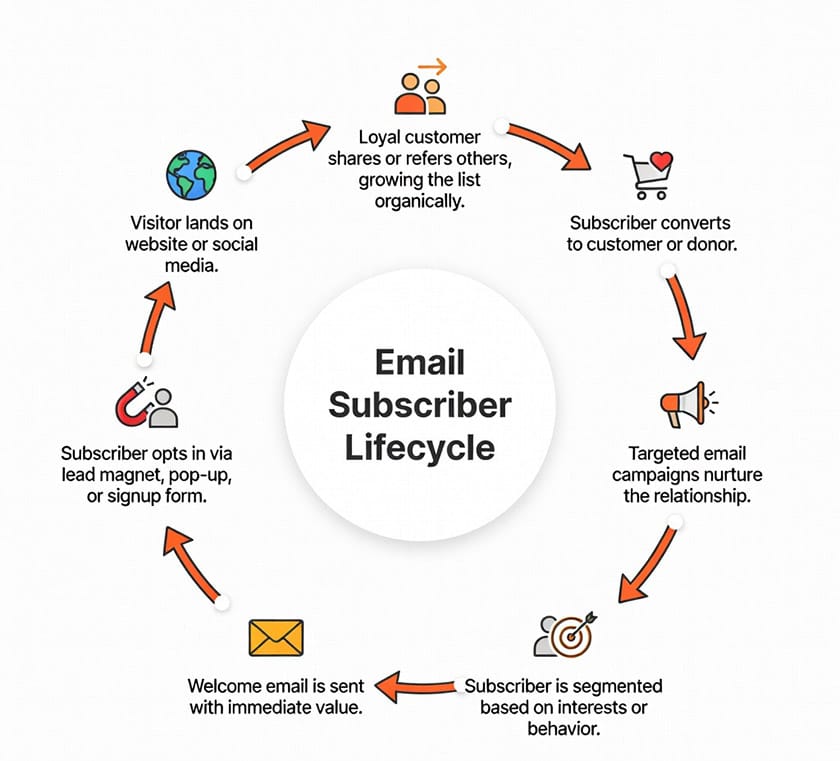
How to Build an Email List from Scratch
Why Email List Building Strategies Are the Foundation of Digital Marketing Success
Email list building strategies are the most reliable way to grow a direct, owned audience for your business — one that no algorithm change or social media platform can take away from you.
Here’s a quick overview of the most effective approaches:
| Strategy | What It Does |
|---|---|
| Lead magnets (ebooks, checklists, templates) | Gives visitors a reason to subscribe |
| Exit-intent pop-ups | Captures visitors before they leave your site |
| Dedicated landing pages | Focuses visitors entirely on signing up |
| Strategic CTA placement | Converts readers into subscribers naturally |
| Social media signups | Drives followers to your email list |
| Referral programs | Turns subscribers into recruiters |
| QR codes and offline events | Bridges in-person and digital list growth |
| Segmentation and double opt-in | Keeps your list healthy and engaged |
Your email list is arguably your most valuable marketing asset. Unlike your social media following, you own it completely.
But here’s the thing — building that list doesn’t happen by accident. It takes the right mix of tools, tactics, and a clear strategy. And if you’re a small business owner or nonprofit leader who’s been too busy running your organization to think about any of this, you’re not alone.
The stakes are real. Email databases naturally shrink by roughly 22.5% every year as people change jobs, abandon old addresses, or simply unsubscribe. That means if you’re not actively growing your list, you’re actually losing ground.
The good news? There are proven, practical strategies that work — even if you’re starting from zero.
I’m Fred Z. Poritsky, founder of FZP Digital, and my background in nonprofit financial management combined with years of hands-on digital marketing work has given me a unique, results-focused perspective on email list building strategies that actually move the needle for small businesses and nonprofits. In this guide, I’ll walk you through everything you need to know to build, grow, and maintain an email list that drives real results for your business.
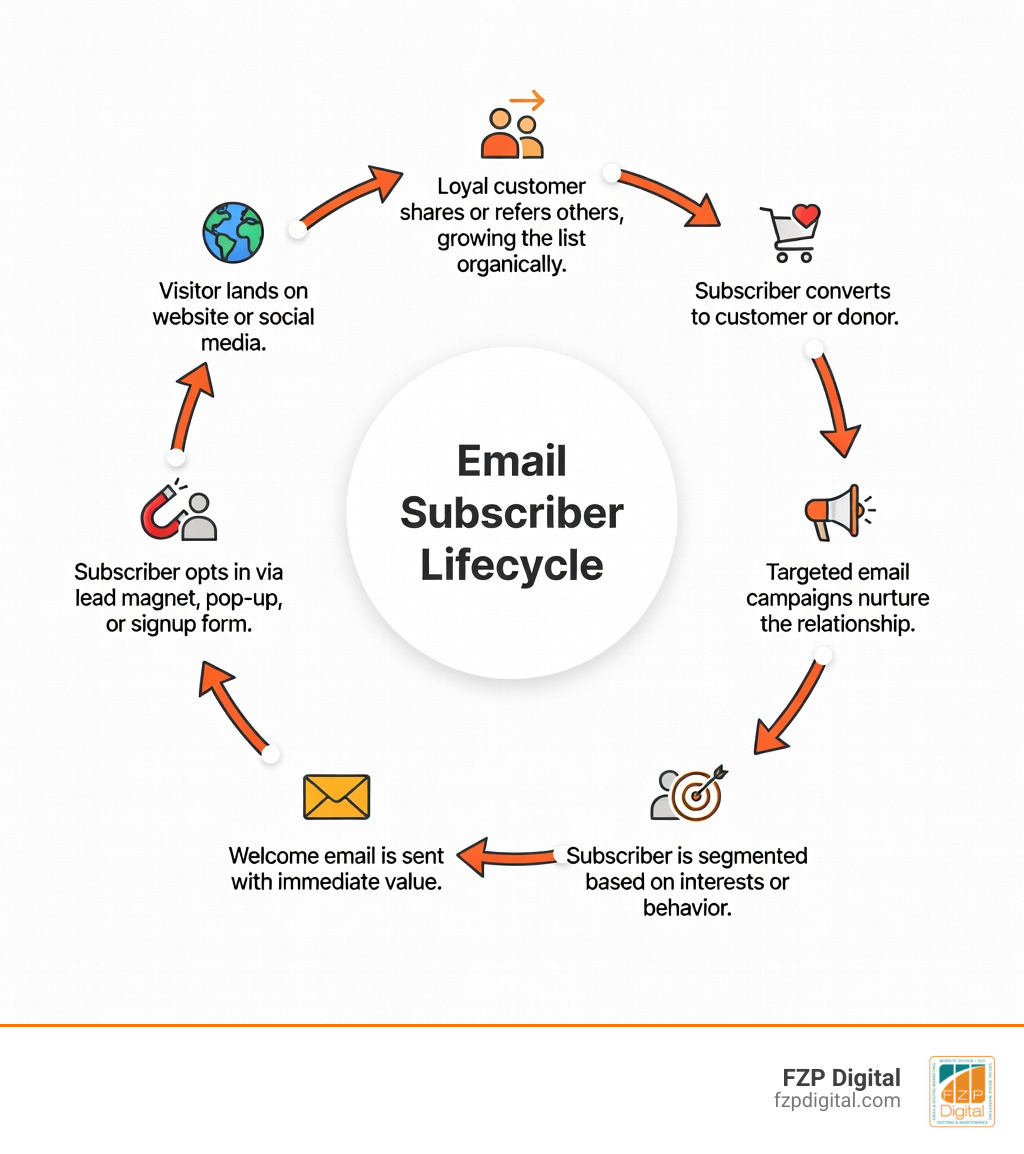
Why Your Business Needs a High-Quality Email List
Have you ever felt like you’re shouting into a void on social media? You post a great update, but only a tiny fraction of your followers actually see it because an algorithm decided your content wasn’t “engaging” enough that day. That’s the danger of “rented” space. When you build your business on Facebook, Instagram, or X, you’re playing in someone else’s backyard. They make the rules, and they can change them whenever they want.
An email list is different. It’s an “owned” audience. When you have a list of people who have explicitly given you permission to contact them, you have a direct line to their inbox. Whether you’re a local shop in Newtown or a nonprofit in Philadelphia, this direct connection is pure gold.
The Reality of Database Decay
We often talk to business owners who are proud of a list they built five years ago. But here’s the cold, hard truth: email lists shrink by roughly 22.5% yearly. This is what we call database decay. People move on, they change jobs (and email addresses), or they simply lose interest.
If you aren’t constantly feeding your list with new, high-quality subscribers, your marketing reach is effectively evaporating. This is why having a consistent set of email list building strategies isn’t just a “nice-to-have”—it’s a survival requirement for your digital presence.
What Makes a List “High-Quality”?
A big list isn’t always a good list. We’ve seen businesses with 10,000 subscribers who get fewer clicks than businesses with 500. Why? Because quality beats quantity every time. A high-quality list has these traits:
- People asked to be there: They gave explicit consent. No “bought” lists (we’ll get to why that’s a disaster later!).
- The emails are valid: You’re using tools to verify that the addresses actually exist.
- The audience is engaged: These are people who actually open your emails because they find your content valuable.
- It’s segmentable: You know enough about them to send a relevant message. You wouldn’t send a “New Mom” discount to a bachelor, right?
At FZP Digital, we help our clients understand that a great list is a growing list. If you’re looking to refine your overall approach, you can explore our digital-marketing-services to see how we integrate list growth into a broader SEO and web design strategy.
| Feature | Owned Audience (Email) | Rented Audience (Social Media) |
|---|---|---|
| Control | You decide when and what to send. | The algorithm decides who sees your post. |
| Directness | Lands straight in the inbox. | Competes with thousands of other posts. |
| Longevity | You keep the data as long as you want. | You lose access if the platform disappears. |
| Customization | Deep personalization is easy. | Very limited targeting for organic posts. |
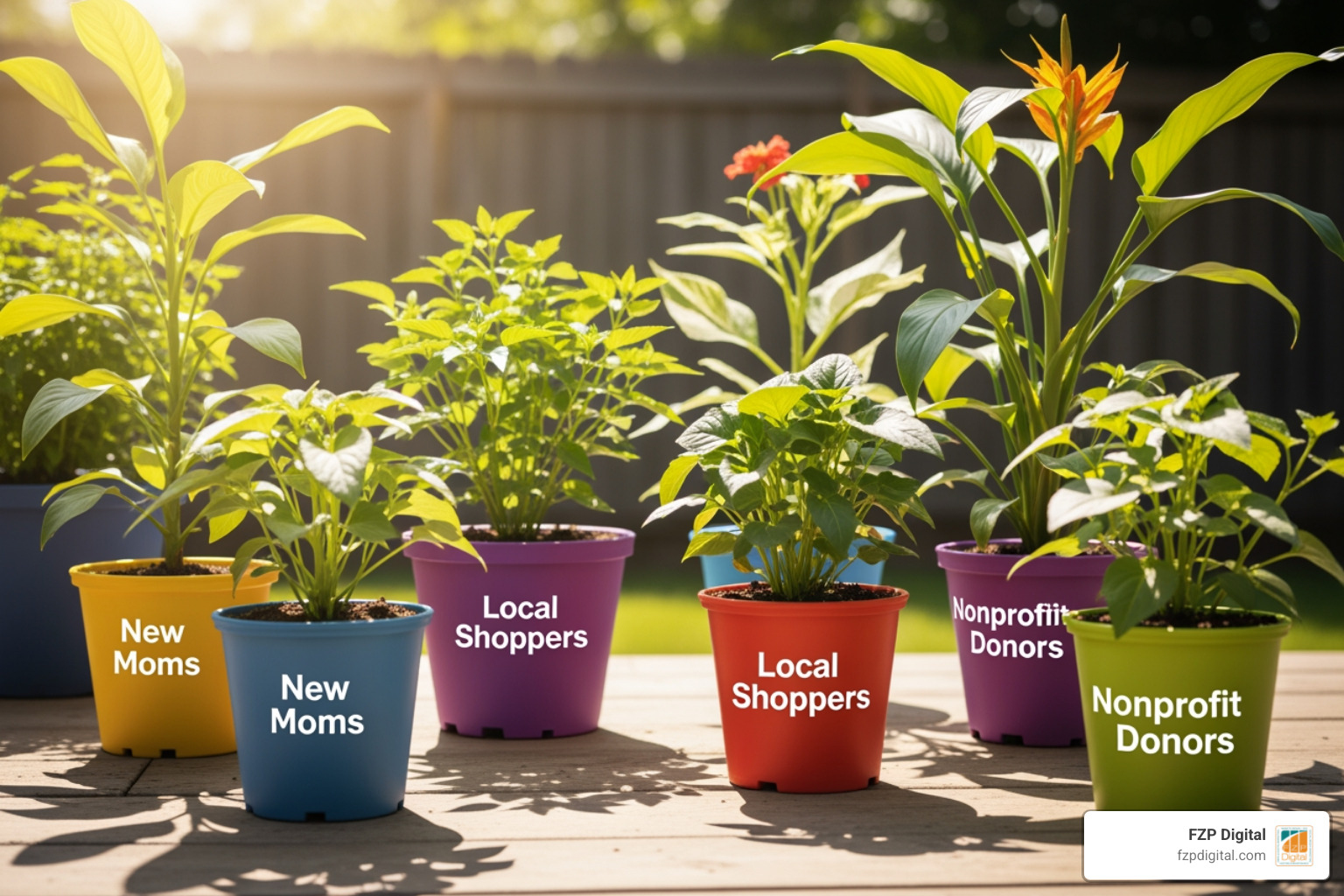
Proven Email List Building Strategies for Your Website
Your website is your hardest-working salesperson. If it’s not capturing emails, it’s leaving money on the table. Think of your website visitors as people walking into your store in Newtown. If they leave without you getting their contact info, you might never see them again.
The Power of the Lead Magnet
The most effective email list building strategies usually involve a “value exchange.” You aren’t just asking for an email; you’re trading something valuable for it. This is called a lead magnet.
What should you offer? It needs to solve one urgent problem for your visitor.
- For B2B: A whitepaper, a checklist, or a “How-To” guide.
- For E-commerce: A 10% discount code or free shipping on the first order.
- For Nonprofits: An impact report or a “Getting Started” guide for volunteers.
We’ve found that simple often wins. A 50-page eBook might sound impressive, but a one-page “Cheat Sheet” that someone can use right now often gets more signups. It’s all about the-power-of-persuasion-in-marketing—giving people a reason to say “yes” immediately.
Exit-Intent Pop-Ups: The “Wait, Before You Go!”
Pop-ups can be annoying if they’re done wrong, but “exit-intent” pop-ups are a game-changer. These only appear when a user’s mouse moves toward the “close” button or the address bar. It’s your last chance to make an impression. Studies show that e-commerce companies can salvage up to 35% of otherwise lost visitors just by using an exit-intent offer.
Landing Pages: Your Secret Weapon
Don’t just send people to your homepage and hope they find the signup form. Create dedicated landing pages. A landing page has one goal: getting that email address.
Did you know that companies see a 55% increase in leads when they go from 10 to 15 landing pages? By creating specific pages for specific topics, you make the offer feel much more relevant to the visitor. If they searched for “WordPress help in Philadelphia,” and they land on a page specifically offering a “WordPress Security Checklist,” they are much more likely to subscribe.
The Small Tweaks That Make a Big Difference
Sometimes, it’s not the offer that’s the problem; it’s the wording. A famous case study showed that replacing a cart icon with the simple text “Add to Cart” increased cart adds by almost 49%. The same applies to your signup buttons. Instead of “Submit,” try “Get My Guide” or “Join the Community.”
Optimizing Your Website with Email List Building Strategies
Once you have your offers ready, you need to place them where people will actually see them. But be careful—you don’t want your site to look like a digital equivalent of a cluttered junk drawer.
1. Strategic CTA Placement Your Call to Action (CTA) should live on an “island”—meaning it should have plenty of white space around it so it stands out. Common spots include:
- The Header/Navigation Bar: A “Join Now” button that stays visible as they scroll.
- The Sidebar: Great for blog posts, but make sure it doesn’t get buried on mobile.
- The Footer: A “safety net” for people who have read your entire page.
2. Personalized CTAs Personalization is king. Research shows that personalized CTAs convert 202% better than generic ones. If someone is reading a blog post about “Local SEO for Bucks County Businesses,” your CTA should offer a “Bucks County SEO Audit,” not a generic “Sign up for our newsletter.” This level of relevance is a core part of a winning content-seo-strategy.
3. Mobile Optimization In Newtown and Richboro, people are checking your site on their phones while waiting for coffee. If your signup pop-up takes up the whole screen and they can’t find the “X” to close it, they’ll leave. Ensure your forms are easy to type into on a small screen and that buttons are large enough for thumbs.
4. A/B Testing Don’t guess—test! Try two different headlines for your signup form. Maybe “Get 10% Off” works better than “Join Our VIP Club.” Small changes in language, like changing “Request a demo” to “Watch a demo,” have been shown to increase conversions by 139%. We love testing these variables because the data never lies.
Driving Growth Through Social Media and Community Engagement
While you don’t want to rely only on social media, it is a fantastic “top-of-funnel” tool to drive people to your email list. Think of social media as the party where you meet people, and your email list as the private conversation afterward.
Reddit: The Hidden Gem
Many marketers avoid Reddit because it can be a bit “wild,” but it’s a goldmine for referral traffic. If you provide genuine value in subreddits related to your niche (like r/Philadelphia for local businesses or r/DigitalMarketing for pros), you can naturally mention your newsletter or lead magnet. The key is to be helpful first and promotional second.
Instagram and the “Link in Bio”
Since you can’t put clickable links in Instagram captions (unless you’re running ads), your bio link is your most precious real estate. Use a tool that allows you to link to a dedicated signup landing page. You can even use Instagram Stories with the “Link” sticker to drive impulse subscriptions when you share something valuable.
If you’re wondering how to balance all these platforms, our digital-marketing-agency-small-business-guide offers a roadmap for local businesses trying to make sense of the noise.
Leveraging Social Platforms for Email List Building Strategies
Social media isn’t just for broadcasting; it’s for building a community that wants to hear more from you.
1. Referral Programs One of the fastest ways to grow is to let your current subscribers do the work for you. Referral programs (like the one used by The Hustle, which netted over 300,000 subscribers in a few months) reward people for inviting their friends. If a subscriber in Richboro refers three friends, maybe they get an exclusive guide or a small discount.
2. Value-First Commenting Don’t just post on your own page. Go where your audience hangs out. Reply to tweets or LinkedIn posts with helpful insights. We’ve seen creators grow lists by hundreds just by being the most helpful person in the comments section of a high-traffic post.
3. Facebook Business Buttons If you have a Facebook page for your Philadelphia business, make sure the main CTA button is set to “Sign Up” and links directly to your email landing page. It’s a simple fix that many people overlook.
4. Viral Giveaways Everyone loves free stuff. Running a contest where an email address is the entry fee can explode your list size quickly. Just be careful—make sure the prize is something only your ideal customer would want. If you give away an iPad, you’ll get everyone. If you give away a “Free Digital Audit for Newtown Businesses,” you’ll get the right people. This aligns perfectly with the 10-actionable-digital-marketing-trends-for-2025.
Measuring Success and Maintaining List Health
Building the list is only half the battle. You also have to keep it healthy. A “dirty” list full of old, inactive emails will hurt your deliverability. If Gmail and Yahoo see that people aren’t opening your emails, they’ll start sending your messages straight to the spam folder.
Key Metrics to Track
To know if your email list building strategies are actually working, you need to watch these numbers:
- Conversion Rate: What percentage of website visitors actually sign up? (Aim for 2-5% as a baseline).
- Bounce Rate: Are your emails actually reaching people? A high bounce rate means your list is getting “stale.”
- Unsubscribe Rate: It’s normal for people to leave, but if it spikes, your content might not be matching what you promised.
- Click-Through Rate (CTR): This tells you if your subscribers are actually interested in what you’re sending.
The Importance of List Hygiene
You should clean your list at least once or twice a year. This means removing “zombie” subscribers—people who haven’t opened an email in 6 months or more. It feels painful to delete contacts, but it actually helps you. A smaller, more engaged list has better deliverability and higher ROI.
We often discuss these technical aspects of list health in our category/digital-marketing blog section. It’s the “behind-the-scenes” work that ensures your creative efforts actually pay off.
Segmentation: The Secret to Engagement
Stop sending the same email to everyone. Use “zero-party data” (info people give you willingly) to segment your list. If you’re a home services company in Bucks County, you might segment by:
- Service Interest: (Landscaping vs. Hardscaping)
- Location: (Newtown vs. Philadelphia)
- Customer Status: (New Lead vs. Past Customer)
By sending targeted content to these groups, you’ll see much higher engagement and much lower unsubscribe rates.
Frequently Asked Questions about List Building
Why should I never buy an email list?
Buying a list is like trying to make friends by shouting at strangers on the street. It’s a “minefield” for several reasons. First, it’s often illegal under GDPR and other privacy laws. Second, those people didn’t ask to hear from you, so they’ll likely mark you as spam. If enough people do that, your domain could get blocklisted, and even your “good” subscribers won’t get your emails anymore. Plus, bought lists are usually full of “dead” emails that will tank your bounce rate.
How often should I clean my email list?
We recommend a deep clean every 6 to 12 months. However, you should be monitoring your bounce rates after every single send. If you see a “hard bounce,” remove that address immediately. Most modern email tools do this automatically, but it’s good to keep an eye on it. If someone hasn’t engaged with your emails in 180 days, try a re-engagement campaign (“We miss you!”), and if they still don’t open, it’s time to say goodbye.
What is the best lead magnet for beginners?
The best lead magnet is a Checklist or a Template. Why? Because they provide “instant gratification.” People are busy. They might not have time to read a 20-page guide, but they definitely have time to download a “10-Point Checklist for a Perfect Garden” or a “Simple Budget Template.” It’s low-friction and high-value.
Conclusion
Building an email list from scratch might feel like a daunting task, especially when you’re already juggling a million other things for your business or nonprofit. But remember, every giant list started with a single subscriber. By focusing on providing real value and using the email list building strategies we’ve discussed, you’re building a foundation for long-term, sustainable growth.
Whether it’s optimizing your website for conversions, leveraging the power of social media, or keeping your list clean and segmented, every step you take brings you closer to a more engaged and loyal audience.
At FZP Digital, we live and breathe this stuff. We love helping our neighbors in Philadelphia, Richboro, and Newtown navigate the complexities of digital marketing. Our “Develop . Design . Deliver” process is all about taking these complex challenges and turning them into clear, actionable results for you.
If you’re ready to stop shouting into the social media void and start building an audience you actually own, we’d love to help. From premium responsive WordPress design to deep SEO strategy, we’re here to be your partner in growth.
Learn more about our digital marketing services and let’s start building your list today!