


Content SEO strategy: 3 Winning Steps
Your Roadmap to SEO Success

Content SEO strategy is your systematic approach to creating, optimizing, and managing content that ranks well in search engines while serving your audience’s needs. Here’s what an effective content strategy includes:
Essential Components:
- Audience research – Understanding who you’re writing for
- Keyword research – Finding what your audience searches for
- Content planning – Organizing topics around user intent
- Quality creation – Developing helpful, comprehensive content
- Optimization – Fine-tuning for search engines and readability
- Performance tracking – Measuring what works and what doesn’t
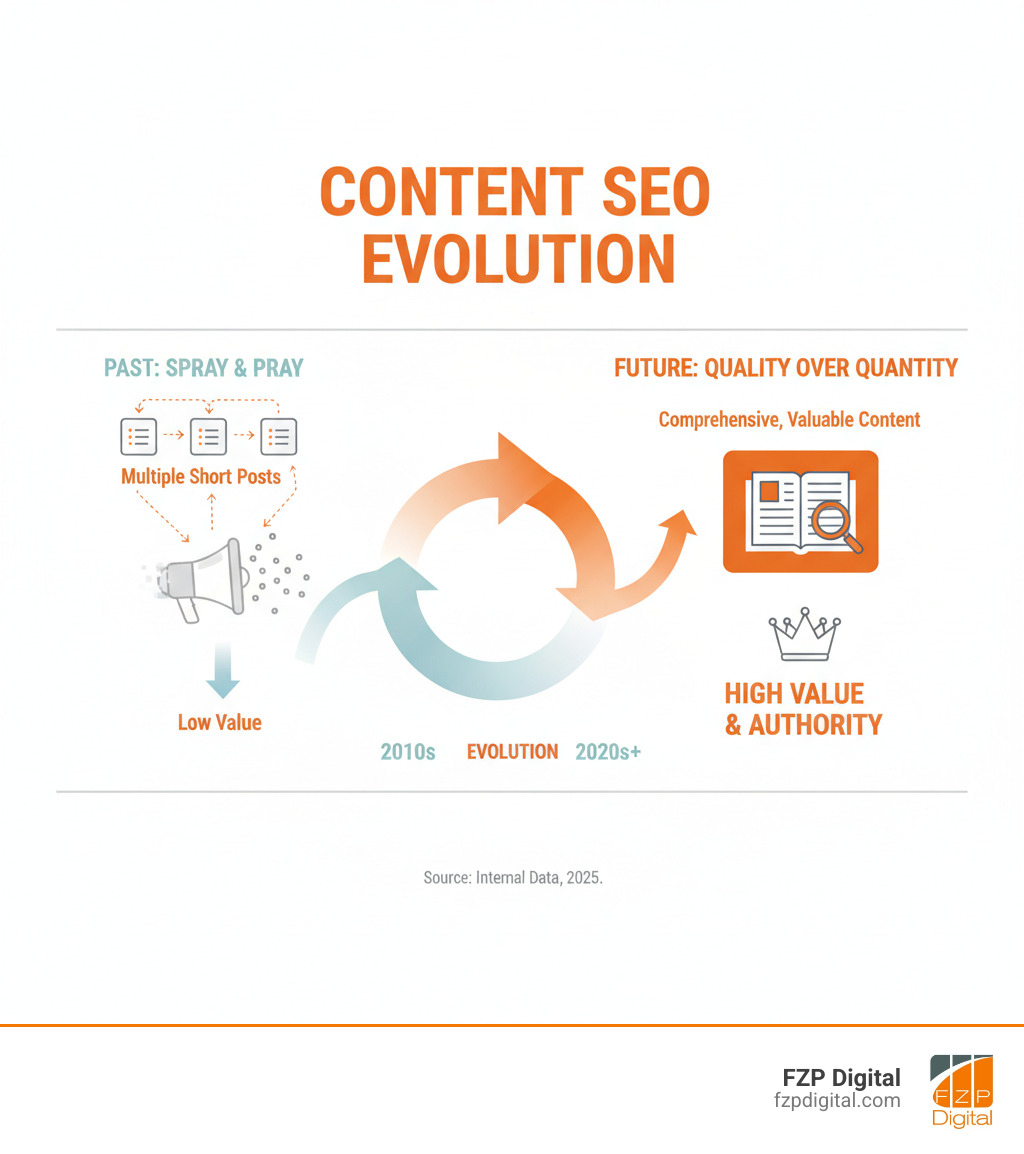
The digital landscape has dramatically shifted from the early “spray and pray” approach of publishing three to five short blog posts weekly. Today’s algorithms and audiences favor quality over quantity – a single outstanding piece of content per month often outperforms multiple mediocre posts.
With Google driving nearly 93% of website traffic, having a solid content strategy isn’t optional anymore. It’s your lifeline to being finded online. Yet many business owners feel like they’re throwing content at the wall, hoping something sticks.
The good news? You don’t need to start from scratch. Research shows that updating existing content often delivers better SEO results than creating new content, especially when you have limited resources. Your current content likely has some traction – we just need to build on it strategically.
I’m Fred Z. Poritsky, and I’ve helped countless Philadelphia-area businesses transform their digital presence through strategic content SEO approaches. After transitioning from nonprofit financial management to digital marketing, I’ve finded that a well-planned Content SEO strategy combines the analytical precision of accounting with the creative flow of music – both skills that inform my approach to helping businesses grow online.
First Things First: What’s a Content SEO Strategy and Why Do You Need One?
Think of your website like a fantastic coffee shop. If people can’t find you, you’ll have empty tables. A Content SEO strategy is your map, guiding people to your door and giving them exactly what they came for once they arrive.

A Content SEO strategy is your plan for creating and optimizing content that serves your audience and your business goals. It connects what people search for with what you offer, turning visitors into loyal customers. Why does this matter? A whopping 93% of online experiences start with a search engine. If you’re not showing up, you’re invisible. The good news is that businesses focusing on organic search often see it become their most profitable channel. In fact, companies that blog regularly see a 67% increase in monthly leads compared to those that don’t.
The evolution from the old “keyword stuffing” days to today’s approach is like the difference between shouting random words on a street corner versus having a meaningful conversation with someone who genuinely needs your help. Google’s algorithms have become incredibly sophisticated at recognizing quality over quantity. They want to see that you’re a credible expert who provides comprehensive, helpful answers to real questions.
This shift means we’re no longer just optimizing for keywords – we’re optimizing for entire topics and user intent. When you align your content strategy with your business goals and truly understand what your audience needs, something magical happens. You start building trust with both search engines and real people. You begin generating leads from folks who are genuinely interested in what you offer, not just random traffic that bounces away immediately.
Want to see how this fits into a broader digital marketing approach? Check out our Digital Marketing Services to explore the full picture.
The “Update First” Mindset
Here’s a game-changing insight: updating existing content is often more powerful than creating brand new content. Think of it as renovating a house with good bones instead of building from scratch. Your existing content might already have some authority with search engines, even if it’s not a top performer yet. By improving what you have, you can get faster results while saving valuable resources like time and money.
This is especially smart if you’re working with a limited budget. Instead of spreading yourself thin, you can focus on making your existing content shine.
Of course, creating new content is still important. You’ll want to create fresh pieces for shifting trends, new campaigns, or to fill gaps your audience needs addressed. The key is to be strategic about when to update and when to create.
Hallmarks of Content That Google (and People) Love
So, what does amazing content look like? It’s all about serving your readers while meeting search engine quality standards. The best content:
- Solves a real problem for your audience, making them feel they’ve found the perfect answer.
- Provides comprehensive answers. The days of thin, 300-word articles are over.
- Is easy to read, using short paragraphs, clear headings, and a conversational tone.
- Involves credible experts. Google’s E-E-A-T guidelines (Experience, Expertise, Authoritativeness, and Trustworthiness) are crucial for ranking.
- Includes helpful links, both internally to your own content and externally to authoritative sources.
- Matches search intent. Your content must align with what the user is trying to accomplish, whether it’s learning, buying, or navigating.
This holistic approach is what separates a successful Content SEO strategy from random blog posts. It’s about blending technical SEO with genuine human value.
Your Game Plan: A Winning Content SEO Strategy in 3 Simple Stages
Building a successful Content SEO strategy doesn’t happen by accident. It’s a deliberate process, much like climbing a staircase, one step at a time. We’ve broken it down into three manageable stages: Detective Work (Audit & Research), The Fun Part (Creation & Optimization), and The Check-Up (Measure & Refine). This structured approach helps us develop powerful topic clusters and pillar pages, ensuring a fantastic user experience and demonstrating our E-E-A-T to search engines.
Stage 1: The Detective Work (Audit & Research)
Before we start creating, we need to put on our detective hats and understand what’s already out there and what our audience truly needs. This stage is all about gathering information to build a solid foundation.
- Perform a Content Audit: We take stock of your existing content to see what’s working, what isn’t, and where opportunities lie. We look for pages to update, refresh, consolidate, or even retire, focusing our efforts on what will bring the best results.
- Use Google Analytics and Search Console: These free tools are essential. Google Analytics 4 (GA4) shows us how users behave on our site (engagement, conversions), while Google Search Console reveals how they find us (search queries, rankings, CTR) and flags any technical issues. Together, they tell us what’s working and where to improve.
- Understand User Search Intent: This is crucial. We need to know why someone is searching. The main intents are:
- Informational: Looking for information (e.g., “how to bake sourdough”).
- Navigational: Trying to find a specific site (e.g., “Facebook login”).
- Transactional: Ready to buy something (e.g., “buy running shoes online”).
- Commercial Investigation: Researching before a purchase (e.g., “best running shoes for flat feet reviews”).
Our content must perfectly match the user’s goal. Tools like Answer the Public help us find the questions people are asking.
- Keyword Research: While we’re moving beyond just keywords, they’re still vital. We’ll use tools like Google’s Keyword Planner, SEMrush, Ahrefs, or GrowthBar to research search volume, keyword difficulty, and identify long-tail keywords that our audience is using. We’ll group these into topic clusters, which are collections of content around a central theme.
- Competitor Analysis: What are our competitors doing well? What are they missing? By analyzing their top-ranking content, we can identify gaps and opportunities to create something even better, or approach a topic from a unique angle. We’re not copying; we’re innovating!
For a more in-depth look at your website’s health, consider a Website Audit and SEO Analysis.
Stage 2: The Fun Part (Creation & Optimization)
Now that we’ve done our homework, it’s time to roll up our sleeves and create some amazing content! This stage focuses on bringing our research to life, ensuring our content is not only valuable but also perfectly optimized for search engines and our human readers.

- Topic Optimization vs. Keyword Optimization: This is a huge shift. We’ve moved beyond stuffing a single keyword into a page. Today, it’s about topic optimization—creating comprehensive content that thoroughly covers a subject. Google is smart enough to understand context, so focusing on the broader topic and user intent is much more effective.
- Structuring for Readability and User Experience: To make content a joy to read, we use:
- Clear Headings and Subheadings (H1, H2, H3s) to create a logical flow.
- Short Paragraphs to avoid walls of text.
- Bullet Points and Numbered Lists to break down information.
- Visuals like images and videos to increase engagement.
- A Table of Contents for long guides to help readers steer.
- Best Practices for On-Page Optimization: This is where we fine-tune individual pages to boost their SEO.
- Compelling Title Tags and Meta Descriptions: These appear in search results. Make them catchy and accurate to encourage clicks.
- URL Structure: Keep URLs short, descriptive, and include your target keyword where natural (e.g.,
/content-seo-strategy). - Image Optimization: Use descriptive filenames and alt text for all images. Compress images to ensure fast loading times.
- Schema Markup (Structured Data): This special code helps search engines understand your content, making it eligible for rich snippets (like star ratings or FAQs) in search results.
- Internal Linking Strategy: Internal links act like road signs, guiding visitors and search engines through your site. They help:
- Strengthen Content Clusters by linking related articles together.
- Pass Link Equity (or “link juice”) to boost your site’s overall authority.
As Nedim Mehic, founder of Beki AI, an internal linking software, says, “internal linking remains a pillar of effective SEO strategies.”
- Mobile-First Indexing: This is non-negotiable! Google practices mobile-first indexing, meaning it primarily uses the mobile version of your site for ranking. If your site isn’t mobile-friendly, it will significantly hurt your chances. According to Mersudin Forbes, an SEO director with 15 years of experience, “it is important to think about how a user is seeking to complete their desired transaction and ensuring that this matches their experience on mobile.”
- The Role of Subject Matter Experts: In an age of AI, the human touch of a subject matter expert (SME) is priceless. SMEs contribute to credibility by:
- Providing Unique Insights from real-world experience.
- Ensuring Accuracy by fact-checking information.
- Building Authority and Trust (E-E-A-T), which signals quality to Google.
Jane Friedman, whose blog post “How to Find a Literary Agent” ranks #1 for a highly competitive term, is a prime example of someone with deep E-E-A-T.
- Risks of Relying Solely on AI for Content Creation: AI tools are great for brainstorming and drafting, but relying on them alone is risky due to:
- Lack of Originality and Credibility: AI can sound generic and lacks the unique perspective of human experience.
- Accuracy Issues: AI can “hallucinate” facts or provide outdated information.
- E-E-A-T Concerns: Content without human oversight struggles to demonstrate true expertise and trustworthiness.
Stage 3: The Check-Up (Measure & Refine)
Our work isn’t done once the content is published! This final stage is all about monitoring our efforts, understanding what’s working, and continually refining our Content SEO strategy to achieve even better results. Think of it as your regular SEO health check.
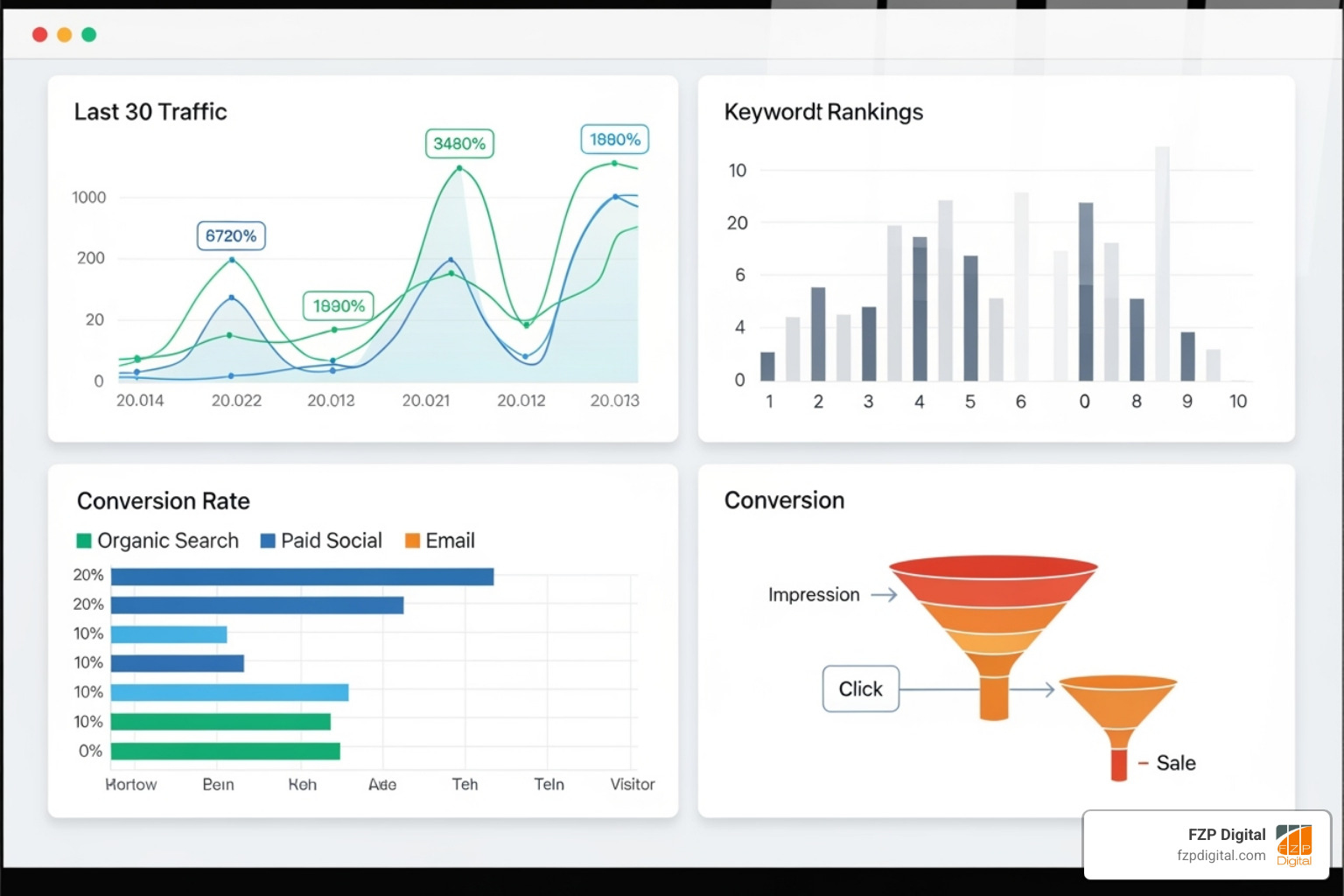
- Key Performance Indicators (KPIs): To measure success, we track crucial metrics, including:
- Organic Traffic: Visitors from search engines.
- Keyword Rankings: Our position in search results.
- Click-Through Rate (CTR): The percentage of people who click our link in search results.
- Engagement Metrics: How users interact with our content (e.g., average engagement rate in GA4).
- Conversions: Desired actions like form submissions or sales.
- Using the Strategy Effectively Within an Organization: A good strategy is a living document that guides the whole team. It helps:
- Inform Content Creators on topics and audience intent.
- Align Marketing Teams to ensure all efforts support SEO.
- Guide Product Development with insights from user searches.
- Facilitate Reporting by providing clear metrics to show ROI.
- Creating an SEO Report: We’ll regularly compile SEO reports that summarize our performance. These reports should be clear, concise, and highlight progress against our KPIs. They help us identify what’s working, what needs adjustment, and demonstrate the value of our SEO efforts. Tools like HubSpot’s Marketing Analytics and Dashboard software can centralize all these metrics.
Frequently Asked Questions about Content SEO
We get a lot of great questions about Content SEO strategy, and we love clearing things up! Here are the answers to the questions we hear most often:
What’s the difference between topic optimization and keyword optimization?
This question highlights how much smarter search engines have become.
Keyword optimization was the old way: pick a phrase like “best running shoes” and repeat it over and over. It was robotic and not very helpful.
Topic optimization is the modern, better approach. Instead of focusing on one phrase, you create comprehensive content that covers an entire subject. For running shoes, you’d cover types, foot-type matching, terrain differences, sizing, and more. You become the go-to resource.
This works because Google now understands context. It knows someone searching for “best running shoes” is also interested in related subtopics. By covering the whole topic, you match what users actually need, and Google rewards you for it.
How long does it take to see results from a content SEO strategy?
Ah, the million-dollar question! Honestly, a good Content SEO strategy is a marathon, not a sprint. You might see small wins in the first 1-3 months, especially if you’re updating existing content.
However, for truly meaningful results that impact your business, you should plan for 6 to 18 months of consistent effort.
Why so long? Google needs time to crawl, index, and evaluate your content and how users interact with it. It’s looking for consistent signals of trust and value, much like building a real-world reputation. It doesn’t happen overnight.
The good news is that the wait is worth it. The organic traffic you build is far more valuable and sustainable than any quick fix.
Is it better to update old content or create new content?
This is a great question that gets to the heart of efficiency. As we mentioned in our “update first” mindset, updating existing content is often your best bet, especially with limited resources. Why? Because your old content already has history with Google (authority, backlinks, some traffic). Improving it builds on that foundation. Plus, it signals to Google that your site is current and active.
However, creating new content is essential when you’re exploring new topics, addressing emerging trends, or launching new products or services.
A good rule of thumb is the 80/20 rule: spend 80% of your effort updating promising existing content and 20% creating strategic new pieces. This approach maximizes the value of what you already have while still growing your content library.
Let’s Bring It All Home
What a journey we’ve been on together! Building an effective Content SEO strategy really is like watching your online presence transform from zero to hero. Throughout our conversation today, we’ve finded how important it is to leave those old “spray and pray” tactics behind and accept a world where quality trumps quantity every single time.
Think about everything we’ve covered – it all comes back to putting your audience first. When you understand what your readers are truly searching for and create content that genuinely helps them, everything else starts falling into place. The magic happens when you combine this audience-focused approach with solid technical foundations.
Remember our three-stage game plan? We started with that detective work of auditing your existing content and really digging into what your audience needs. Then came the fun creative part – crafting and optimizing content that’s not just technically sound but actually enjoyable to read. Finally, we talked about the ongoing process of measuring your results and fine-tuning your approach based on real data, not just hunches.
Here at FZP Digital, we see this change happen all the time with businesses throughout Philadelphia and Bucks County. Whether you’re looking for premium responsive WordPress website design, logo design, or you want to dramatically boost your organic search rankings, our collaborative “Develop . Design . Deliver” process is built around this same principle – creating something that truly serves your audience while achieving your business goals.
The importance of having a documented plan cannot be overstated. Without a clear Content SEO strategy, you’re essentially trying to steer without a map. But with a well-thought-out plan in hand, you’re not just keeping up with the ever-changing digital landscape – you’re staying ahead of the curve.
I know this might feel like a lot to tackle all at once, and that’s completely normal! Every successful website started exactly where you are right now. The key is taking that first step and then building momentum one piece of content at a time. We’re here to support you through every stage of this journey, helping you connect with the customers who need what you offer most.
Ready to boost your rankings? Learn more about Search Engine Optimization!