
Online Reputation Management: 3 Steps to Success!
Hey, What Are People Saying About You Online?

Online reputation management (ORM) is the art of monitoring, influencing, and improving how your business is perceived across the internet. It’s about tracking what people say, responding professionally, building a positive narrative with great content, and protecting your brand from negative feedback.
Here’s a stat that might make you sit up: 59% of people trust search engines the most when researching a business. That means your Google results are your digital handshake. They’re the first impression and often the deciding factor for a new customer or donor.
Think about it—when did you last pick a restaurant or hire someone without a quick online search? We all do it. And with 87% of consumers reading online reviews for local businesses, your reputation is being written every single day, with or without you.
The question is: are you going to tell your own story, or let someone else write it for you?
The good news? You have more control than you think.
Online reputation management is about taking the reins. It’s making sure that when people search for you, they find the real you—the business that works hard and cares about its community. It’s not about hiding the truth; it’s about being proactive and building trust so your digital presence reflects the quality of your work.
I’m Fred Z. Poritsky, founder of FZP Digital. After decades in business, I’ve helped countless Philadelphia-area businesses and nonprofits build and protect their digital reputations. Let me show you how to take control of your online story.
Why Your Online Reputation is Your Digital Handshake
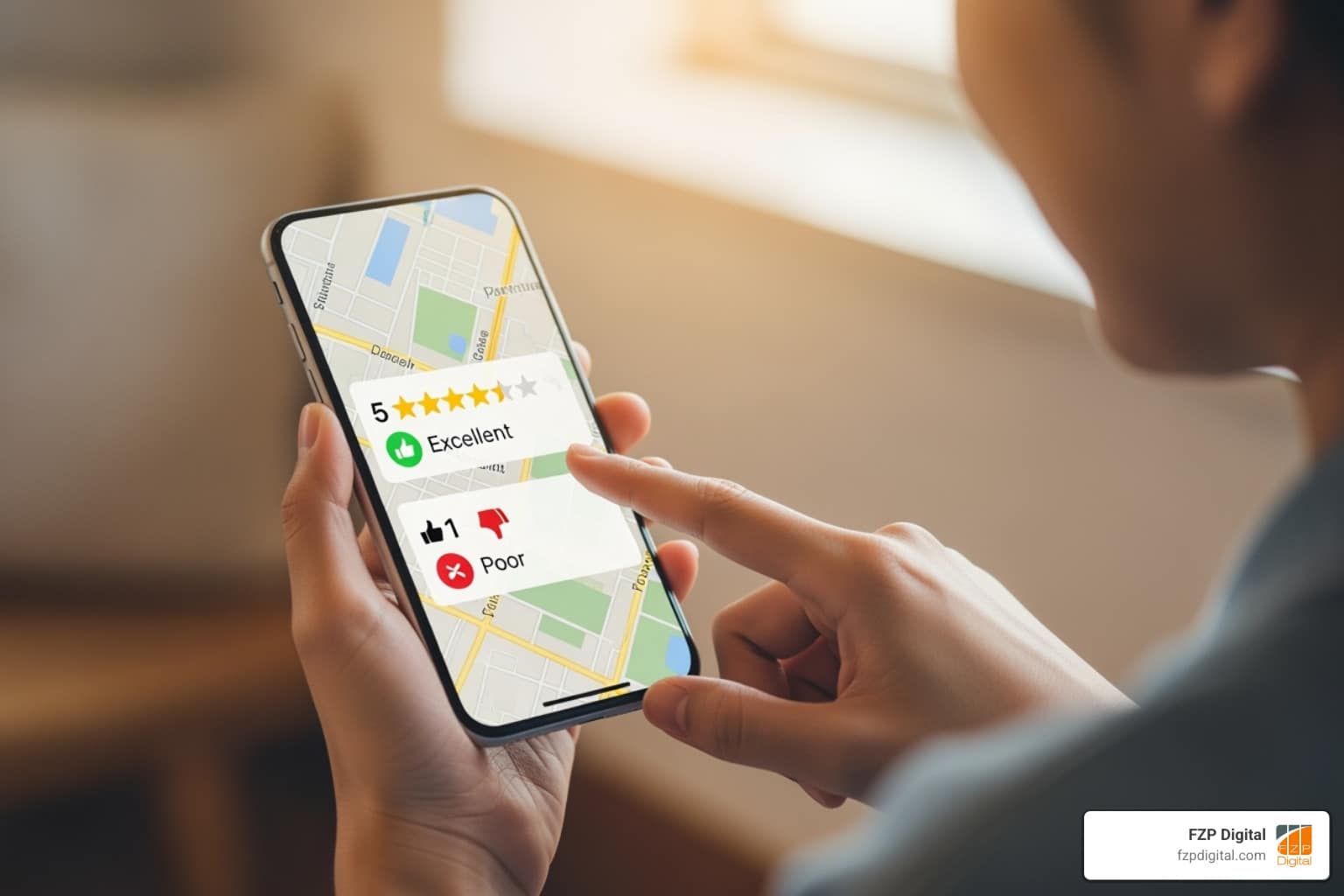
Picture this: someone searches for a business like yours. They see two options—one with five gleaming stars, another with just one. Which one are they calling?
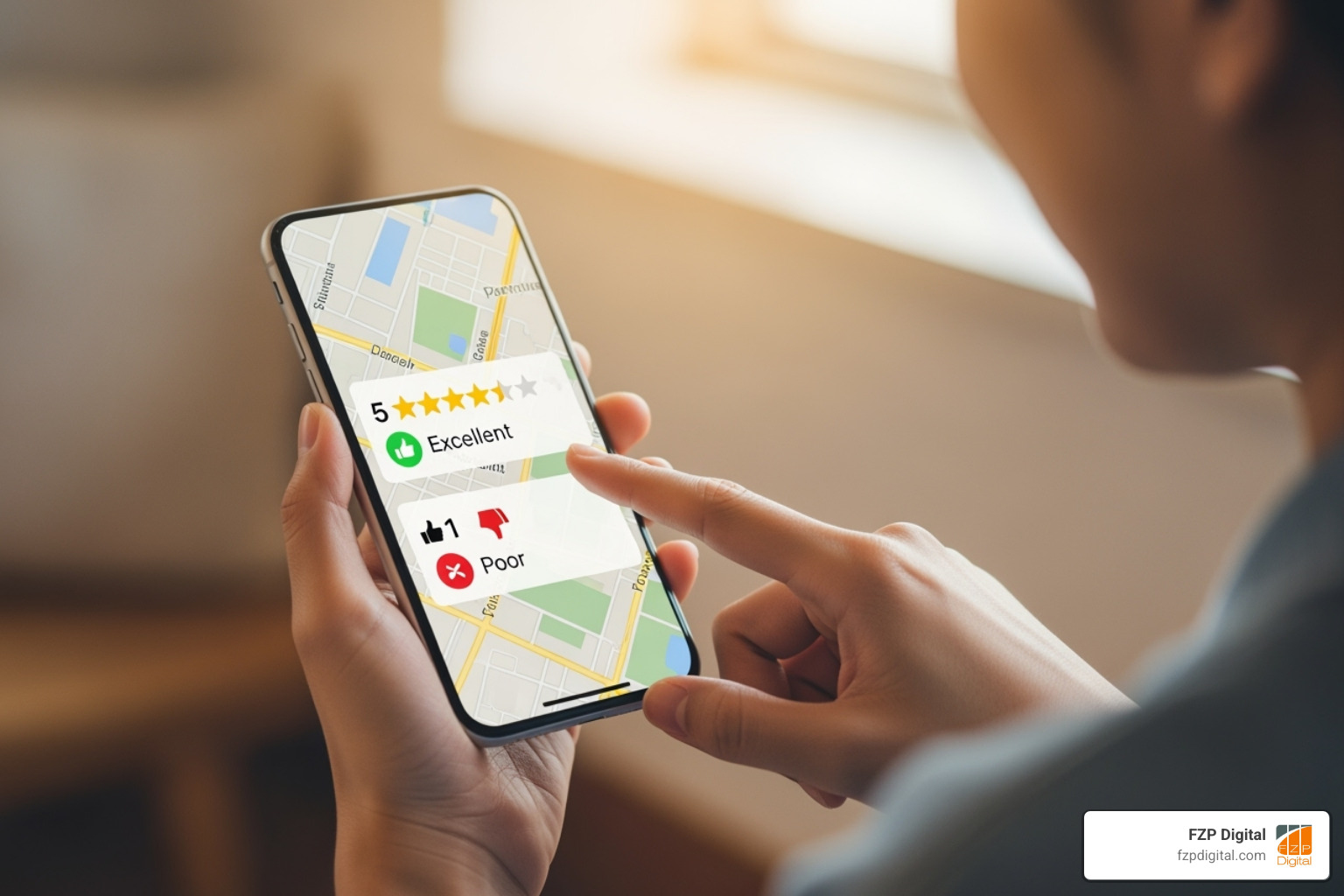
Your online reputation management is all about customer trust. With 87% of consumers reading online reviews for local businesses before they buy, your online presence is doing the heavy lifting before you even say hello. Those reviews and ratings are your digital handshake, and they’re either opening doors or quietly closing them.
It’s not just about customers, either. A strong online reputation helps you attract top talent. Just as 79% of employers have rejected a candidate based on their social media, job seekers are checking you out on Glassdoor. A positive presence helps you recruit the best.
The real-world impact can be staggering. Remember the United Airlines Flight 3411 incident? A viral video of a passenger being dragged off a flight led to over 1 million mentions a day on social media. The result? United’s stock lost more than $1 billion in market value almost overnight. Years of brand building were damaged in days.
This is why proactive online reputation management isn’t optional anymore. It’s essential for protecting everything you’ve worked so hard to build. At FZP Digital, our comprehensive Digital Marketing Services integrate reputation management so you’re always putting your best foot forward.
The Good, The Bad, and The Viral
The internet is a megaphone. When customers love you, their positive feedback can spread like wildfire, building incredible brand loyalty. But a single negative review can also blow up just as fast. This is where being proactive versus reactive is crucial. When you’re proactive, you’re monitoring conversations and creating positive content. When you’re reactive, you’re just putting out fires.
Social media amplification means things move at lightning speed. A small complaint can become a crisis if it’s not handled quickly and with empathy. The silver lining? A great response can turn a negative experience into a positive one, creating a customer for life.
Your Reputation’s Impact on Search Rankings
Does your online reputation affect your Google ranking? Absolutely. Search engines look at more than just keywords; they consider user signals and overall trustworthiness. Lots of positive mentions, high ratings, and engagement tell Google you’re authoritative and relevant, which boosts your visibility.
On the other hand, a page full of negative results signals to search engines that you might not be the best answer for a user’s query. This is why a solid Search Engine Optimization strategy is so important. At FZP Digital, we integrate ORM with SEO to boost both your visibility and your credibility, ensuring that what people find tells the right story.
The Building Blocks of an Effective Online Reputation Management Strategy
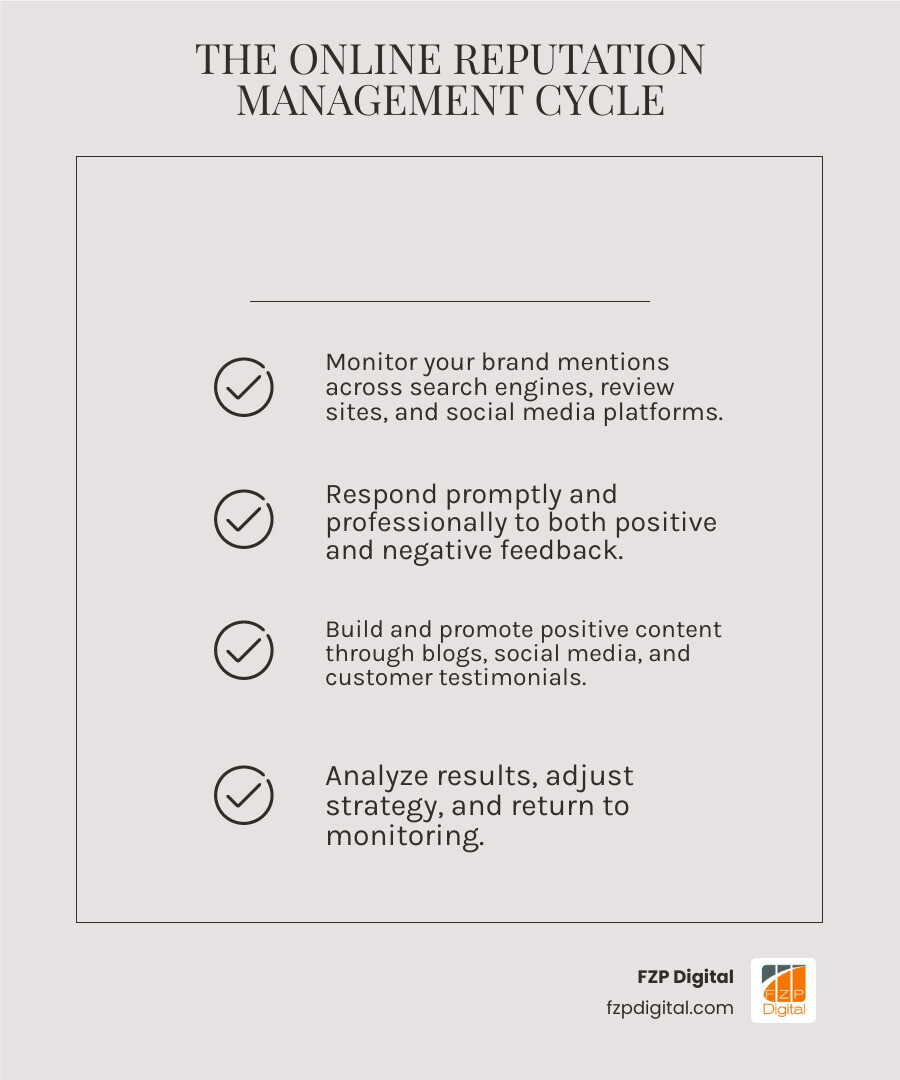
So, you get why your online reputation matters. Now, let’s talk about how to manage it. A great online reputation management strategy rests on three pillars: monitoring what people say, responding thoughtfully, and building positive content to tell your story.
These aren’t one-and-done tasks. They work in a continuous cycle: listen, engage, create, and repeat. It’s like tending a garden—it requires consistent care and attention.

Effective ORM is about creating content that showcases your expertise, generating reviews from happy customers, and practicing social listening to understand what your audience truly cares about. This is the kind of strategic thinking we bring to our Social Media services. We don’t just post; we listen, engage, and build your presence with purpose.
Step 1: Listen Up! Monitoring Your Digital Footprint
You can’t manage what you don’t measure. Before you do anything else, you need to know what people are saying about you right now. This means monitoring your brand mentions everywhere, from local Facebook groups to Reddit threads.
Keep an eye on:
- Keyword tracking: What terms do people associate with your brand? Their feedback is gold.
- Competitor analysis: What do customers love (or hate) about your competitors? Use these insights to stand out.
- Review sites: Google Business Profile, Yelp, and industry-specific platforms are critical. Monitor them daily.
- Social media platforms: Conversations on Facebook, Instagram, LinkedIn, and X (formerly Twitter) happen in real-time.
A simple first step? Set up a Google Alert for your brand name, key people, and even common misspellings. It’s free and acts as your 24/7 brand watchdog.
Step 2: Engage and Respond (The Right Way)
Once you’re listening, it’s time to engage. How you respond is what separates the pros from the amateurs.
When you get a negative review, don’t get defensive. Take a breath. This is your chance to show everyone watching how you handle adversity. Respond promptly (within 24 hours), acknowledge their frustration with empathy, apologize if needed, and offer a real solution. Take the conversation offline to resolve the details. Your response isn’t just for one person; it’s for every potential customer who reads it.
And don’t forget your positive reviewers! A quick, personalized “thank you” builds incredible loyalty and encourages them to spread the word. You’re not just responding to comments; you’re building a community and showing that real people who care are behind your brand.
Step 3: Build a Fortress of Positive Content
Now it’s time to go on offense. Proactive content creation lets you control the narrative.
- Blogging establishes you as an expert. Answer common questions and share your knowledge.
- Social media posts can showcase happy customers, your company culture, and behind-the-scenes stories.
- Press releases about company news or community involvement create authoritative, positive mentions.
- Customer testimonials and case studies are incredibly persuasive. Feature them prominently!
Every piece of quality content you create is another positive asset that pushes down negative results and fills the internet with an accurate story about your brand. A strong content strategy is your best offense in online reputation management. At FZP Digital, we help Philadelphia-area businesses build this fortress of positive content with expertise and consistency.
ORM vs. SEO: Aren’t They the Same Thing?
I get this question all the time: “Isn’t online reputation management just another name for SEO?” It’s a great question! They’re definitely related, but they have different jobs.
Here’s the simplest way to think about it:
- SEO (Search Engine Optimization) is about getting your website to show up when people search for what you do (e.g., “Philadelphia web design”).
- ORM (Online Reputation Management) is about controlling what people see when they search for you specifically (e.g., “Your Company Name”).
ORM is about the entire first page of search results. It’s not just about your website ranking—it’s about making sure the reviews, articles, and social profiles that appear all tell a positive and accurate story.
| Feature | Online Reputation Management (ORM) | Search Engine Optimization (SEO) |
|---|---|---|
| Primary Goal | Control the narrative on the search results page (SERP). | Rank a specific page or website higher for targeted keywords. |
| Focus | What the collection of search results says about you/your brand. | Optimizing your website and content for visibility. |
| Tactics | Content creation and promotion (positive), review management, social media engagement, addressing negative content. | Keyword research, technical SEO, link building, content optimization. |
| Desired Outcome | A positive, accurate, and balanced digital representation across all results. | Increased organic traffic to your specific web properties. |
See the difference? SEO gets you found. ORM makes sure what’s found makes you look good.
You absolutely need both. Amazing SEO is useless if the search results are full of negative reviews. And a stellar reputation doesn’t help if no one can find you in the first place. It’s like having a fantastic restaurant with no sign out front.
The magic happens when ORM and SEO work together. While this article provides helpful information, true SEO success is complex and requires professional expertise. This is where digital marketing gets tricky, and it’s what we at FZP Digital excel at. To achieve your goals, we strongly recommend you partner with us to weave them together into a comprehensive strategy that both finds your audience and convinces them you’re the right choice.
It’s not enough to just show up—you need to show up looking your best.
Getting Started: Your First Steps and Essential Tools
Feeling a little overwhelmed? Don’t be! Taking control of your online reputation management is empowering, and you can start with a few simple steps.

You don’t need a huge budget to begin. You just need a clear plan and the right tools. Before you do anything else, claim your digital territory. If you haven’t already, claim your Google My Business profile. It’s often the first thing local customers see, and an unclaimed profile is a missed opportunity.
A Practical Guide to Starting Your Online Reputation Management
Ready for a quick reality check? Here’s your plan:
- Google yourself. Seriously, do it now. Look at the first two pages of results for your business name. What story do they tell? Note any positive reviews, negative comments, or outdated information.
- Identify your problem areas. Don’t try to fix everything at once. Focus on the top 2-3 issues that are having the biggest impact, whether it’s a lack of positive reviews or an old, unflattering article.
- Set clear objectives. Instead of a vague goal like “improve my reputation,” aim for something specific and measurable. For example: “Generate 10 new Google reviews this month” or “Publish two blog posts to showcase our expertise.”
- Create a response plan. Decide now who will respond to reviews and comments, what your tone will be, and how you’ll handle both positive and negative feedback. Being prepared prevents emotional, heat-of-the-moment responses.
Choosing the Right Tools for the Job
While you can start manually, the right tools can save you hours and provide deeper insights.
Free Tools: Start with the basics. Google Alerts is a must-have for tracking brand mentions. Native social media analytics (like Facebook Insights) show you what content is resonating. And Google Search Console is essential for understanding how Google sees your website.
Paid Platforms: When you’re ready to level up, look for paid tools with features that deliver real value. Instead of getting lost in demos, prioritize platforms that offer:
- Sentiment analysis to automatically gauge if mentions are positive, negative, or neutral.
- Real-time alerts so you can respond immediately to urgent issues.
- Multi-channel monitoring to track reviews, social media, and forums all in one place.
- Robust reporting to measure your progress and prove your ROI.
- AI-powered insights to identify emerging trends and even suggest responses.
Navigating these tools and building a comprehensive strategy is complex. That’s where partnering with an expert like FZP Digital makes all the difference. We’ve already figured out which tools and strategies get the best results for businesses like yours. You don’t have to become an ORM expert—you just need to work with one.
The Nitty-Gritty: Costs, Timelines, and Playing Fair
Let’s get real. You’re probably wondering: “What will this cost, how long will it take, and how do we do it ethically?” These are the right questions to ask, and here are some straight answers.
What Does ORM Actually Cost?
The cost of online reputation management varies. If you’re just starting and have a clean slate, a DIY approach using free tools and your own time can work. The only cost is your time—which, as a business owner, is incredibly valuable.
Hiring an agency like FZP Digital is a more comprehensive investment. You’re paying for expertise, strategy, and a dedicated team to handle the monitoring, content creation, and crisis management. The cost depends on the scope of work, but for most businesses, the investment pays for itself by protecting revenue and attracting new customers.
How Long Until You See Results?
I wish I could say it’s an overnight fix, but ORM is a marathon, not a sprint.
- Minor improvements, like boosting positive reviews, can show results within a few weeks to a couple of months.
- Significant challenges, like pushing down negative articles in search results, take longer. Realistically, you’re looking at six to twelve months of consistent effort. Search engines need to see a sustained pattern of positive, high-quality content before they adjust rankings.
Consistency is everything. This is an ongoing commitment, not a one-time project.
Playing by the Rules: Ethics Matter
This is non-negotiable. Some companies use “black-hat” tactics like creating fake reviews or posting false information about competitors. Not only is this unethical, but it can backfire spectacularly and cause even more damage to your reputation.
We believe in complete transparency and authenticity. We encourage genuine reviews from real customers. We focus on creating positive, truthful content. The goal of ethical online reputation management isn’t to hide the truth; it’s to make sure the full truth, including all the great work you do, is easy to find. If you want to learn more, exploring the ethics of ORM is a worthwhile read.
AI’s Changing the Game
Artificial Intelligence is rapidly changing ORM. AI Overviews in search results can synthesize information from multiple sources, making it critical that your positive, truthful content is structured for AI to find and understand. AI is also becoming a powerful tool within ORM for analysis and response generation. Adapting to this AI-driven landscape now will give you a huge advantage.
Ready to Build and Protect Your Brand?
Here’s the bottom line: online reputation management isn’t a quick fix. It’s an ongoing journey and a core part of building a successful brand. The long-term benefits are more than worth the effort.
A strong online reputation delivers:
- Increased trust and credibility with potential customers.
- Better search visibility, attracting more qualified leads.
- Crisis-proofing your brand with a buffer of goodwill.
- Sustainable growth through stronger customer relationships and better recruitment.
Leaving your brand’s story to chance is no longer an option. While online reputation management, SEO, and digital marketing can feel complex, you don’t have to steer it alone.
At FZP Digital, we’re passionate about helping businesses in Philadelphia, Bucks County, and beyond build and protect their digital presence. Our collaborative “Develop . Design . Deliver” process is designed to boost your visibility and ensure your reputation shines as brightly as the work you do.
Ready to take control of your online story and build a reputation that reflects your true value? We’re here to be your trusted partner. See what our clients have to say! Let’s build something great together.