

Stop Guessing: Here’s How to Build Brand Identity Design That Actually Works

Knowing how to build brand identity design is one of the most valuable things you can do for your business — and one of the most misunderstood.
Here’s a quick answer if you need it right now:
How to Build Brand Identity Design: Quick-Start Steps
- Define your brand strategy — clarify your purpose, values, mission, and target audience before touching any design tools
- Research your competition — audit 5–10 competitors to find visual and verbal gaps you can own
- Develop your brand personality and voice — decide how your brand speaks, feels, and connects
- Design your visual system — logo, color palette, and typography that express your strategy
- Build supporting visual elements — imagery style, iconography, and graphic patterns
- Create brand guidelines — document every rule so your brand stays consistent everywhere
- Apply across all touchpoints — website, social media, print, email, and beyond
- Evolve intentionally — audit and refresh your brand as your business grows
That’s the skeleton. But the real difference between a brand that blends in and one that people remember? It’s in the details — and the order in which you tackle them.
Most small business owners do this backwards.
They start with a logo. Maybe spend a few hundred dollars on a design platform or a quick hire. Then they build a website around it, pick some colors they like, and hope it all comes together.
It rarely does.
86% of small business owners say visual branding is important to their overall business success — and 78% say it directly contributes to revenue growth. Yet most businesses still treat brand identity as an afterthought, something to figure out after the “real” work is done.
Here’s the truth: your brand identity is the real work. It’s what makes a first impression in 50 milliseconds. It’s what gets people to trust you before they’ve ever spoken to you. And it’s what allows you to charge more, attract better clients, and build something that lasts.
This guide will walk you through every step — from strategy and research to visual design and brand guidelines — so you can stop guessing and start building a brand that actually represents what your business is worth.
I’m Fred Z. Poritsky, founder of FZP Digital, and I’ve spent years helping Philadelphia-area businesses and nonprofits cut through the noise with cohesive, strategic brand identities that work — bringing together my background in financial management, digital marketing, and a lifelong love of creativity to help clients understand how to build brand identity design that drives real results. Let’s dig in.

How to build brand identity design word guide:
Why You Need to Know How to Build Brand Identity Design
Have you ever wondered why some companies can charge double or triple what their competitors charge for nearly identical services? Or why customers will stick with certain businesses even when cheaper options pop up down the street in Newtown or Downtown Philadelphia?
The secret isn’t a magic trick. It’s brand equity.
When you understand how to build brand identity design, you aren’t just selecting a pretty font or drawing a symbol. You are intentionally architecting how the world perceives your business. As we like to say, brand identity is what you control; brand image is what your audience actually perceives. If you don’t build that identity on purpose, your audience will make up their own version — and it might not be the premium, trustworthy image you want!
A cohesive brand identity acts as a strategic business asset that drives financial performance in several key ways:
- Market Differentiation: It helps you stand out in crowded industries. If every local service provider in Bucks County uses the same blue-and-gray color scheme, using a vibrant yellow or deep charcoal immediately sets you apart.
- Customer Trust and Credibility: Consistency builds familiarity, and familiarity builds trust. When your website, social media, sales decks, and email signatures all feel like they belong to the same professional family, customers feel secure doing business with you.
- Commanding Premium Pricing: Cohesive branding signals stability, quality, and attention to detail. Customers are naturally willing to pay 20% to 40% more for brands that look premium, even without changes to the underlying product or service.
- Attracting Top Talent: Great branding doesn’t just attract customers; it makes people want to work for you.
As highlighted in The Complete Guide to Brand Identity Design, consistent brand presentation across all channels can increase revenue by up to 33%. Think of your brand identity as a compounding growth mechanism. Every asset you create without a unified system becomes “technical design debt” that you’ll have to pay to fix later. To dive deeper into what this means, check out our guide on Beyond the Logo: What Is Brand Identity Anyway?.
The Core Elements of a Strong Brand Identity System
Think of your logo as a single brick, while your brand identity system is the entire building. A common trap is focusing purely on the logo and ignoring the supporting cast. To build a system that works, you need both visual and verbal assets working in perfect harmony.
To help visualize how these elements divide, let’s look at this comparison:
| Element Type | Component | Strategic Function |
|---|---|---|
| Visual Assets | Logo System | The primary visual anchor; instantly recognizable |
| Visual Assets | Color Palette | Evokes subconscious emotions and increases recognition |
| Visual Assets | Typography | Sets the structural tone and ensures readability |
| Visual Assets | Imagery & Graphics | Establishes the “vibe” through photos and patterns |
| Verbal Assets | Brand Voice & Tone | Defines how the brand speaks and thinks |
| Verbal Assets | Core Messaging | Communicates your value proposition clearly |
For an in-depth look at how these elements interact, read our article on What Is Visual Identity and Branding in Design?.
The Visual Assets: Logo, Typography, and Color
Let’s break down the core visual elements that make up your design system.
1. The Logo System
Your logo shouldn’t try to tell your entire company story in a tiny 150-pixel icon. Its primary job is identification, not explanation. A great logo system must be simple, distinctive, scalable, and versatile. It should include:
- Primary Logo: Used on main surfaces like website headers.
- Secondary/Alternative Logo: Stacked or horizontal versions for different layouts.
- Submark/Favicon: Simplified icons or monograms for social media avatars and browser tabs.
Your logo must work in a single color (black or white) and at tiny sizes without losing legibility. For a complete walkthrough on crafting a timeless mark, check out Make a Mark: The Ultimate Guide to Crafting Your Perfect Logo.
2. Color Palette
Color operates below conscious decision-making, influencing perception before a single word is read. In fact, research shows that color can increase brand recognition by up to 80%. When building your palette, we recommend:
- 1 Main Brand Color: Your hallmark shade (like Twitch’s purple or Coca-Cola’s red).
- 2 Primary Supporting Colors: To build the core layout.
- 2–3 Neutrals: For backgrounds and body text.
- 1 Accent Color: For call-to-action buttons and key highlights.
Ensure your color choices meet web accessibility standards (WCAG). Contrast ratios should be at least 4.5:1 for normal text to ensure everyone can easily read your content.
3. Typography
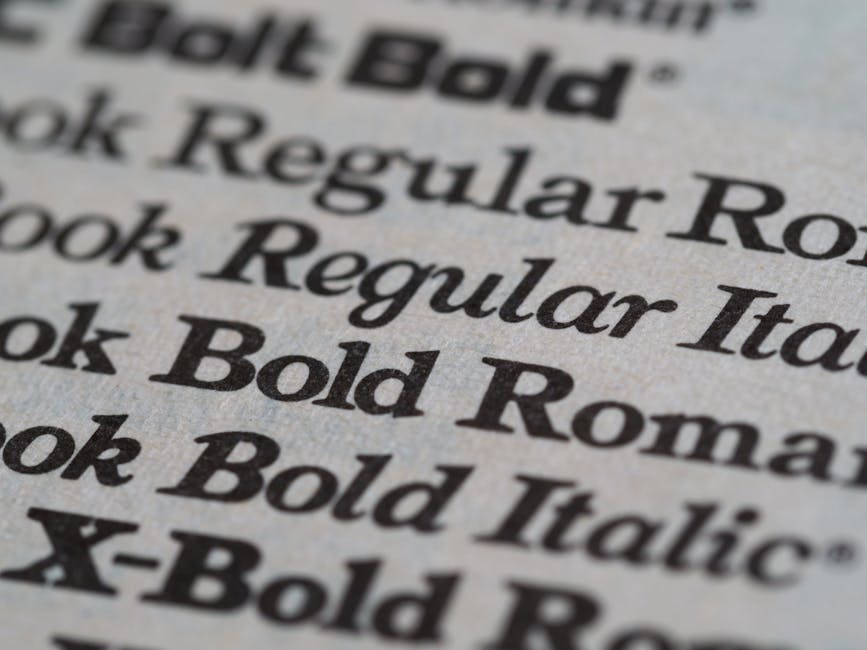
Typography carries immense personality. Are you modern and sleek (using clean sans-serifs), or traditional and authoritative (using classic serifs)? Limit your brand to 2–3 typefaces maximum:
- Primary Header Font: Expressive and full of personality.
- Body Text Font: Highly readable on screens of all sizes.
- Accent Font: Optional, used sparingly for callouts or buttons.
The Verbal Assets: Voice, Tone, and Messaging
A beautiful brand without a voice is just an empty shell. In 2026, where AI search engines and large language models are summarizing your business for potential clients, your verbal identity is more critical than ever.
Your verbal identity includes:
- Brand Personality: If your business were a person, who would they be? Are they the warm, encouraging coach? The highly technical, precise engineer? Or the fun, rebellious disruptor?
- Voice and Tone: Define your communication rules. Write a “Do and Don’t” list. For example: “We are professional but not stiff. We use plain English instead of industry jargon.”
- Messaging Framework: Your core value proposition, tagline, and 3–5 key messaging pillars that address your audience’s deepest pain points.
By aligning your visual and verbal elements, you stop blending in and build a magnetic presence. Learn how to do this seamlessly in our guide: Stop Blending In and Start Making a Brand Mark.
The Step-by-Step Process for Creating Your Brand
Now that you know what goes into a brand identity system, let’s walk through the actual creative process we use at FZP Digital to bring a brand to life. We follow our collaborative “Develop . Design . Deliver” framework to ensure nothing is left to guesswork.
Step-by-Step: How to Build Brand Identity Design with Strategy
Before you open Adobe Illustrator or look at color swatches, you must build your strategic foundation. If you skip this, your design will just be decoration looking for a meaning.
Phase 1: Research and Discovery
Start by interviewing internal stakeholders and actual customers. You want to understand:
- What is your core business purpose (your “why”)?
- Who is your absolute ideal customer? (Create detailed buyer personas).
- What are your core values? (A true value should be costly to live by — if it has never caused you to turn down a client or make a difficult operational decision, it’s just a tagline).
Phase 2: Competitor Analysis
Audit 5–10 direct and indirect competitors in your local market, whether in Richboro, Newtown, or Philadelphia. Look at their logos, colors, fonts, and messaging.
- Are they all using the same colors? (e.g., all local law firms using navy blue).
- What tone do they use?
- Where is the gap? This is your opportunity to carve out a unique visual space.
Phase 3: Brand Positioning
Write a clear, one-sentence positioning statement: We help [Target Audience] solve [Core Problem] through [Unique Approach] so they can [Desired Feeling/Outcome].
Once you have this strategic clarity, you can write a comprehensive creative brief that outlines the visual direction. You can also create internal mood boards (collections of 10–15 images, textures, and typography styles) to align on the “energy” or vibe of the brand before starting the heavy design work. For a detailed roadmap of this strategy phase, check out How to Develop a Unique Brand Identity: The 9-Step Guide.
Designing the Visual Assets and Style Guide
With the strategy locked in, the visual design phase begins.
Phase 4: Concept Exploration & Design
This is where the magic happens. We explore multiple directions, starting with black-and-white logo sketches to ensure the form is strong before adding the distraction of color. We then pair the logo concepts with typography and color options, testing them in real-world mockups (like on a phone screen, a business card, or a website header) rather than just on a blank white canvas.
Phase 5: Creating the Brand Guidelines
Once a visual direction is refined and approved, you must protect it. You do this by building a comprehensive brand style guide (often 30 to 80 pages for growing businesses, or a streamlined one-page guide for smaller operations).
Your brand guidelines should document:
- Approved logo variations, minimum size rules, and clear-space requirements.
- Exact color formulas (Hex, RGB, CMYK) and their specific roles.
- Typography hierarchies (which fonts to use for H1, H2, and body text).
- Rules for imagery, photography style, and iconography.
- Clear examples of logo “misuse” (e.g., do not stretch, do not change colors).

By housing all these assets in a central, accessible location, your team can maintain absolute consistency across every single touchpoint. To understand what to expect when hiring professionals for this process, see What Are Brand Identity Design Services? Everything You Need to Know.
Best Practices and Pitfalls to Avoid
Creating a brand identity is an investment in your business’s future. To ensure your new look stands the test of time, keep these best practices and common pitfalls in mind.
Best Practices: How to Build Brand Identity Design for the Long Term
- Prioritize Simplicity: The most memorable brands in the world — like Apple or Nike — are incredibly simple. Simple designs are easier to recognize, scale beautifully from a tiny mobile favicon to a massive billboard, and don’t go out of style.
- Design for Versatility: Your visual system must work across digital and physical mediums. Test how your logo looks on a custom WordPress website, a social media avatar, an embroidered polo shirt, or a printed brochure.
- Build an Emotional Connection: People buy with emotion and justify with logic. Choose colors, imagery, and messaging that evoke the specific feeling you want your customers to have when they interact with you (e.g., calm, energized, secure).
- Plan for Evolution: A great brand identity should last 5 to 10 years. Build a system that is flexible enough to grow as you add new services or target new markets.
To understand the long-term strategic impact a designer can have on your business growth, read Beyond the Logo: Understanding the Brand Identity Designer’s Impact.
Common Branding Mistakes to Sidestep
- Trend Chasing: It’s tempting to copy the latest design trends you see on social media. But trends fade quickly. Stick to timeless design principles rooted in your unique strategy.
- Designing for Yourself Instead of Your Audience: Your brand isn’t about your personal favorite color or font; it’s about what appeals to your ideal customer. Always filter design decisions through your buyer personas.
- Overcomplicating the Design: Too many colors, complex gradients, or overly decorative fonts will make your brand hard to read and expensive to print. Keep it clean.
- Inconsistent Application: The number one killer of brand trust is inconsistency. If your Instagram looks playful and bright, but your website looks dark and formal, customers will feel a disconnect.
If your current branding feels a bit dated or cluttered, you don’t always need a complete, expensive overhaul. Often, a strategic cleanup is all it takes. Learn more in Give Your Logo a Glow Up: Easy Ways to Re-Edit and Revitalize.
Frequently Asked Questions about Brand Identity Design
Navigating branding can feel overwhelming. Here are clear answers to the most common questions we hear from business owners in Bucks County and Philadelphia.
What is the difference between brand identity, branding, and brand strategy?
These terms are often used interchangeably, but they represent three distinct parts of a successful brand:
- Brand Strategy is the “Why”: It’s the internal blueprint — your positioning, target audience, values, and messaging.
- Brand Identity is the “What”: It’s the tangible, outward expression of that strategy — your logo, colors, typography, voice, and design system.
- Branding is the “How”: It’s the ongoing action of building awareness and applying your identity across marketing, customer service, and advertising.
In short: Strategy is the plan, Identity is the toolkit, and Branding is the execution.
How much does it cost to build a brand identity design?
The financial investment for brand identity design can vary widely depending on the scope of work and the depth of strategy required.
- Small Business / Solo Operations: Typically range from $1,500 to $3,000 for core visual assets (logo, basic color palette, and typography).
- Growing Mid-Market Businesses: Usually invest $3,000 to $10,000+ for a comprehensive strategy, full visual system, messaging framework, and extensive brand guidelines.
- Enterprise-Level / High-End Agencies: Can range from $15,000 to $30,000+ for deep market research, global positioning, and complex multi-platform systems.
For a transparent breakdown of what goes into these numbers and how to budget for your project, check out Unmasking the Price Tag: A Deep Dive into Brand Identity Design Service Costs.
How long does the brand identity design process take?
A thorough, professional brand identity project typically takes 4 to 8 weeks from kickoff to final asset delivery. This timeline is broken down into structured phases:
- Discovery & Strategy (Weeks 1–2): Research, competitor audits, and positioning.
- Concept Development (Weeks 3–4): Logo sketches, color exploration, and typography pairings.
- Refinement & Testing (Weeks 5–6): Real-world mockups and revision rounds (usually capped at 3 rounds to keep the project moving efficiently).
- Documentation & Delivery (Weeks 7–8): Building the brand guidelines and exporting final vector files.
Conclusion
Building a brand identity design is one of the most powerful moves you can make for your business. It takes you out of the price-matching race and positions you as a trusted, professional leader in your market. But remember, a beautiful brand is only as strong as the strategy beneath it.
At FZP Digital, we don’t believe in guesswork. Led by our founder, Fred Z. Poritsky, we bring a unique blend of financial strategy, creative design, and technical marketing expertise to every project. Whether you’re a local service business in Richboro, a growing practice in Newtown, or a nonprofit in Downtown Philadelphia, we partner closely with you through our collaborative “Develop . Design . Deliver” process to craft a brand identity that looks incredible, speaks clearly, and drives real business growth.
Ready to stop guessing and start building a brand that stands out? Read our guide on Crafting Your Core: The Best Brand Identity Design Agencies for a Lasting Impression, or reach out to us today to Partner with FZP Digital and let’s bring your vision to life!