
Local Link Building Strategy Guide for Growing Businesses
Local Link Building Ideas That Help Your Business Get Found
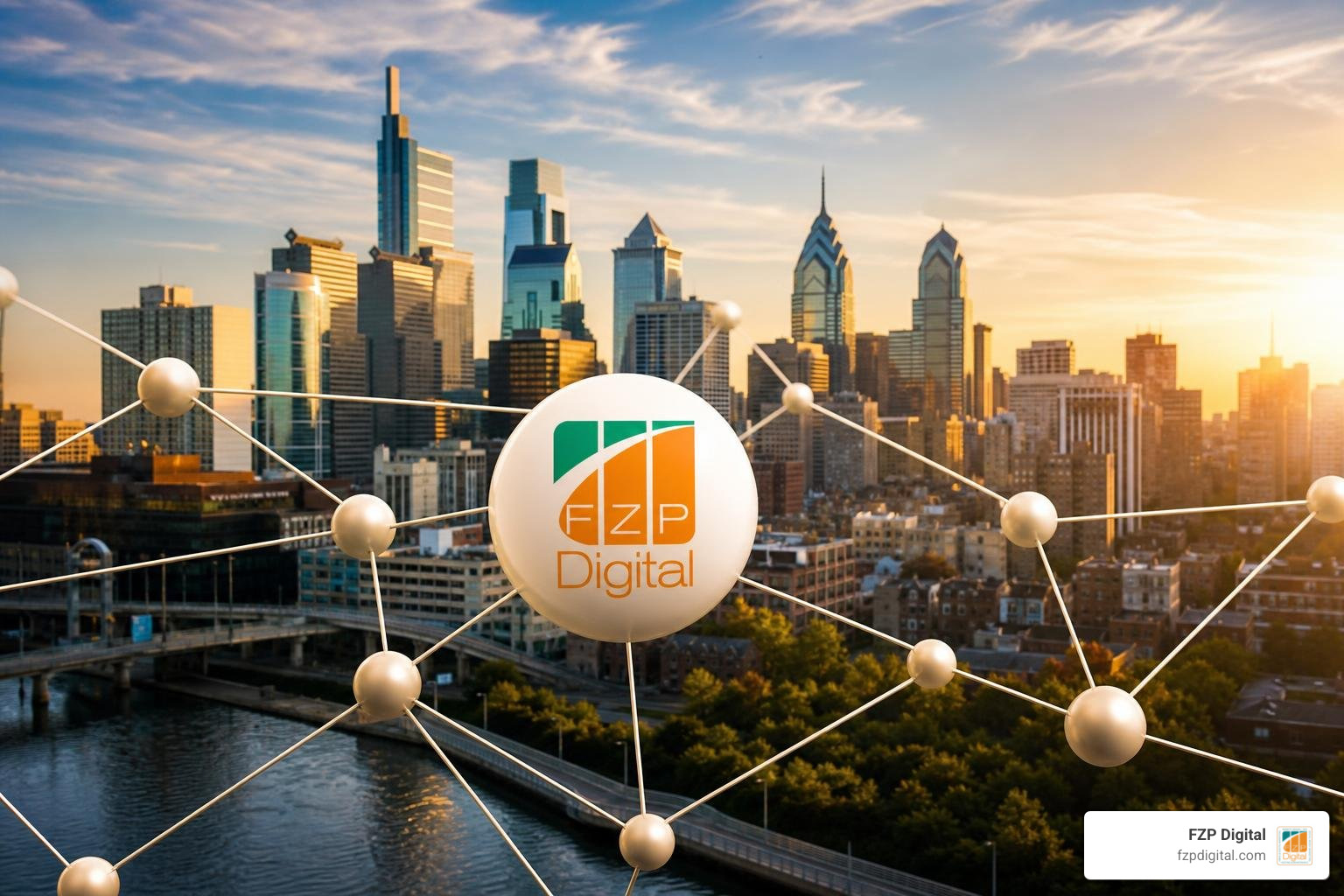
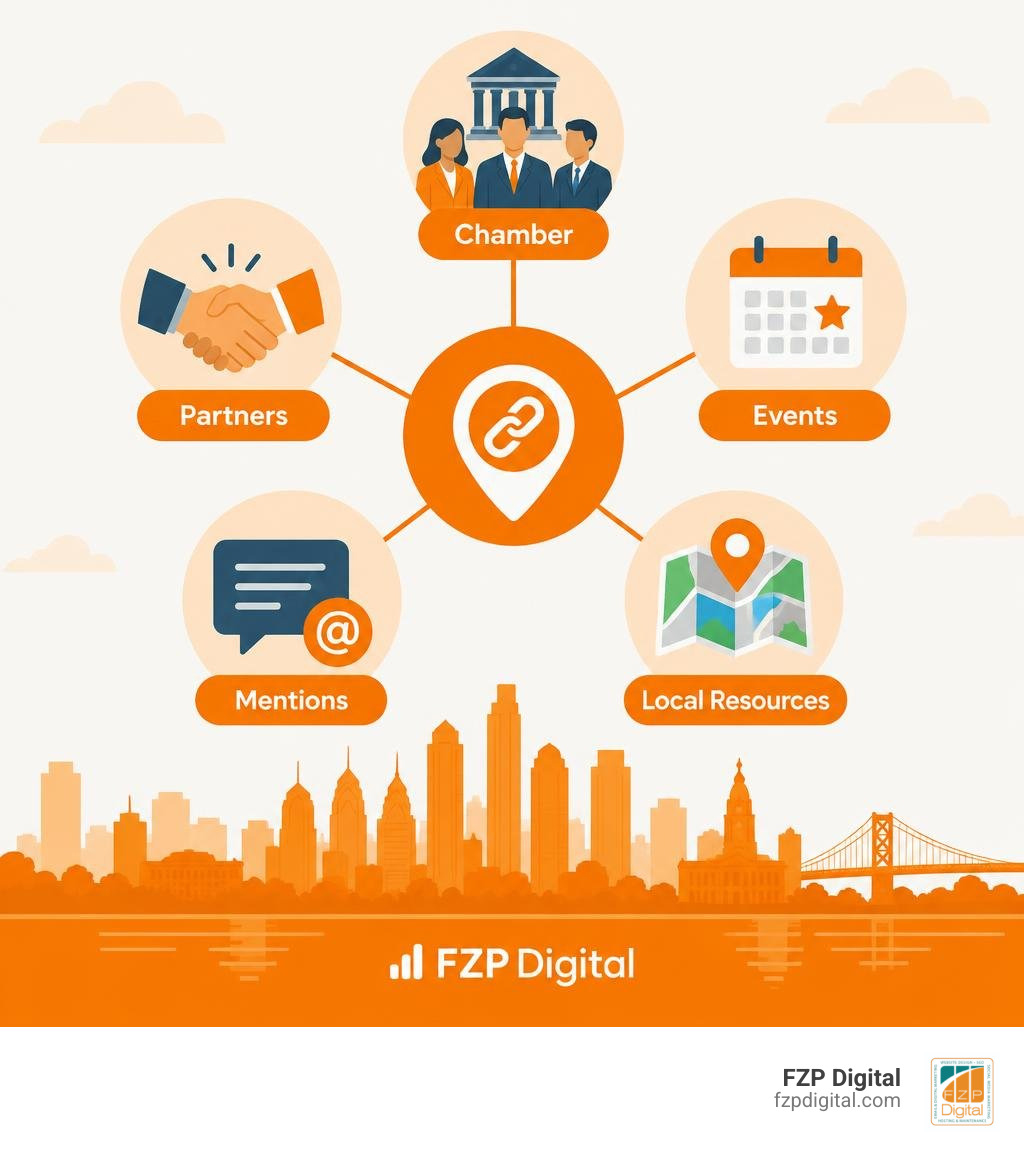
The best local link building ideas start with real community relationships. Join your Chamber of Commerce, ask local vendors for a testimonial-page link, sponsor a neighborhood event, reclaim unlinked mentions of your business, and create a genuinely useful Philadelphia-area guide or resource that local organizations can reference.
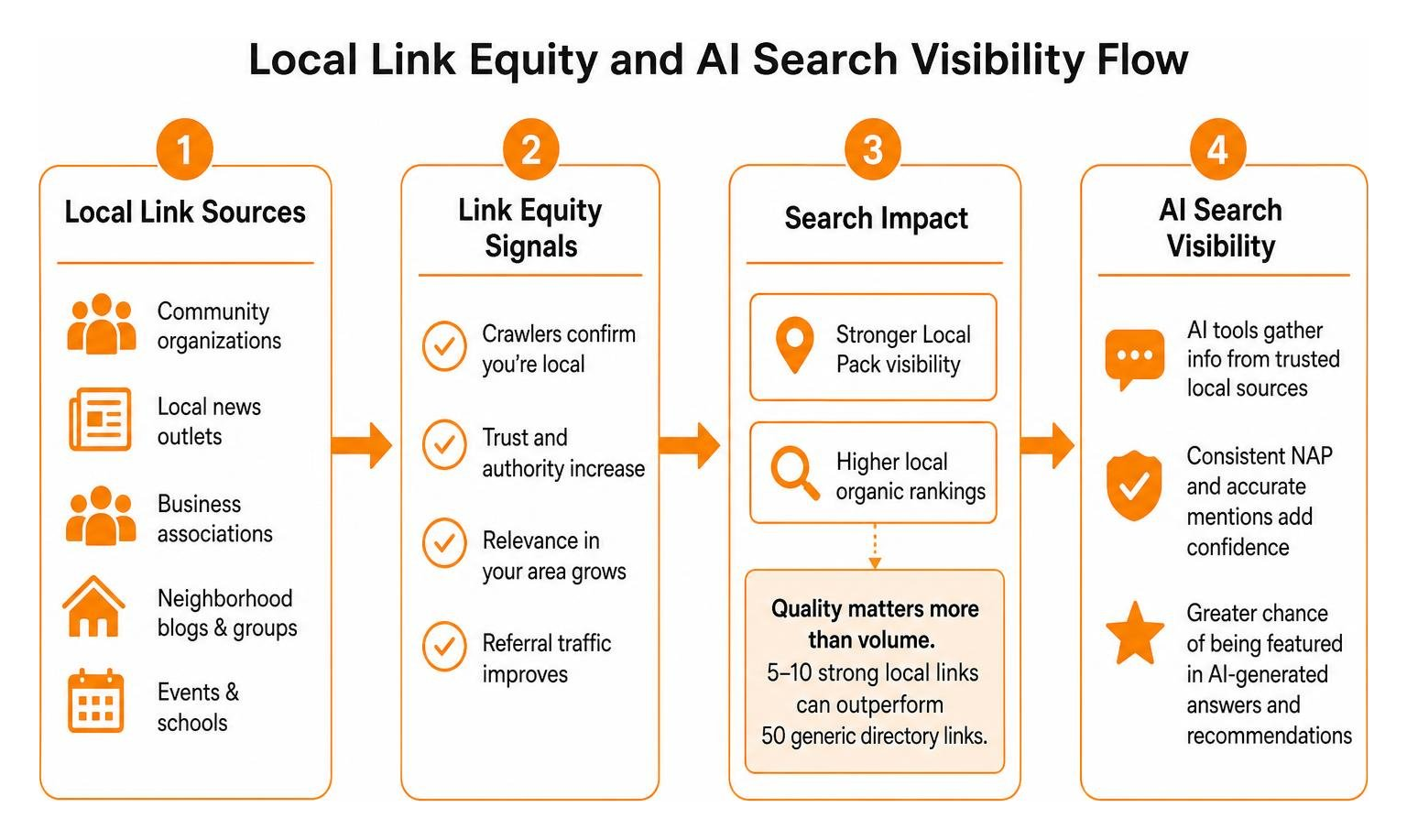
A local backlink is a clickable link from a website connected to your area, such as a community nonprofit, local news outlet, business association, neighborhood blog, school, or event organizer. These links help search engines understand that your organization is relevant and trusted in the places you serve.
Quality matters far more than volume. Research cited in this guide indicates that 5 to 10 strong local links can outperform 50 generic directory links, while businesses with several hyperlocal neighborhood links tend to earn stronger Local Pack visibility than those relying only on national directories.
Local links can also help your organization show up beyond traditional search results. As AI-powered search tools synthesize answers from trusted local sources, accurate mentions, consistent Name, Address, and Phone number (NAP) details, and credible local references give them better evidence that your business belongs in a recommendation.
I’m Fred Z. Poritsky, founder of FZP Digital, where I combine experience in nonprofit financial management, web design, and digital marketing to help Philadelphia-area organizations build a stronger online presence. In this guide, I’ll share practical local link building ideas that support visibility without resorting to spammy shortcuts.
Glossary for local link building ideas:
Why Local Backlinks Matter for Map Packs and AI Search in 2026
Have you ever wondered why some nearby competitors always seem to sit comfortably at the top of the Google Map Pack, even when their websites look like they were built decades ago? The secret usually comes down to prominence and geographic trust.
When search engines rank local businesses, they balance three core pillars: relevance, distance, and prominence. While your physical address handles distance and on-page optimization covers relevance, prominence is heavily dictated by off-page signals. In fact, industry data shows that link signals account for roughly 24% of local organic rankings and 8% of Local Pack rankings. To see how these algorithmic factors fit together, check out A Practical Guide to How Local SEO Works.
Search engines treat local backlinks like digital votes of confidence from your neighbors. When a community organization, a neighborhood association in Newtown, or a regional business publication links to your website, it confirms to search crawlers that you aren’t just an entity floating in cyberspace—you’re an active, reputable fixture in your physical market.
Local Citations vs. Local Backlinks
It’s easy to confuse local citations with local backlinks, but understanding the difference is crucial for prioritizing your marketing budget and effort.
A local citation is any online mention of your core business details—specifically your Name, Address, and Phone number (NAP)—on directories like Yelp or online yellow pages. Often, citations are plain text without a clickable link. A local backlink, on the other hand, is an active hyperlink embedded on another website pointing directly to yours, passing authority (also known as link equity) and referral traffic.
Here is a breakdown of how the two compare:
| Feature | Local Citations | Local Backlinks |
|---|---|---|
| Primary Purpose | Identity verification and NAP consistency | Passing topical and geographic authority |
| Algorithmic Weight | Foundational baseline (~7% of Local Pack weight) | High ranking power (~24% of local organic weight) |
| Link Equity Transferred | Minimal to none (mostly unlinked or nofollow) | High (direct equity and context) |
| Difficulty to Acquire | Low (straightforward directory submissions) | Moderate to High (requires outreach & value) |
| Impact on Rankings | Consistent NAP can lift visibility up to 16% | 5–10 quality links outperform 50 generic links |
While claiming essential citations sets your foundation, relying solely on business listings won’t get you to the top of competitive search results. For a deeper look at balancing citations with foundational optimization, read The Simple Guide to Winning at Local SEO.
Generative Engine Optimization and Local Link Signals
Search has evolved dramatically. Today, platforms utilize Generative Engine Optimization (GEO) principles, where conversational AI models and AI Overviews answer user queries directly. Link signals now drive an estimated 13% of AI search rankings for local businesses.
When generative engines assemble recommendations for local service providers, they look for authoritative consensus across the web. If your business has consistent NAP data across your top 20 local link sources, research shows your business appears in AI Overview responses at a rate 2.8x higher than competitors with messy, conflicting information. Earning links from respected community hubs establishes the exact footprint AI engines need to cite you as the premier answer. You can learn more about finding local context from industry analyses like What Is A Local Link & How To Find More.
High-Impact Local Link Building Ideas for Regional Authority
Now that you know why these links are so essential, let’s explore practical, high-impact strategies you can start using today. Getting quality links doesn’t require complex technical tricks; it simply requires being an active, helpful participant in your local business ecosystem.
If you’re just getting started with your overall outreach strategy, our Beginner’s Guide to Link Building for Small Businesses provides a great primer on establishing your initial outreach habits.
Community-Driven Local Link Building Ideas
Your physical community is packed with link opportunities that national competitors simply cannot touch. Here are a few reliable ways to earn authoritative local links:
- Join Local Chambers of Commerce: Becoming a member of regional business chambers (such as local business associations across Philadelphia or Bucks County) typically comes with an authoritative profile page and a direct backlink from a trusted, high-authority domain.
- Sponsor Local Events and Youth Teams: Sponsoring a charity 5K, a community arts festival, or a local youth sports league gets your logo and website link featured directly on the event’s official sponsor page.
- Engage in Group and Corporate Community Events: When organizing team activities, such as regional workshops or participating in curated Team-Building Activities in Philadelphia, connect with the organizing entities and ask to be featured as a participating business on their community blog or partner resource index.
- Offer Community-Focused Scholarships: Creating a modest annual scholarship for local high school seniors or community college students can earn high-trust
.eduand local media backlinks from educational resource lists.
Partnership and Content-Based Local Link Building Ideas
Collaborating with neighboring businesses allows you to earn valuable contextual links naturally:
- Provide Vendor Testimonials: Make a list of your regular B2B suppliers—from your commercial printer and cleaning crew to your IT support. Write them an enthusiastic, honest testimonial. Service providers are almost always thrilled to feature client praise on their websites along with a backlink to your business.
- Reclaim Unlinked Brand Mentions: Local blogs, news outlets, and community forums often mention regional businesses without adding a clickable link. Set up alerts for your business name, reach out politely to the author, thank them for the mention, and ask if they would mind turning it into a clickable link for their readers.
- Create Hyperlocal Linkable Assets: Design a resource page that answers a specific neighborhood problem. Whether it’s a neighborhood parking and accessibility guide in Downtown Philadelphia or a seasonal maintenance checklist for Richboro homeowners, useful assets naturally earn editorial references from other local sites.
- Contribute Guest Articles to Regional Portfolios: Share your industry expertise by writing helpful, non-promotional guides for regional business blogs. If you want to refine this approach, review our walkthrough on A Practical Guide to Learning Link Building Through Guest Posting.
Execution Roadmap: Finding and Earning Quality Local Links
Executing a structured local link acquisition campaign keeps your outreach focused and effective. You don’t need a sprawling digital marketing department to make meaningful progress; following a steady, four-week monthly rhythm can yield remarkable compounding results.
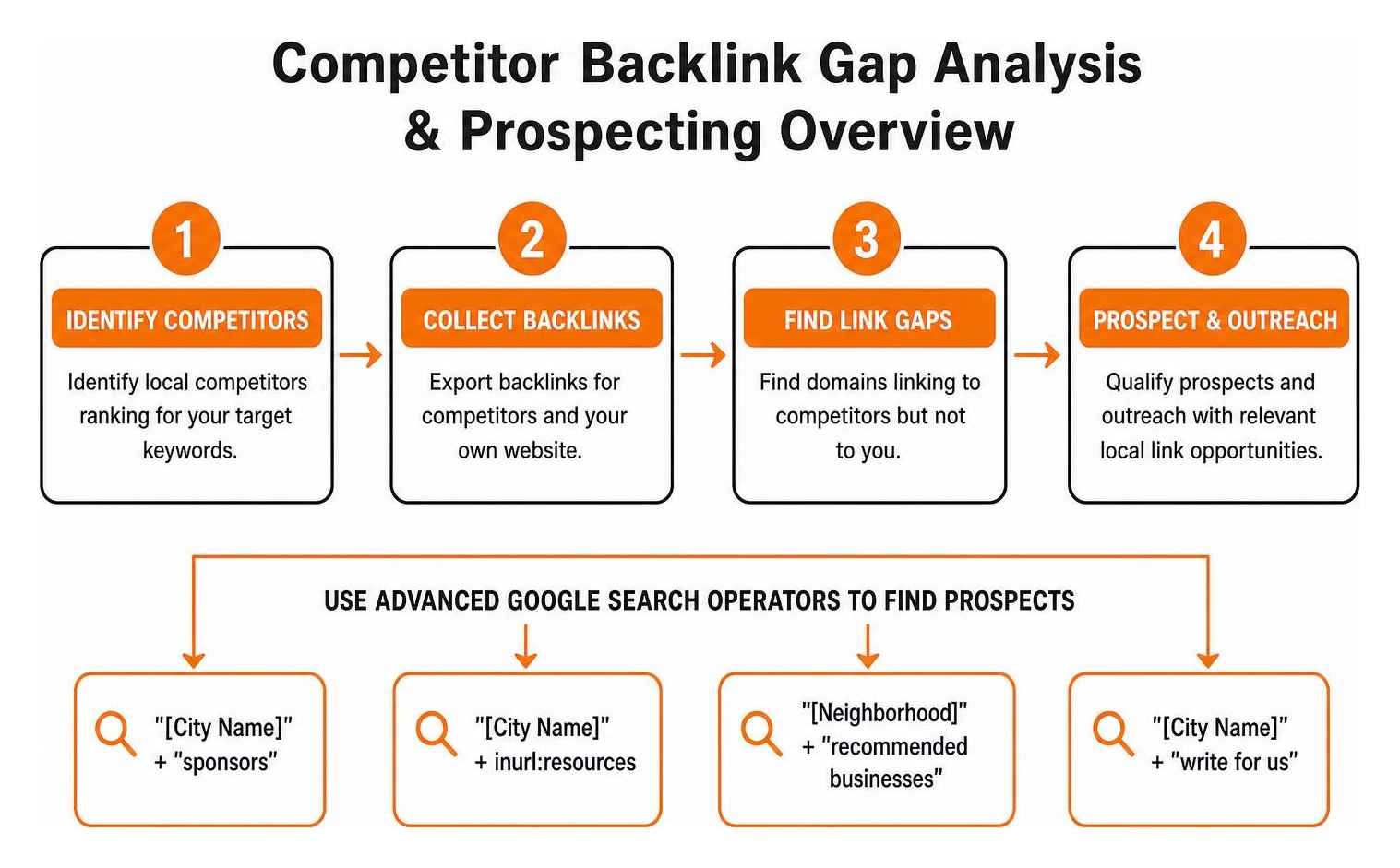
To identify link prospects quickly, leverage advanced Google search operators:
"[City Name]" + "sponsors""[City Name]" + inurl:resources"[Neighborhood]" + "recommended businesses""[City Name]" + "write for us"
Pairing search prospecting with regular competitor backlink gap analyses using industry SEO tools will reveal exactly where your top-ranking competitors are earning their local authority. For businesses looking for full-scale support, exploring our Off-Page SEO Services Complete Guide will give you a clear roadmap of how comprehensive outreach is executed.
Best Practices and Pitfalls to Avoid
Local link building requires authenticity. Navigating off-page optimization can feel daunting, which is why having an experienced guide like Fred Z. Poritsky and the team at FZP Digital can prevent costly missteps.
Keep these proven guidelines in mind:
- Maintain Natural Link Velocity: Don’t build 50 links in a single week and zero the next. Aim for a consistent, natural cadence of 5 to 10 quality links per month.
- Diversify Anchor Text: Avoid cramming exact-match commercial keywords into every link. Keep anchor text natural by mixing your brand name, page URLs, and conversational phrases.
- Avoid Low-Quality Directory Blasts: Buying automated packages that promise 500 directory submissions will harm your credibility. A single link from a local neighborhood association is worth far more than dozens of spammy, automated directories.
- Focus on Geographic Relevance: Always prioritize links from websites situated within your immediate market (such as Philadelphia, Newtown, or Richboro) over generic national platforms.
To ensure your link outreach connects seamlessly with your overall lead-generation goals, see our advice on Local SEO for Service Businesses That Actually Works.
Frequently Asked Questions About Local Link Building
How many local backlinks are needed to rank in the Local Pack?
There isn’t a single universal number, as link requirements depend heavily on market competition and geographic density. However, in most mid-sized markets, acquiring 15 to 25 quality local links is typically enough to significantly elevate your Local Pack rankings. Hyperlocal relevance matters most: businesses with at least 3 hyperlocal links rank an average of 1.4 positions higher in the Local Pack than competitors who rely only on national directories.
What is the fastest way to earn a local backlink?
The quickest win is writing detailed testimonials for your current local vendors, suppliers, and service providers. This takes only a few minutes, delivers immediate value to your vendor, and consistently converts into a live homepage or client-showcase backlink within days.
How do you measure the ROI of local link acquisition?
Most businesses begin to see ranking movement within 4 to 8 weeks of securing quality local links. Measure success by monitoring your Local Pack positions, tracking organic keyword shifts in Google Search Console, measuring increases in referral traffic from linking domains, and analyzing phone calls and form submissions generated through your Google Business Profile.
Conclusion
Building lasting local prominence isn’t about chasing shortcuts or manipulating algorithms—it’s about creating authentic relationships across your community and ensuring your digital presence reflects that real-world trust. When you combine strong local links, consistent business citations, and an optimized, mobile-responsive website, dominating your regional search results becomes a predictable reality.
At FZP Digital, we leverage our collaborative “Develop . Design . Deliver” process to help organizations across Philadelphia and Bucks County build enduring organic search authority. Whether you need a fresh website design or tailored affordable SEO services, our team—led by founder Fred Z. Poritsky—is here to guide your business toward measurable growth. If you are also exploring reliable website infrastructure to host your digital assets, FZP Digital recommends GoDaddy and WP Engine as top-tier managed WordPress hosting providers to keep your site fast, secure, and ready to rank. Reach out to us today, and let’s put your business at the top of the local map!