

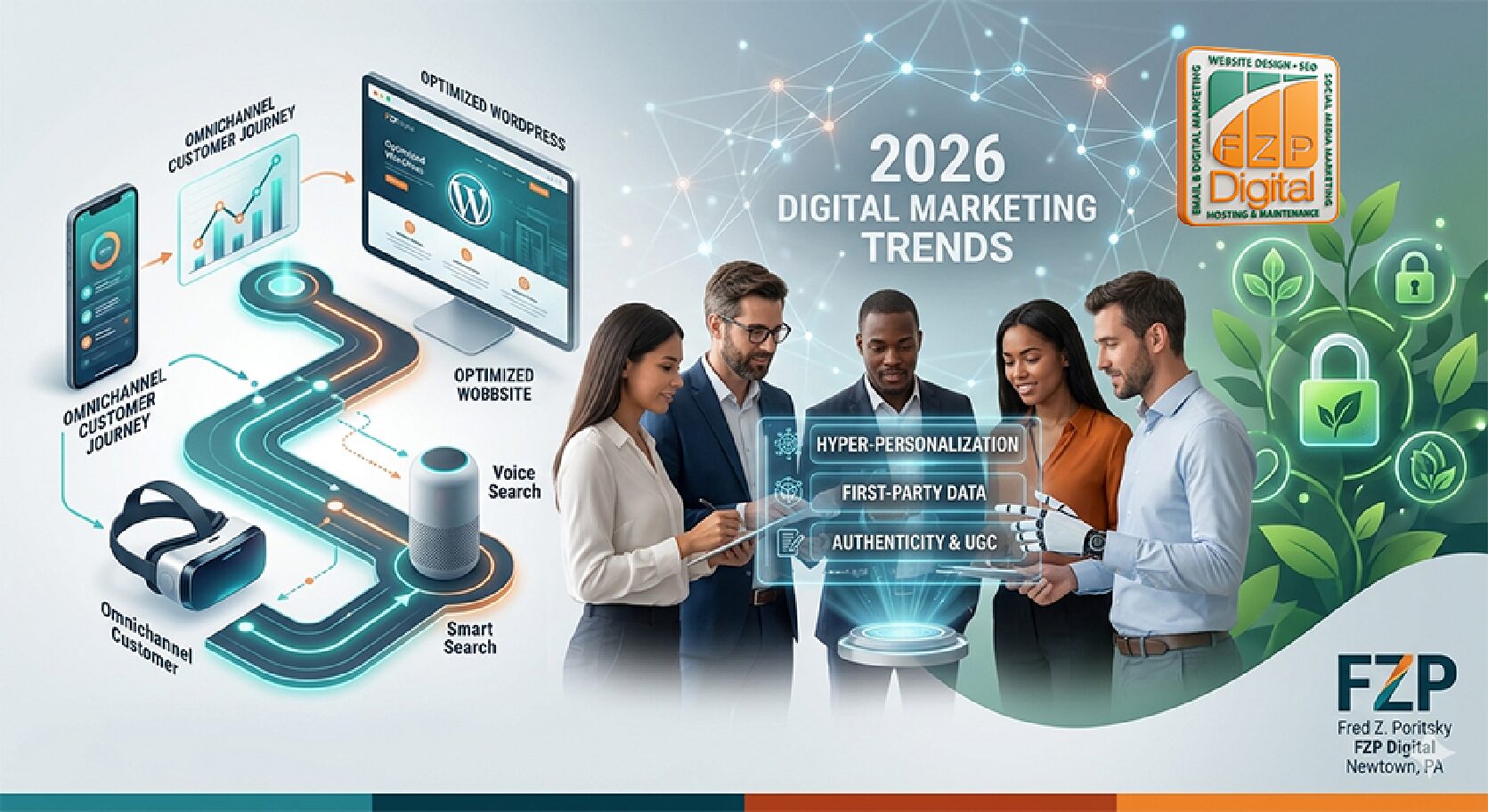
10 Actionable Digital Marketing Trends for 2026

How is AI Reshaping Digital Marketing in 2026?
The digital marketing world is moving at lightning speed, and AI is right at the heart of it. In 2026, AI isn’t just a buzzword; it’s your indispensable partner for connecting with customers. Are you ready to harness its power?
AI & Generative AI for Hyper-Personalization
AI and Generative AI are your secret weapons for creating marketing that truly speaks to people. Imagine content and experiences so tailored they feel made for just one person—that’s hyper-personalization at scale. It’s about anticipating needs before your customers even realize them.
AI allows for dynamic content, automated campaigns, and predictive analytics to understand behavior. This leads to micro-segmentation, letting you send ultra-targeted messages that actually cut through the noise.
75% of consumers are more likely to buy from brands that personalize content, and businesses leading here are 48% more likely to exceed revenue goals. With the GenAI market expected to soar past $442 billion by 2031, it’s clear this is a major revenue driver. Even AI-written emails, when polished by a human, can see a 41% higher click-through rate.
Actionable steps:
- Use AI-driven tools: Integrate platforms that use predictive analytics to suggest the “next-best action” for your customers.
- Automate with a human touch: Use GenAI for email subjects or ad copy drafts, but always have a human review them to keep your unique brand voice.
- Create dynamic websites: Use AI to change website content and product picks in real-time based on how someone browses.
Examples: Grammarly offers personalized writing feedback, while Hilton uses AI chatbots to provide instant, 24/7 customer service.
At FZP Digital, Fred Z. Poritsky and our team use AI to sharpen SEO strategies and build personalized websites that resonate. We see AI as a powerful assistant that boosts human creativity. Want to dive deeper? Check out our insights on How Can You Use Ai In Your Business and our category/ai resources.
First-Party & Zero-Party Data Strategies
With cookies fading away, it’s time to build direct relationships. In 2026, it’s all about first-party and zero-party data. This isn’t just about rules; it’s about building trust.
First-party data comes from your own website or apps. Zero-party data is what customers intentionally share, like their preferences. Brands prioritizing this grow 1.5 times faster! Transparent data policies are now foundational for earning loyalty.
Actionable steps:
- Invest in a CDP: A Customer Data Platform unifies your data into one clear view for better personalization.
- Use interactive tools: Quizzes and surveys make data collection a fun value exchange.
- Be transparent: Clearly explain how you use data and give customers control. This builds long-term trust.
Our team at FZP Digital can help you navigate these privacy complexities, building data strategies that foster trust and drive growth.
How Can Brands Create Seamless Customer Journeys?
In our digital world, you know customers expect smooth, intuitive interactions. They don’t want to feel like they’re starting over when they move from your site to your social media.
Omnichannel Experiences with AI Integration
Your customers don’t think in “channels”; they think in experiences. Omnichannel marketing creates a unified journey across every touchpoint—online and offline. In 2026, AI is the glue making this seamless.
It’s about more than just being everywhere; it’s about making those channels work together. Businesses excelling here see 9.5% higher annual revenue. You want your customer to feel understood at every single step.
Actionable steps:
- Map the journey: Identify every touchpoint and find where you can smooth out the experience.
- Unify your data: Ensure customer info is updated in real-time across your whole marketing stack.
- Use context-aware AI: Personalize interactions based on what the customer is doing right now, whether they’re on your app or talking to a chatbot.
Examples: Nike connects its app, stores, and online shop perfectly, giving fans personalized rewards and a cohesive brand feel.
When FZP Digital designs your responsive WordPress website, we make sure it’s a seamless part of your bigger strategy. We build digital foundations that support all your marketing efforts. See more about our Digital Marketing Services.
The Rise of Zero-Click & Compressed Customer Journeys
Search is changing fast. More people get answers directly on Google through AI Overviews or buy products right inside social feeds. This means the traditional funnel is shrinking.
Fewer than 60% of US Google searches lead to a click today. This “zero-click” trend means users find what they need without leaving the search page. With 90% of keywords showing “Related Questions,” people clearly want fast answers. Discovery and purchase now happen in the same moment.
Actionable steps:
- Optimize for snippets: Use clear headings and Q&A sections to show up in AI Overviews and featured snippets.
- Give direct answers: Provide authoritative answers in your content to satisfy users immediately.
- Build brand authority: Even without a click, appearing in these results builds massive trust and awareness.
With our SEO expertise, FZP Digital helps you capture these zero-click wins, ensuring you’re the go-to authority. Learn more about Search Engine Optimization What Is It Why Do I Need It.
What Content Strategies Will Win Trust and Engagement?
In an era saturated with information, breaking through the noise requires more than just good content; it demands content that resonates, builds trust, and genuinely engages.
Authenticity, UGC & the Creator Economy
In an age of polished ads and increasingly sophisticated AI-generated content, authenticity is your most valuable currency. Consumers in 2026 are craving genuine connections and trust recommendations from real people far more than traditional advertising. This is where user-generated content (UGC) and strategic partnerships with creators truly shine.
It’s a cultural shift: 90% of consumers say authenticity matters when deciding which brands they support. This preference for genuine content means that influencer marketing, when done right, can deliver an impressive 11 times higher ROI compared to more traditional digital channels. It’s about leveraging the trust that real people have built with their audiences.
Actionable steps:
- Encourage UGC: Actively solicit and celebrate content created by your customers. Run contests, create branded hashtags, and make it easy for users to share their experiences. Showcase positive reviews, photos, and videos from your community.
- Partner with micro-influencers: Instead of chasing mega-influencers, consider micro-influencers. Their smaller, more engaged audiences often lead to higher trust and conversion rates because their recommendations feel more personal and relatable.
- Showcase behind-the-scenes content: Humanize your brand by sharing your story, your values, and the real people behind your products or services. This transparency builds a deeper connection with your audience.
Examples: GoPro built an entire brand around user-generated content, showcasing incredible footage captured by its customers. This strategy not only provides authentic marketing material but also fosters a strong community. Many fashion brands now use “real people” or raw iPhone footage for campaigns to appear more relatable and trustworthy than highly stylized studio shots.
FZP Digital specializes in crafting content strategies that prioritize authenticity, helping you connect with your audience on a deeper, more human level. We understand the power of community and genuine voice. Explore our insights on Category/Social Media.
Video-First Content Strategy (Short & Long-Form)
If you’re not thinking video-first in 2026, you’re already behind. From bite-sized TikToks and Instagram Reels to in-depth YouTube tutorials, video dominates how consumers consume content. It’s engaging, highly shareable, and incredibly effective at building brand awareness, educating audiences, and driving conversions.
The statistics highlight this dominance: short-form videos tend to receive twice the engagement compared to other content formats. This immediate impact makes platforms like TikTok and Instagram Reels ideal for capturing audience interest quickly. Furthermore, 66% of marketers plan to increase their use of YouTube videos, recognizing the platform’s power for longer-form, educational content. Marketers are encouraged to reallocate resources and creativity towards video content to stay competitive.
Actionable steps:
- Repurpose existing content: Maximize your content’s reach by transforming it into video. Turn blog posts into short video summaries, infographics into animated explainers, or webinars into a series of YouTube clips.
- Embrace short-form platforms: Consistently create engaging content specifically for TikTok, Instagram Reels, and YouTube Shorts. These platforms are perfect for quick tips, behind-the-scenes glimpses, and product highlights.
- Invest in quality (appropriately): While authenticity is key, ensure your video content is well-produced enough to be engaging. This doesn’t always mean a Hollywood budget; often, good lighting, clear audio, and compelling storytelling are sufficient.
Examples: Ahrefs uses long-form YouTube videos to educate its audience on complex SEO topics, building authority and trust within the industry. Brands across various sectors use short-form videos for quick product demos, engaging challenges, and behind-the-scenes glimpses that humanize their brand.
For more detailed insights into the power of short-form video, you can refer to insights from AFF Maven.
Where Are Customers Shopping and Interacting in 2026?
The digital landscape is constantly evolving, and so are the places where your customers spend their time and money. Understanding these shifts is crucial for staying relevant.
Social Commerce & Shoppable Content
The lines between social media and e-commerce have blurred entirely. Social commerce allows customers to discover, browse, and purchase products directly within their favorite social platforms, reducing friction and creating a seamless shopping experience. It’s about meeting customers where they are already engaged.
This trend is significant, with social commerce revenues forecasted to surpass an astounding $1 trillion USD by 2028. This integration of shopping with social media allows brands to connect with consumers directly where they spend much of their digital time, reducing friction in the sales process and creating a more connected shopping experience.
Actionable steps:
- Enable shoppable features: Make sure you’re utilizing platform-specific features like Instagram Shopping, Facebook Shops, and TikTok Shop to tag products directly in your posts, stories, and videos.
- Explore livestream commerce: Host live shopping events where customers can interact with your brand, ask questions, and purchase products in real-time. This creates an engaging, interactive shopping experience.
- Partner with creators: Collaborate with influencers who can showcase and sell your products directly to their audience through shoppable content, leveraging their authentic connection and trust.
Examples: Many brands effectively use Instagram’s “Shop” tab and product tags in stories to drive direct sales, turning casual browsing into immediate purchasing opportunities. Livestream shopping events on platforms like TikTok have become massive sales drivers, especially for fashion and beauty brands.
Detailed data and analysis on this trend can be found at AFF Maven.
Immersive Experiences (AR/VR)
Augmented Reality (AR) and Virtual Reality (VR) are no longer just for gaming; they’re powerful tools for experiential marketing in 2026. Imagine customers trying on clothes virtually, placing furniture in their homes before buying, or taking a virtual tour of a product – these immersive experiences boost engagement, build confidence, and reduce purchase hesitation.
The global immersive marketing market is experiencing rapid growth, estimated at $6,898.2 million in 2024 and projected to reach an impressive $29,681.2 million by 2030. AR, in particular, supports experiential marketing by increasing consumer engagement by up to 200%. Marketers are leveraging these technologies to offer immersive experiences that allow customers to interact with products and services in novel ways.
Actionable steps:
- Develop AR filters: Create branded AR filters for social media platforms like Instagram and Snapchat. These fun, interactive tools can significantly boost brand visibility and engagement.
- Implement virtual try-on features: For fashion, beauty, or home goods, allow customers to virtually “try on” or “place” products in their own environment using AR. This helps them visualize the product and make more informed decisions.
- Explore VR for unique experiences: Consider using VR for virtual showrooms, immersive product launches, or deeply interactive brand storytelling. While more resource-intensive, VR can create unforgettable brand experiences.
Examples: IKEA Place allows users to virtually place furniture in their homes using AR, helping them visualize how pieces fit before buying. Sephora’s Virtual Artist lets customers try on different makeup shades and products without physical application, enhancing the online shopping experience.
Explore further details on AR/VR by reviewing insights from Integral Media.
How Can You Future-Proof Your Marketing for Evolving Tech?
Staying ahead in the digital marketing game means constantly adapting to new technologies and consumer behaviors. Here’s how to ensure your strategies remain robust.
Voice Search Optimization
With the proliferation of smart speakers, smartphones, and voice assistants, optimizing for voice search is no longer optional – it’s a necessity. People are using natural, conversational language to find information, ask questions, and even make purchases, and your content needs to be ready to answer their queries directly and efficiently.
The numbers speak volumes: the number of digital voice assistants is expected to reach an astonishing 8.4 billion units, surpassing the global population. This means a significant portion of your audience is likely using voice to interact with the digital world. Marketers must reconfigure their SEO strategies to account for these devices.
Actionable steps:
- Optimize for Q&A format: Structure your content to directly answer common questions your audience might ask verbally. Think about the “who, what, where, when, why, and how” of your industry.
- Use conversational language: Write as if you’re having a conversation. Anticipate how someone would speak their query rather than how they might type it. This often means using longer, more natural phrases (long-tail keywords).
- Strengthen local SEO: Many voice searches are “near me” queries (e.g., “best pizza near me in Philadelphia”). Ensure your Google Business Profile is fully optimized, accurate, and consistent across all online directories.
Our SEO specialists at FZP Digital are experts in optimizing for conversational search, ensuring your business is easily discoverable by voice commands. We help businesses in Philadelphia and Bucks County capture local voice search traffic. Dive deeper into our local SEO strategies with our Search Engine Optimization Philadelphia Complete Guide.
Ethical Marketing & Sustainability
Consumers in 2026 are more conscious than ever about the brands they support. They expect transparency, ethical practices, and a genuine commitment to social and environmental responsibility. Purpose-driven marketing isn’t just good for the world; it’s a powerful differentiator and a key driver of business success.
This focus on environmental responsibility translates directly into a competitive advantage. Brands that integrate sustainable practices into their operations and communications typically see about 30% higher loyalty rates compared to those that do not. Ethical storytelling and transparent data practices build stronger, long-lasting relationships with audiences.
Actionable steps:
- Communicate your values authentically: Clearly articulate your brand’s stance on social and environmental issues. This should be woven into your brand story, not just a one-off campaign.
- Be transparent about data: Explain how you collect and use customer data in simple, clear language. Give customers control over their information and respect their privacy choices.
- Ensure AI ethics: If you’re using AI for content creation, personalization, or automation, be transparent about its use. Establish clear ethical guidelines to ensure AI aligns with your brand’s values and avoids bias or misinformation.
Examples: Patagonia is a prime example of a brand built on strong environmental and ethical principles. Their unwavering commitment to sustainability has fostered immense customer loyalty and advocacy, proving that purpose and profit can go hand-in-hand.
Learn more about how integrating sustainable practices can lead to higher loyalty rates by reviewing insights from Integral Media.
Frequently Asked Questions about 2026 Digital Marketing Trends
Navigating these shifts can be tricky! Here are some common questions we hear from business owners like you.
How do I measure the ROI of these new trends?
In 2026, we look beyond just the last click. Focus on a holistic view:
- Engagement: Are people watching your videos and commenting?
- Lifetime Value (CLV): Are you building more profitable, long-term relationships?
- Brand Sentiment: Is your brand being mentioned positively online?
- Owned Data: Are you successfully growing your first-party data assets?
- AI Visibility: How often does your brand pop up in AI summaries?
What skills does my team need in 2026?
You’ll want a mix of tech-savvy and creativity. Key skills include AI literacy (like prompt engineering), data analysis, video production, and UX design. But don’t forget the basics: great storytelling and a strong ethical compass are still the most important traits for any marketer.
How can a small business implement these trends?
You don’t need a huge budget to win in Philadelphia or Bucks County! Start small and focus on your audience:
- AI: Use simple AI tools for better email subject lines.
- Data: Add a quick quiz to your site to learn about customer preferences.
- Omnichannel: Keep your Google Business Profile updated and consistent with your website.
- Zero-Click: Use clear Q&A sections in your blog posts.
- Video: Try out short-form videos on Instagram or TikTok to show off your work.
- Voice Search: Optimize for local questions like “Where’s the best digital marketing agency in Newtown?”
The key is to start, learn, and grow. You don’t have to do it all at once! Pick one or two that fit your goals and go from there.
Conclusion
The digital marketing landscape in 2026 is dynamic, challenging, and full of incredible opportunities. By embracing AI, prioritizing data privacy, crafting seamless omnichannel experiences, focusing on authentic content, and exploring new immersive platforms, you’re not just keeping up – you’re setting your brand up for unparalleled success. These trends aren’t just about technology; they’re about understanding and connecting with your customers on a deeper, more meaningful level.
Ready to transform your digital marketing strategy for 2026 and beyond? Don’t navigate these exciting, yet complex, trends alone. Partner with FZP Digital, your local Philadelphia and Bucks County experts in responsive WordPress website design, cutting-edge SEO, and impactful digital marketing services. We’re here to help you Develop, Design, and Deliver a digital presence that truly stands out and drives real results for your business.