
Nonprofit Design Firms: Boost Your Storytelling and Digital Reach
Why Nonprofit Design Firms Can Expand Your Mission’s Reach
The best nonprofit design firms do more than make a logo, website, or building look polished. They help mission-driven organizations turn complex work into clear stories, accessible experiences, and community-informed solutions.
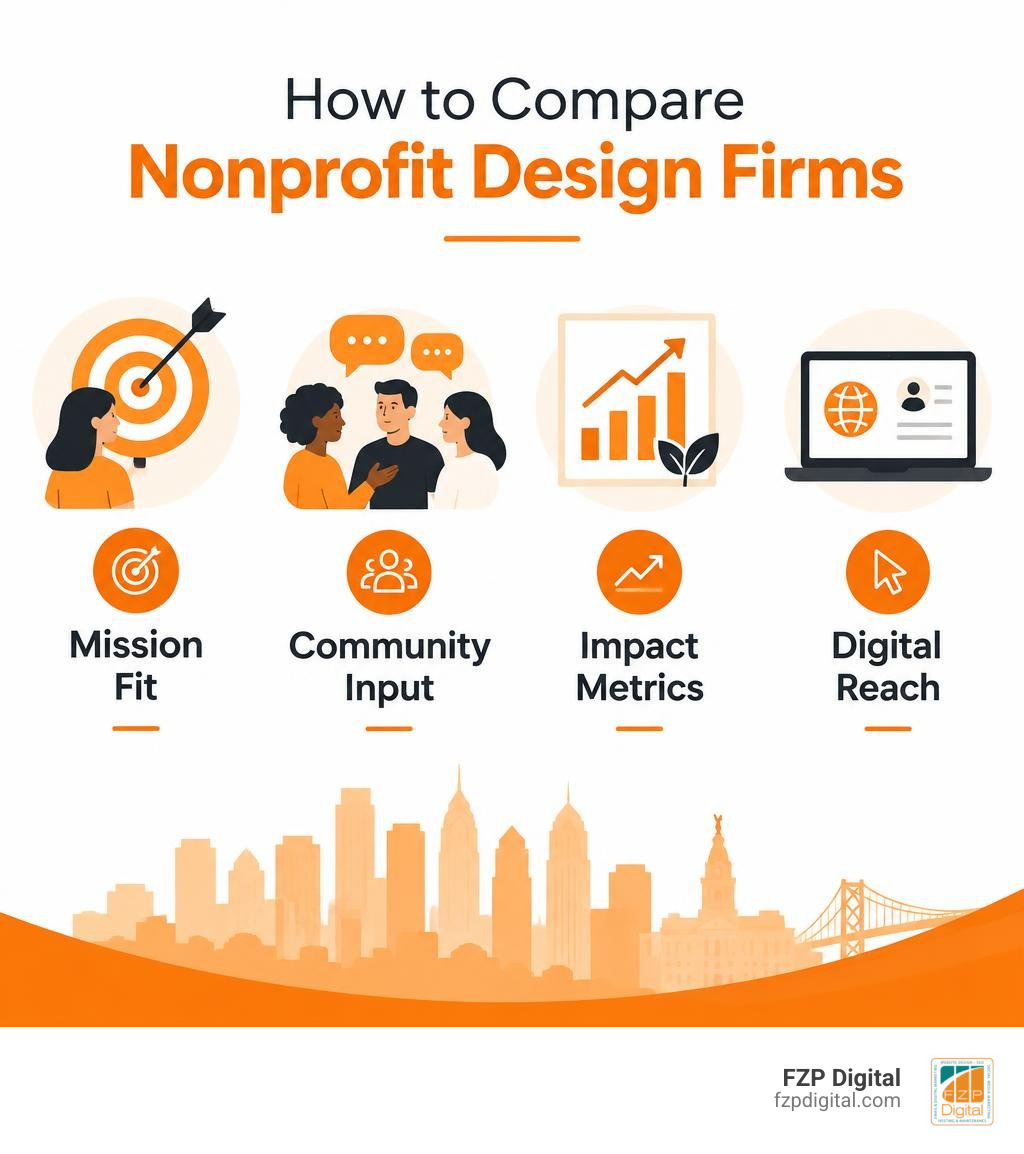
When comparing potential partners, look for firms that can:
- Start with your mission, audience, and real-world constraints.
- Involve community members and stakeholders in the design process.
- Measure outcomes such as participation, accessibility, behavior change, and environmental benefit – not only project revenue.
- Build practical digital tools that help you reach donors, volunteers, clients, and partners.
That difference matters. Traditional agencies may primarily optimize for commercial growth, while purpose-driven studios often balance quality design with equity, local knowledge, long-term stewardship, and measurable social impact.
For a Philadelphia nonprofit or small organization, collaborating with specialized nonprofit website design companies helps your website and brand explain why your work matters in seconds – then gives people an easy next step to donate, volunteer, register, refer someone, or get support.
I’m Fred Z. Poritsky, founder of FZP Digital. After years in nonprofit financial management and now helping organizations improve their websites, SEO, and digital presence, I understand why choosing the right professional web design firm or dedicated charity website design company is essential for connecting creative work to a sustainable mission.
What Sets Nonprofit Design Firms Apart from Traditional Agencies?
When you run a mission-driven organization, your daily challenges are completely unique. Traditional creative agencies often focus purely on commercial conversions, clicks, and immediate sales revenue. While those metrics work well for retail brands, they fall short when your primary goal is community transformation, equity, or lasting policy change.
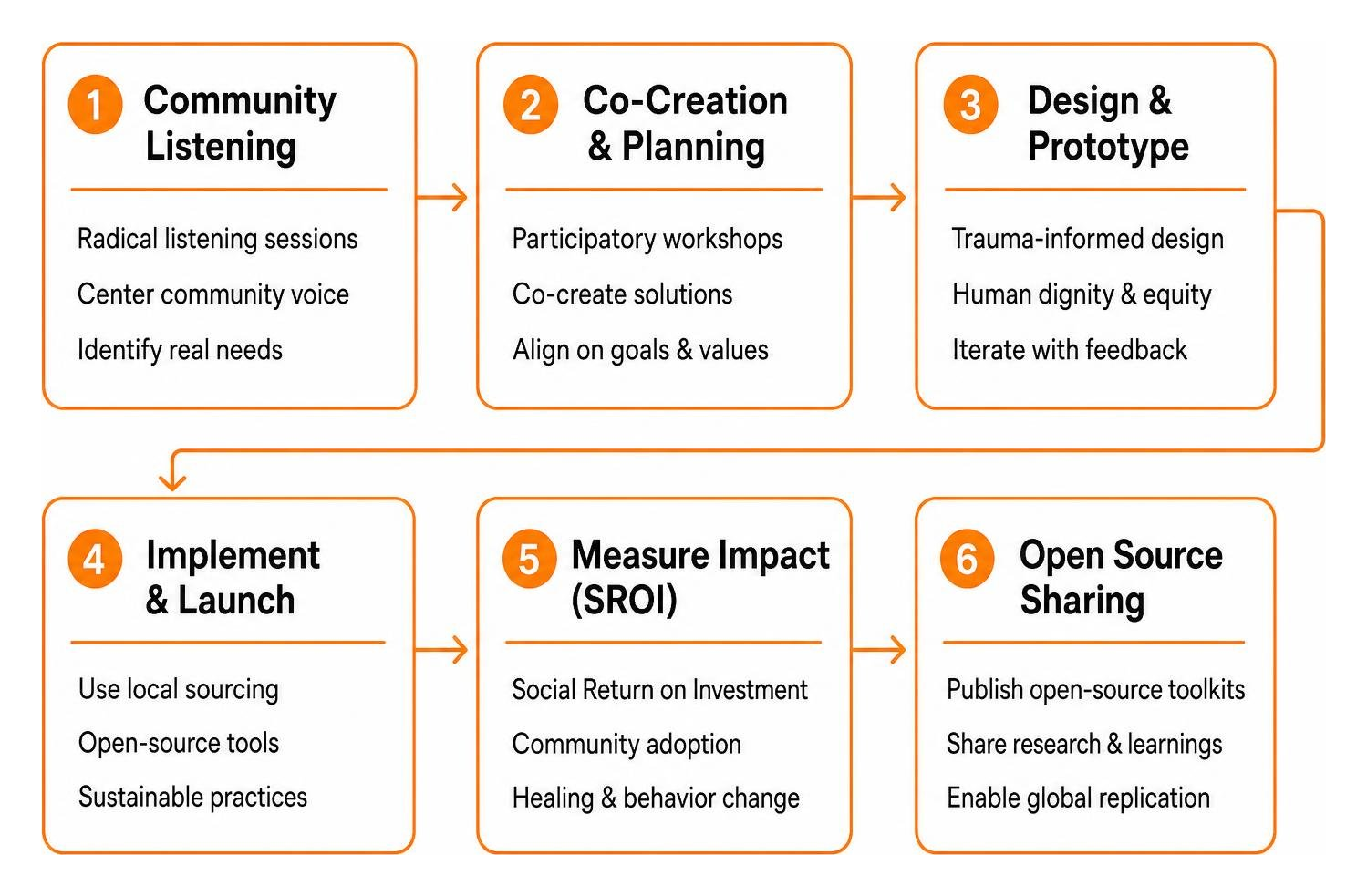
This is where purpose-driven creative studios step in. These organizations—often structured as 501(c)(3) nonprofits or registered benefit corporations—prioritize social mission over pure profit maximization. Rather than treating local populations as passive consumers, they use participatory co-creation, inviting community members to help shape the exact solutions they will use.
By aligning their legal structures with public interest goals, these organizations evaluate success through Social Return on Investment (SROI), measuring community adoption, physical healing, and behavioral shifts alongside standard milestones. Discovering modern nonprofit website design best practices helps your team see how purpose-driven design directly improves community engagement.
| Core Dimension | Traditional Design Agencies | Purpose-Driven & Nonprofit Design Studios |
|---|---|---|
| Primary Objective | Commercial conversion & commercial profit | Social impact, equity, & systemic change |
| Legal Structure | Standard LLC or C-Corp | 501(c)(3) Nonprofit, Benefit Corporation, or WBE |
| Design Process | Top-down, agency-led creative sprints | Participatory co-creation & community workshops |
| Key Metric of Success | Direct ROI, brand sales, and market share | Social Return on Investment (SROI) & lives improved |
| Material & Tech Sourcing | Cost-efficiency & commercial vendor partnerships | Local sourcing, open-source tools, & sustainable labor |
| Asset Distribution | Proprietary intellectual property | Open-source toolkits & shared public research |
Core Values Guiding Leading Nonprofit Design Firms
Purpose-driven studios share foundational convictions that guide every sketch, code commit, and community meeting. At the heart of this work is radical listening. Instead of assuming what a neighborhood needs, designers conduct extensive listening sessions to ensure community voice leads the initiative.
Key shared principles include:
- Human Dignity & Equity: Designing spaces, platforms, and services that respect the lived experiences of every participant.
- Trauma-Informed Design: Creating environments and digital pathways that foster psychological safety, reduce stress, and promote emotional restoration.
- Regenerative Frameworks: Adopting strategies like the “One Health” concept, which links human wellbeing directly to environmental health and local ecological stewardship.
When applying the core principles of nonprofit website designs, your team can translate these values into intuitive digital experiences that build trust with supporters.
Key Challenges Facing Nonprofit Design Firms and How They Adapt
Operating without a purely commercial profit model brings distinct challenges. Funding instability and scaling constraints require creative problem-solving. Pro bono capacity is naturally limited, meaning studios must balance community-led initiatives with reliable revenue streams.
To adapt, these firms leverage innovative operational models:
- Open-Source Asset Sharing: Rather than locking work behind paywalls, studios publish open-source design toolkits, educational flipbooks, and architectural plans to allow global replication.
- Cross-Sector Collaboration: By partnering with municipal agencies, philanthropic foundations, and universities, firms amplify their reach without taking on excessive financial risk.
- Ethical Technology Integration: Incorporating artificial intelligence to enhance human-centered workflows while keeping algorithms transparent, accountable, and aligned with human values.
Key Impact Sectors and Methodologies Shaping Purpose-Driven Design
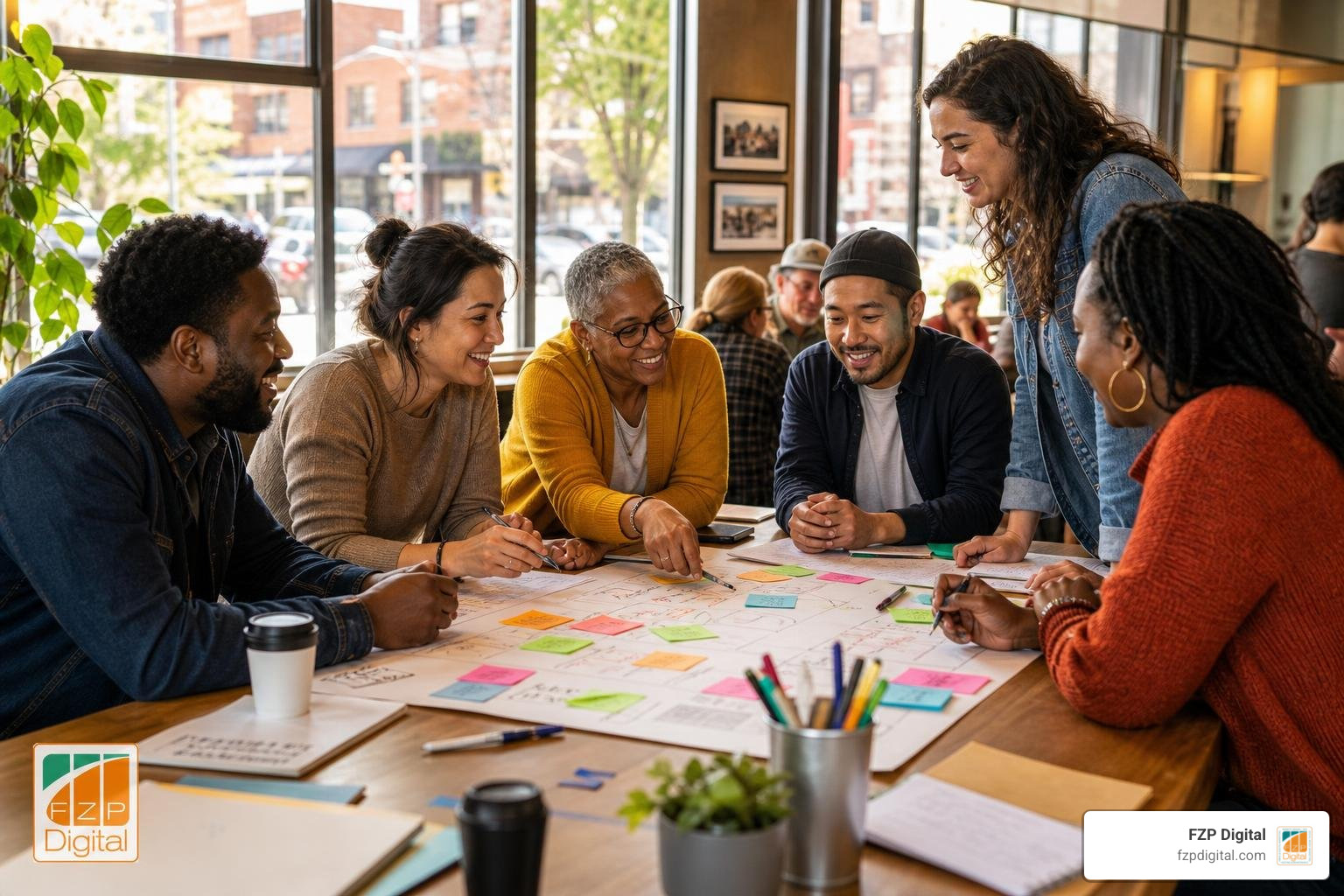
Purpose-driven creative firms work across diverse sectors where public well-being is paramount. Whether addressing public health crises, designing affordable housing, or advancing civic education, these studios build solutions alongside the people who rely on them daily. Reviewing tailored charity website design practices shows how intentional user journeys make complex community programs easy for the public to navigate.
Human-Centered and Trauma-Informed Spatial Design
In physical architecture and urban planning, trauma-informed design creates restorative environments for vulnerable populations. By assessing how lighting, spatial acoustics, layout, and natural materials influence human stress levels, designers build spaces that restore a sense of personal agency.
Key spatial interventions include:
- Inclusive Playgrounds & Eco-Gardens: Building inclusive playgrounds from recycled materials and transforming vacant rooftops into productive eco-gardens that foster neighborhood pride.
- Community Facilities: Converting vacant spaces into vibrant community hubs, youth makerspaces, and family permanency centers designed for healing.
- Regenerative Urban Infrastructure: Utilizing climate-positive, locally sourced building materials to support regional craftspeople while cutting environmental footprints.
Digital Storytelling, Open-Source Tools, and Systems Change
Beyond physical structures, mission-driven design transforms how organizations communicate online. Complex social issues require clear, accessible digital systems that encourage civic engagement and long-term participation.
Using essential digital marketing strategies for nonprofits, organizations turn intricate research into interactive stories, behavioral change tools, and educational campaigns. Open-source educational flipbooks, clean water initiatives, and mobile-friendly resource directories break down systemic barriers and empower everyday users.
Notable Mission-Driven Studios Transforming Communities
Around the world and across local communities, specialized studios demonstrate the tangible power of mission-centered design. Exploring these inspiring nonprofit organization examples illustrates how diverse operating models achieve outsized public impact.
Architectural and Spatial Innovators
Leading spatial studios prove that architecture can be a tool for systemic equity:
- Multidisciplinary Design Teams: Some organizations operate with teams of professionals spanning dozens of countries, showing how architecture can promote justice and dignity. Their construction-focused branches often prioritize a highly localized workforce, strong representation of women in leadership, and partnerships with dozens of artisan cooperatives.
- Benefit Corporation Studios: Certified Women’s Business Enterprises and Registered Benefit Corporations often bridge high-level design with nonprofit operational realities. They focus on trauma-informed design, feasibility studies, and community spaces like youth makerspaces and library outdoor infrastructure.
- Regenerative Urban Design Groups: Studios specializing in regenerative eco-design in challenging urban contexts have transformed dozens of rooftops, built inclusive playgrounds, completed community projects, created kindergarten eco-gardens, and directly impacted hundreds of families using recycled materials and localized stewardship.
- Volunteer Design Networks: Some organizations connect volunteer design professionals with neighborhood nonprofits, helping grassroots organizations visualize community enhancements through early-stage technical assistance.
Collaborative Alliances and Impact Initiatives
Purpose-driven alliances and research networks tackle social challenges through shared open-source frameworks and collective action:
- Global Design Alliances: Some global alliances unite dozens of organizations with ambitious goals to improve millions of lives by the end of the decade. Having trained thousands of creatives, these alliances deliver open-source solutions ranging from clean portable sanitation models to menstrual health education tools.
- Open-Source Civic Alliances: Coalitions of educators, researchers, and public interest advocates collaborate to create publicly accessible design toolkits, environmental awareness guides, and educational materials that empower grassroots leaders worldwide.
How Mission-Driven Organizations Can Choose and Fund the Right Design Partner

Selecting the right design partner requires balancing mission alignment with technical execution. Whether you need an architectural feasibility study or a digital overhaul, choosing a team that understands grant cycles and board governance is essential.
Here is how you can set your organization up for success:
- Conduct an Early Needs Assessment: Define your core operational constraints, audience personas, and long-term objectives before drafting a Request for Proposals (RFP).
- Use Feasibility Studies for Fundraising: Comprehensive visual feasibility studies and interactive wireframes help donors and grantmakers visualize your project, making capital campaigns significantly more persuasive.
- Prioritize Responsive CMS Platforms: Ensure your digital partner builds on an open, scalable platform. At FZP Digital, we emphasize accessible WordPress architecture hosted on reliable infrastructure. When evaluating managed hosting, FZP Digital recommends GoDaddy and WP Engine for maximum stability, security, and ease of maintenance.
- Incorporate Search Engine Visibility: Beautiful design needs an audience. Organic search engine optimization ensures that people searching for your services, programs, or volunteer opportunities can actually discover you.
Navigating complex digital landscapes and technical SEO can feel overwhelming for busy nonprofit leaders. That is why having our experienced team at FZP Digital by your side makes all the difference. Under the leadership of Fred Z. Poritsky, our collaborative “Develop . Design . Deliver” methodology ensures your website accurately communicates your mission while driving measurable real-world engagement. Reviewing our comprehensive nonprofit website design guide and connecting with expert web designers for nonprofits will give your organization the clarity needed to move forward confidently.
Frequently Asked Questions About Nonprofit Design Firms
How do nonprofit design firms measure project success beyond financial ROI?
Purpose-driven firms focus on Social Return on Investment (SROI) and community-centered metrics. Success is measured by how effectively a project improves everyday lives:
- Community Adoption & Ownership: Tracking sustained community participation, volunteer retention, and local stewardship over time.
- Behavioral & Health Outcomes: Quantifying tangible changes, such as improved hygiene habits, reduced stress indicators, or increased use of local services.
- Policy & Systems Change: Measuring how visual storytelling or spatial research influences municipal policy, zoning, or philanthropic grant allocations.
How do these organizations maintain financial sustainability while offering pro bono services?
Nonprofit design studios use diversified business models to support their mission-aligned work without compromising quality:
- Tiered Fee-for-Service: Charging market rates to larger institutions, universities, and foundations to subsidize discounted or pro bono work for grassroots groups.
- Philanthropic Grants & Sponsorships: Securing operational grants from foundations dedicated to civic innovation and social justice.
- Strategic Municipal Partnerships: Teaming up with local government agencies for public infrastructure, research, and community outreach initiatives.
When should an NGO hire a nonprofit design firm versus a traditional digital agency?
Consider a nonprofit design firm or a dedicated mission-aligned agency when your project involves:
- Complex Community Stakeholders: You need deep participatory workshops, co-creation sessions, and alignment across diverse community groups.
- Trauma-Informed Requirements: Your physical or digital environment serves vulnerable individuals requiring specialized attention to accessibility and emotional safety.
- Mission-First Storytelling: You need a digital partner who understands 501(c)(3) governance, donor psychology, and organic search strategies tailored specifically to civic impact.
Conclusion
Purpose-driven design is reshaping how communities solve problems, tell stories, and build sustainable futures. When you partner with a creative team that values human dignity, deep listening, and accessible technology, your organization’s real-world impact multiplies.
Whether you are updating your digital presence, launching a fundraising campaign, or building an accessible community platform, having the right digital team ensures your message connects with the people who need it most. At FZP Digital, we bring decades of financial insight and technical digital marketing expertise to help mission-driven organizations across Philadelphia, Richboro, Newtown, and Bucks County thrive.
Ready to build a digital presence that amplifies your mission? Explore our professional web design and development services today, and let’s craft something meaningful together.