
Why Local Backlinks Matter and How to Land Your First Five
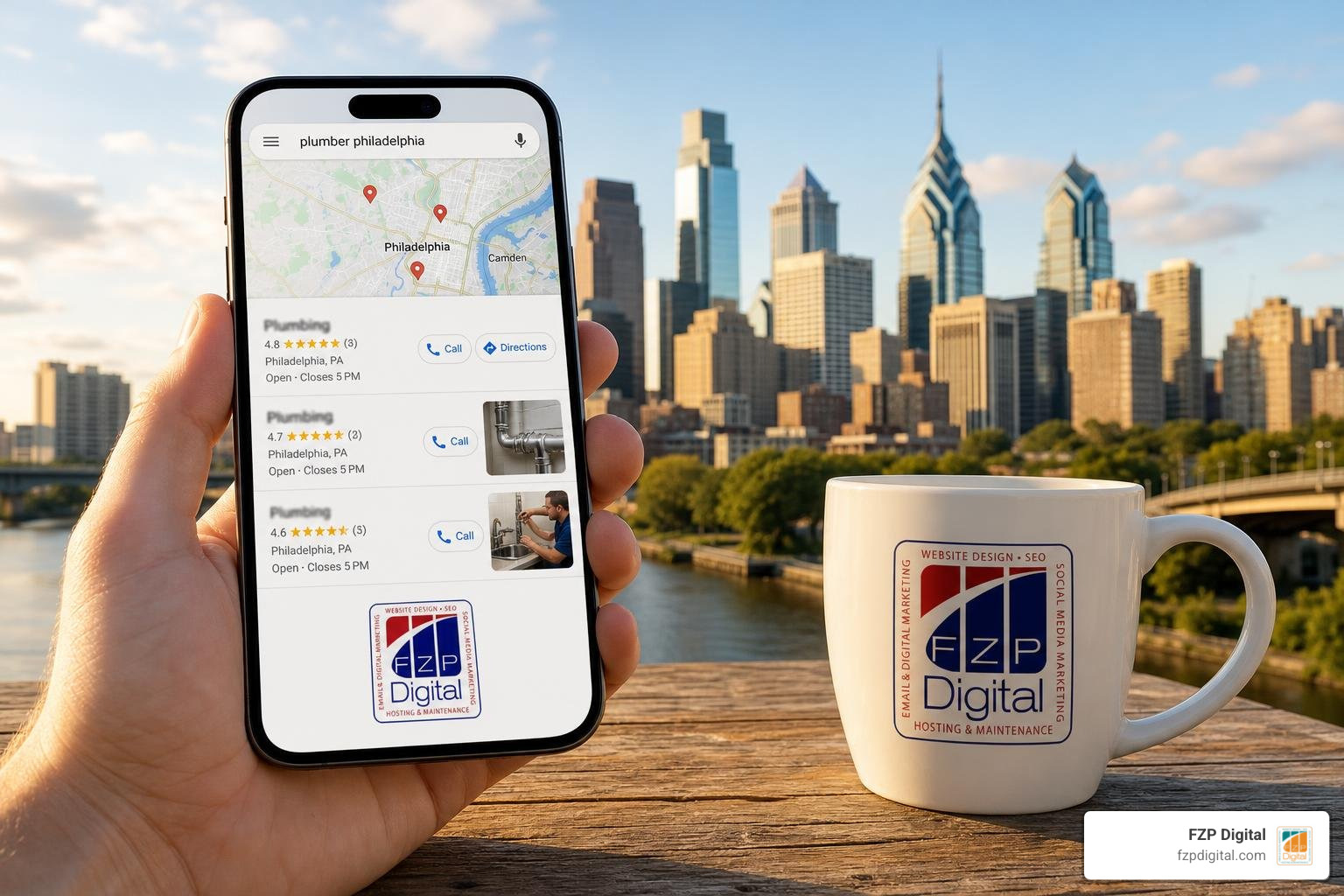
How to Get Local Backlinks That Help People Find You
Start with people and organizations you already know. Ask a local vendor to link to a testimonial you wrote, check whether your chamber of commerce offers a member profile, and look for a relevant neighborhood event you can support. Then pitch a useful local story to a community publication and ask a business partner whether they have a resources page where your website belongs.
Why focus close to home? A link from a trusted Philadelphia-area website can help potential customers discover you and give search engines more context about your place in the community. A directory listing can help, too, but a genuine recommendation on a relevant local site is usually a better goal than collecting dozens of generic listings. According to Moz’s research on local search ranking factors, link signals remain one of the most influential elements in determining local pack visibility.
I’m Fred Z. Poritsky, and my background in nonprofit financial management now informs my work in web design and SEO at FZP Digital. I help businesses and nonprofits understand how to get local backlinks as part of building a stronger, more useful online presence.
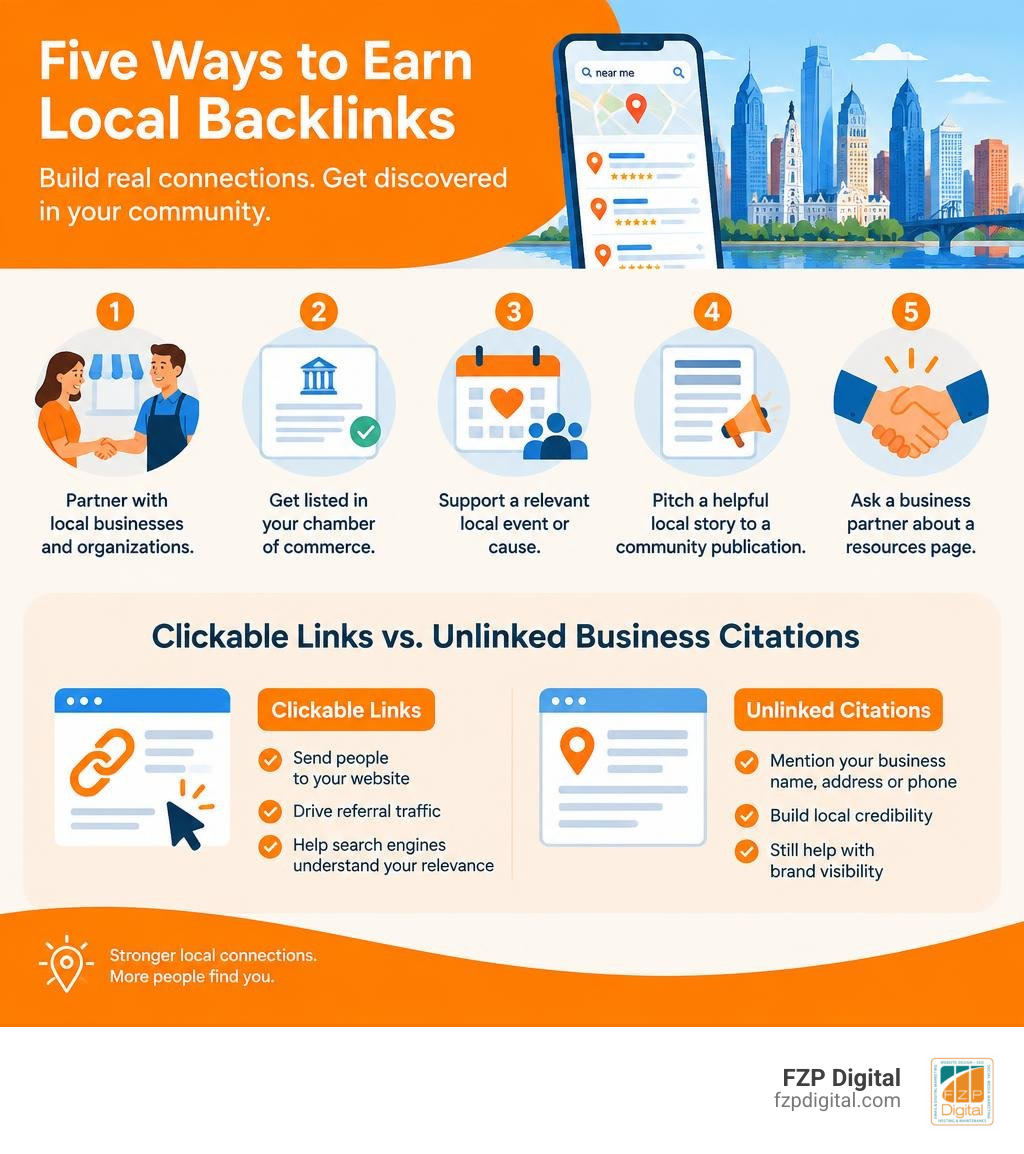
How to get local backlinks terminology:
Understanding Why Local Backlinks Drive Map Pack Rankings
Have you ever wondered why some neighborhood businesses show up at the very top of Google Maps while others stay buried? In Google’s local algorithm, ranking weight comes down to three main pillars: proximity, relevance, and prominence. Prominence is how well-known and trusted your business is across the web, and backlinks are one of the strongest signals Google uses to evaluate it. According to the 2024 Whitespark Local Search Ranking Factors survey, link signals account for roughly 11% of organic ranking weight and 8% of Local Pack weight.
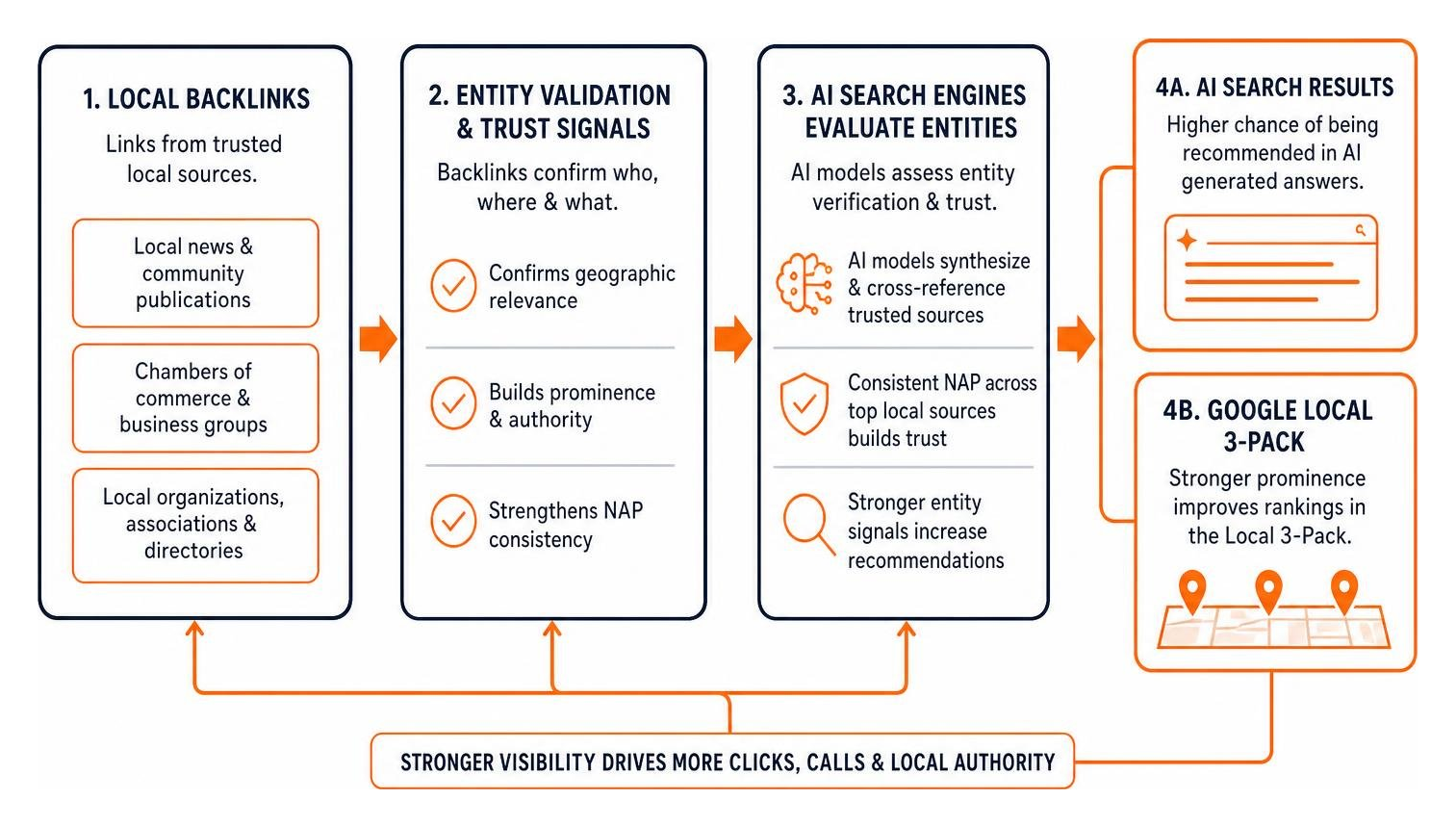
When search engines see established local organizations linking to your website, it confirms your geographic relevance. A link from a trusted neighborhood association in Newtown or a business directory in Bucks County acts as a digital vote of confidence. In fact, research shows that businesses with at least 3 hyperlocal links rank an average of 1.4 positions higher in the Local Pack than competitors relying solely on national directories. Gaining a clearer picture of a practical guide to how local SEO works helps illustrate why these authentic community ties drive qualified referral traffic and real phone calls.
| Metric / Attribute | Local Backlink | National Directory Link | Local Citation |
|---|---|---|---|
| Primary Value | Editorial trust, local prominence, referral traffic | Broad domain authority | NAP consistency, foundational discovery |
| Placement Type | In-content editorial, partner page, sponsor listing | Automated structured profile | Structured listing or plain text mention |
| Link Equity | High contextual equity passed to your domain | Minimal to moderate equity | Often nofollow or unlinked text |
| Impact on Map Pack | Strong positive influence on local prominence | Low geographic relevance signal | Foundational baseline verification |
| Difficulty to Earn | Moderate (requires real outreach & relationships) | Easy (self-submission) | Easy (claim & verify) |
Local Citations vs. Local Backlinks: What Is the Difference?
It is easy to mix up citations and backlinks, but understanding the distinction is essential. A local citation is any online mention of your core business details—specifically your Name, Address, and Phone number (NAP). Citations can appear on review sites or community directories, and they do not always include an active hyperlink. Their primary job is establishing consistency and proving to search crawlers that your business physically exists where you say it does.
A local backlink, on the other hand, is an active, clickable HTML link from another website directly to yours. These links pass crawl authority and editorial equity. While citations build trust, high-quality backlinks propel your site to higher rankings. A single editorial mention in a respected community publication or regional news outlet provides far more ranking power than 50 standard directory citations. Reviewing our beginner’s guide to link building for small businesses is a great way to start identifying how these link types fit together.
How Local Links Influence AI Search and Generative Engines in 2026
Search behavior has shifted dramatically in 2026. Generative engines like Google AI Overviews, ChatGPT Search, and Perplexity actively synthesize answers for users searching for service providers. Rather than simply scanning keywords, these AI models evaluate entity verification and trust signals. Perplexity’s published citation patterns reveal that 46.7% of its cited sources are websites with strong referring-domain profiles.
Furthermore, businesses with consistent NAP across their top 20 local link sources appear in AI Overview responses for local queries at a rate 2.8 times higher than businesses with data inconsistencies. When an AI engine suggests a top service provider in Downtown Philadelphia, it cross-references local news coverage, community mentions, and verified business associations to ensure reliability. Integrating comprehensive off-page SEO services ensures your business establishes the digital footprint necessary for visibility across both traditional search results and modern generative answer engines.
How to Get Local Backlinks: The Tiered Authority Framework
Building a resilient backlink profile requires a structured approach. Instead of randomly chasing links, we recommend categorizing your link-building opportunities into a tiered framework:
- Tier 1: High-Authority Civic & News Links. These are the most influential links you can acquire. They come from local government portals, regional news outlets, educational institutions, and accredited chambers of commerce. They carry significant trust and reinforce your regional footprint.
- Tier 2: Community & Industry Organizations. This tier includes local non-profits, sports leagues, neighborhood business associations, and regional industry organizations. These links demonstrate active community involvement and provide valuable local relevance.
- Tier 3: Commercial Partnerships & Local Vendors. These links come from vendors you buy supplies from, clients you serve, and non-competing businesses you collaborate with.
Balancing your anchor text across these tiers is critical. Keep your anchor profile natural by prioritizing your brand name, website URL, and descriptive natural phrases rather than forcing exact-match commercial keywords.
How to Get Local Backlinks Fast: Securing Your First Five Links This Week
You do not need months of outreach preparation to start earning meaningful links. Here is how you can secure your first five high-value local backlinks quickly:
- Write Vendor Testimonials: Make a list of local vendors, suppliers, accountants, or software providers you work with regularly. Write a genuine 2-to-3 sentence testimonial praising their service and send it over. Most businesses maintain a “Clients” or “Testimonials” page on their site and are happy to include your quote alongside a clickable link to your website.
- Join the Local Chamber of Commerce: Joining organizations like the Newtown Chamber of Commerce or Greater Philadelphia Chamber provides an instant, authoritative profile link in their member directory.
- Sponsor a Neighborhood Event or Charity: A modest $250 sponsorship for a local 5K charity run or youth sports team usually earns a featured spot on a well-maintained sponsor page that stays active for years.
- Claim Your Business Association Listings: Check regional trade groups or local merchant associations. Most maintain active resource directories for member businesses.
- Leverage Customer Partner Pages: Reach out to B2B clients you have completed work for and ask if they feature a “Preferred Partners” or “Our Network” section on their website.
Mastering structured link building outreach strategies makes reaching out to these community partners simple, polite, and effective.
How to Get Local Backlinks Through Community PR and Collaborations
Once your foundational links are in place, long-term growth comes from creative community collaborations. Pitching local journalists becomes much easier when you frame your story around community impact rather than self-promotion. Did your team renovate a community center, host a charity food drive, or launch an educational workshop? Local news editors love community-focused stories with clear local angles.
Collaborating with non-competing businesses also opens doors for co-hosted events, cross-promotional guides, and mutual resources. For instance, an interior designer and a local flooring installer can easily co-author an informative guide on home renovation trends, earning high-relevance editorial links on each other’s websites. For a deeper dive into these methods, explore our local link building strategy guide.
Uncovering High-Value Opportunities and Practices to Avoid
Finding relevant link targets does not require expensive tools or complicated setups. By observing your local market and avoiding common traps, you can build a sustainable backlink profile that outlasts algorithm updates.
Reverse-Engineering Competitors to Uncover Local Link Targets
An effective way to identify high-value targets is to see where your top-ranking competitors are earning their links. Running a structured SEO competitive analysis plan lets you pinpoint local sites already linking to businesses in your industry.
You can also uncover unlinked mentions and local opportunities using targeted search operators in Google:
"Philadelphia" + "sponsors""Bucks County" + "useful resources""Richboro" + "business directory"site:.org "local partners" + "Pennsylvania"
When you discover community event archives, regional blogs, or neighborhood business roundups linking to other businesses, reach out and introduce yourself.
Harmful Local Link Building Tactics to Avoid in 2026
Just as good links elevate your rankings, manipulative link tactics can trigger penalties that wipe out your search visibility. Avoid these risky practices:
- Private Blog Networks (PBNs): Artificial networks of expired domains set up solely to pass link equity are easily detected by modern search algorithms.
- Bulk Directory Blasts: Purchasing packages that promise “500 Directory Links for $50” often places your NAP on low-quality, spam-filled link farms.
- Sitewide Footer Links: Trading site-wide footer links with other businesses creates an unnatural link pattern that search engines devalue.
- Comment and Forum Spam: Dropping automated links into community forums, local blogs, or unmoderated comment sections damages your brand reputation and yields zero SEO value.
- Unvetted Paid Links: Paying for guest posts or sponsor links that fail to use proper disclosure tags violates search engine webmaster guidelines.
Tracking Link Performance and Measuring Ranking Velocity
Earning backlinks is an ongoing investment, so tracking your progress is essential to see what works. Use Google Search Console to monitor when newly acquired referring domains are indexed by search crawlers. Complement this with a reliable local rank tracker to observe changes in your Local 3-Pack and organic search positions across your primary target zip codes.
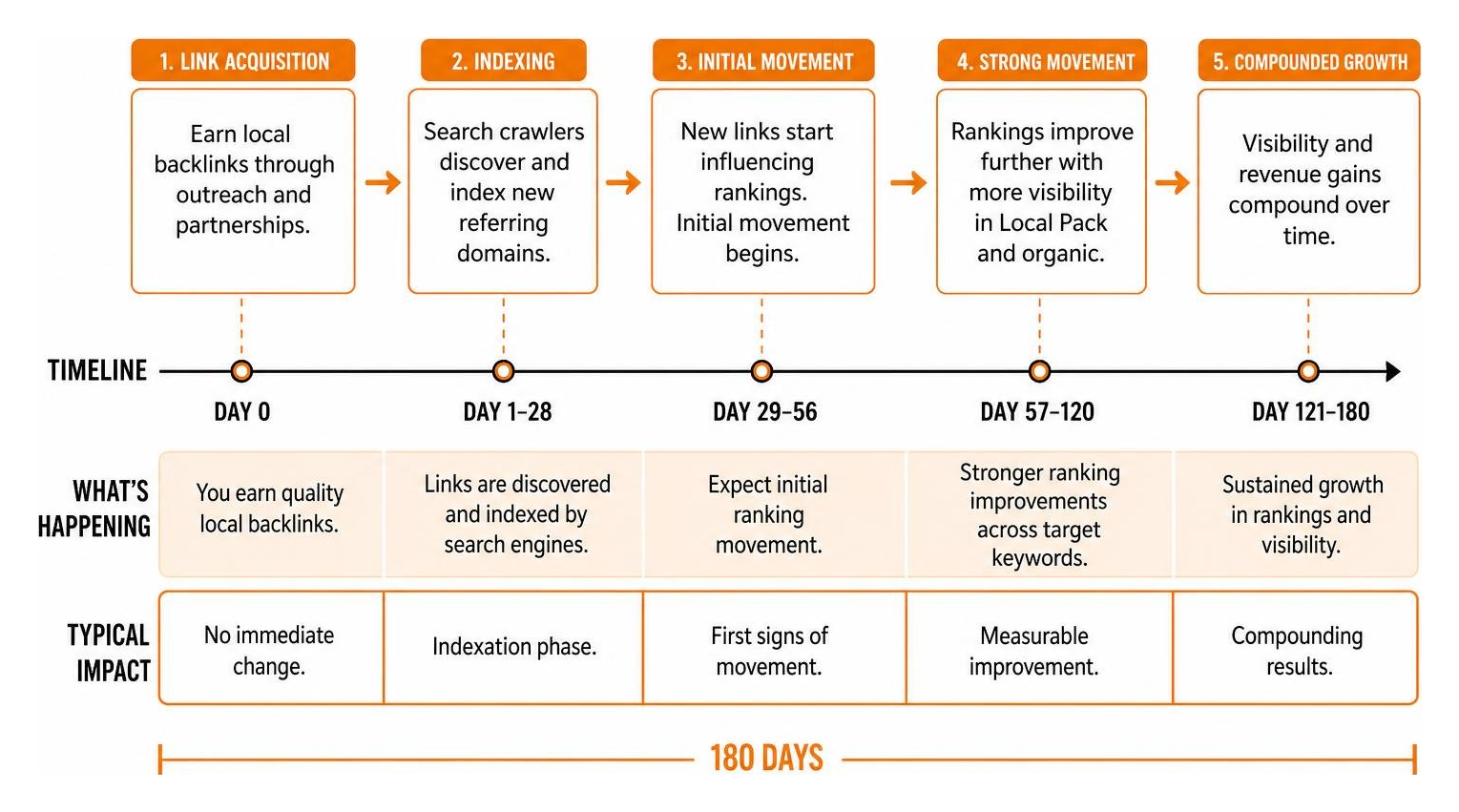
Local backlinks typically take between 4 to 8 weeks to show initial ranking movement, with measurable visibility and revenue gains compounding over 60 to 180 days. Regularly auditing your progress helps you improve search ranking performance by showing which outreach tactics deliver the strongest returns.
Frequently Asked Questions About Local Link Building
How many local backlinks does a small business need to rank in the Local Pack?
In most mid-size markets, acquiring 15 to 25 quality, locally relevant backlinks is enough to significantly move the needle in the Local Pack. The key is relevance over volume. Research indicates that 73% of local service businesses have fewer than 10 referring domains pointing to their website, while competitors owning the top spots in the Local 3-Pack average around 38 referring domains. Aiming for a steady pace of 2 to 4 new editorial links per month creates a natural, authoritative profile.
How long does it take for local backlinks to improve rankings?
Most businesses begin seeing noticeable movement within 4 to 8 weeks after a high-quality link is crawled and indexed, assuming their on-page SEO and Google Business Profile are properly optimized. Full ranking impact and authority maturation generally compound over 3 to 6 months.
Do links from local Facebook groups or Nextdoor help local SEO?
Links shared in Facebook groups, Nextdoor posts, or other social platforms almost always carry rel="nofollow" attributes, meaning they do not directly pass link authority to your site. However, they are still valuable! They drive direct referral traffic, increase brand awareness, and often put your business in front of local journalists, bloggers, and community leaders who can provide genuine editorial backlinks later on.
Conclusion
Securing impactful local backlinks does not require hundreds of spammy directory listings or complicated technical tricks. By prioritizing genuine relationships, supporting community initiatives, partnering with regional businesses, and maintaining NAP consistency, you create an authoritative digital foundation that elevates both your Local Map Pack rankings and AI search visibility.
If you are ready to expand your online visibility, improve your organic rankings, and partner with experienced professionals who understand the regional landscape of Philadelphia and Bucks County, explore our tailored affordable SEO services and let our team at FZP Digital help you grow your business today.