
Expert Web Designers for Nonprofits That Will Actually Amplify Your Mission
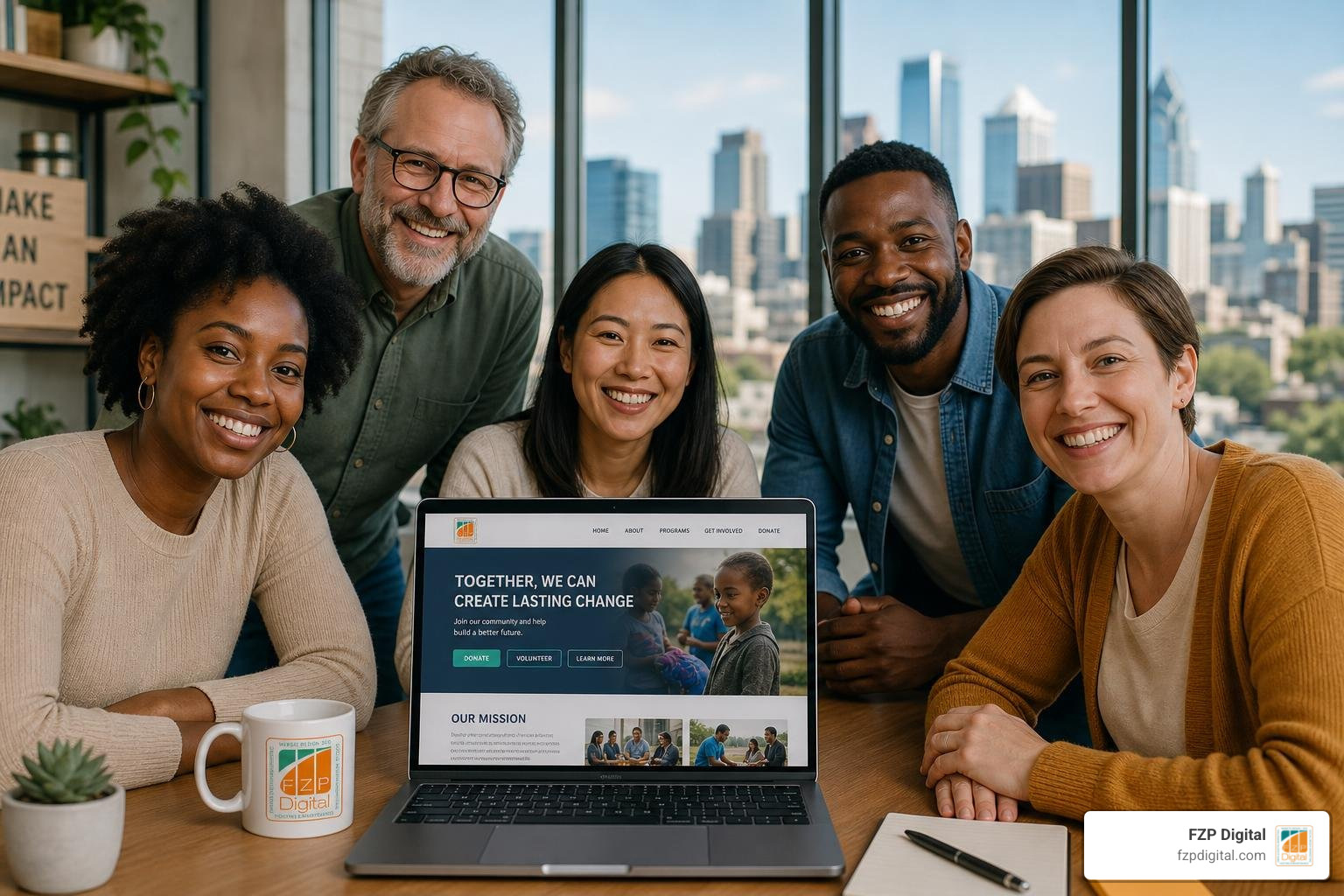
Your Nonprofit’s Website Is Either Working for Your Mission — or Against It
Web design for nonprofit organizations isn’t just about making something that looks good online — it’s about building a digital home that turns curious visitors into committed donors, volunteers, and lifelong advocates for your cause.
Here’s a quick look at what the right nonprofit website needs to do:
| What Your Website Must Do | Why It Matters |
|---|---|
| Make donating fast and frictionless | 63% of donors prefer to give by credit/debit card — a clunky form loses them instantly |
| Tell your story with warmth and clarity | Visitors decide within seconds whether to trust your organization |
| Serve multiple audiences at once | Donors, volunteers, and grant applicants all need different pathways |
| Rank on Google without paid ads | 44% of nonprofit site visits come from organic search traffic |
| Work flawlessly on mobile | Most donors and volunteers discover organizations on their phones first |
| Meet accessibility standards | Roughly 15% of the world’s population lives with some form of disability |
Think about the last time you landed on a nonprofit website that felt cold, cluttered, or outdated. Did you donate? Probably not.
That’s the hard truth: a poorly designed website doesn’t just fail to help your mission — it actively undermines it. When someone visits your site and can’t quickly find where to give, how to get involved, or why your work matters, they leave. And they may not come back.
The good news? You don’t need a massive budget or a big in-house tech team to fix this. You need the right design partner who understands the unique world of nonprofit organizations — one who can translate your mission into a digital experience that moves people to act.
That’s exactly what this guide is here to help you find.
I’m Fred Z. Poritsky, founder of FZP Digital, and I bring a background in nonprofit financial management — combined with deep expertise in WordPress web design for nonprofit organizations — that gives me a perspective most web designers simply don’t have. I’ve sat on the inside of nonprofit operations, so I understand what your organization actually needs from a website, not just what looks impressive in a portfolio.
Handy web design for nonprofit organizations terms:
- WordPress development for nonprofits
- digital marketing for nonprofits
- website development company near me
Essential Features of Web Design for Nonprofit Organizations
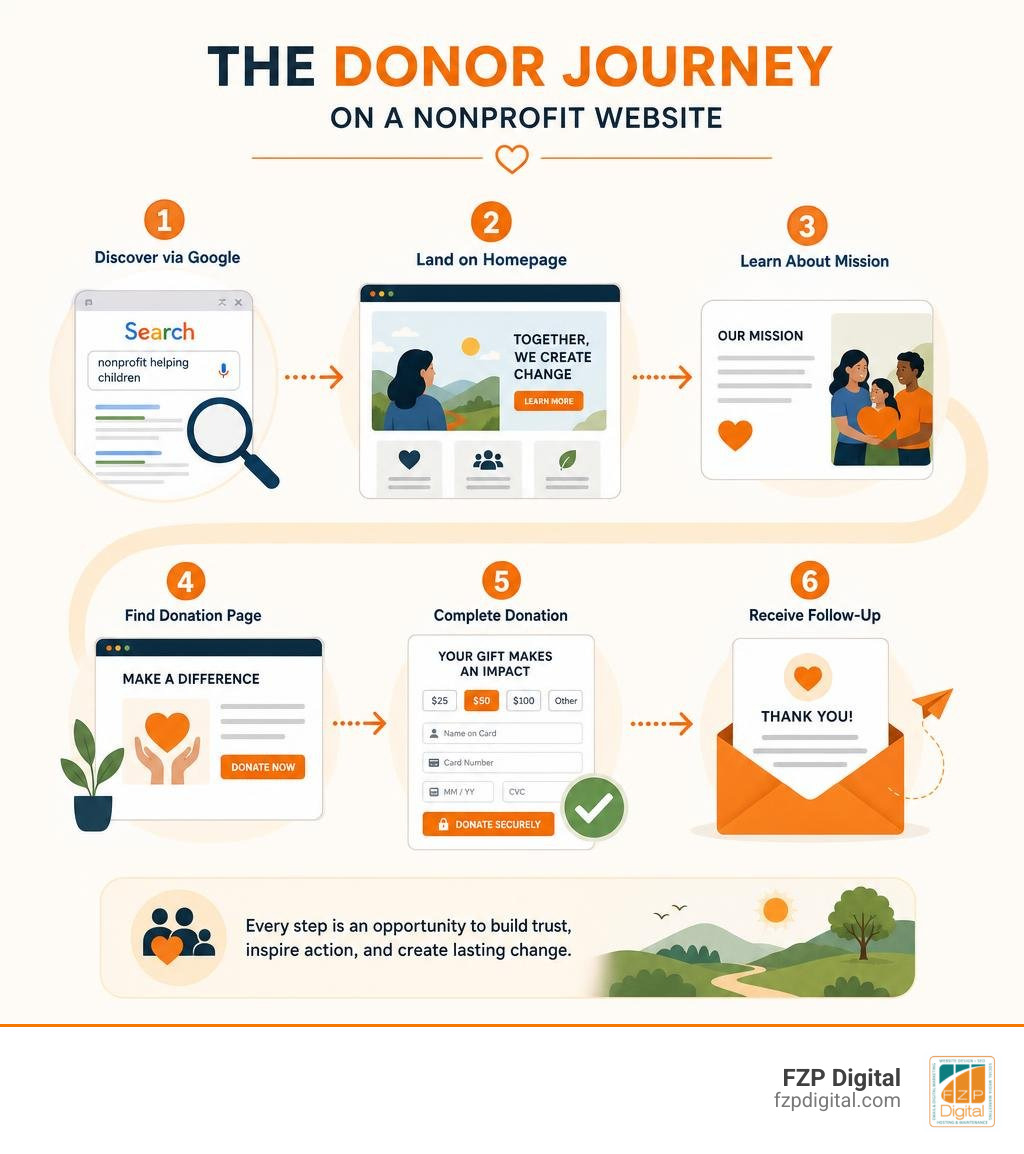
When we sit down with nonprofits in Philadelphia and Bucks County to plan a website redesign, we always start with a fundamental question: What do you want your visitors to do the second they land on your site?
Answering this question requires moving past generic templates. Your website should be a custom-tailored engine designed to drive real-world action. Let’s look at the essential features your website needs to build immediate trust and inspire action.
To help you map out your site’s structure, we’ve compiled the absolute essentials in our Best Practices for Nonprofit Website Design. Beyond a beautiful layout, your site must prominently display your 501(c)(3) tax-exempt status, showcase real-time impact numbers (like “10,000 meals served” or “500 pets adopted”), and offer a clear, welcoming volunteer sign-up path.
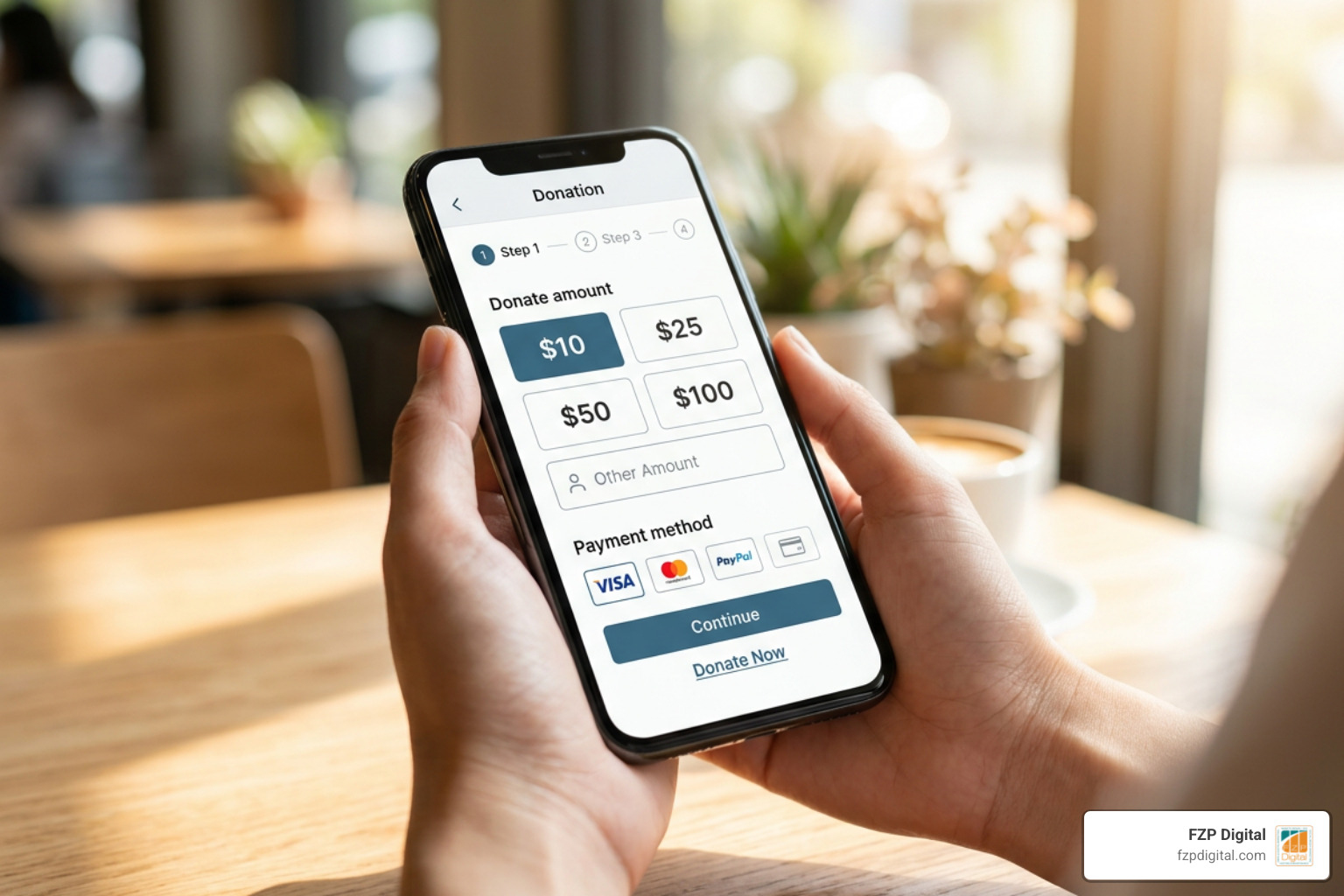
Streamlining the Donation Process
Did you know that a single second of delay in your website’s load time can reduce your conversions by 7%? If your donation page is slow, confusing, or looks untrustworthy, potential supporters will click away.
According to industry research, 63% of donors prefer to make their contributions via credit or debit cards. Meanwhile, 5% prefer wire transfers, and 1% utilize digital wallets. If your site doesn’t easily support these preferred payment methods, you are leaving critical funding on the table.
We design donation flows that keep supporters on your site rather than redirecting them to confusing third-party pages. By integrating secure, modern payment gateways like Stripe and PayPal directly into your custom design, we build immediate donor trust. To learn more about setting up a seamless, secure giving experience, check out FZP Digital’s Guide to Secure Donation Integration.
Engaging Volunteers and Showcasing Real Impact
A great nonprofit website must do more than collect funds; it needs to build a community. This is where strategic storytelling and dedicated volunteer portals come into play.
Instead of burying your achievements in a dry, 50-page PDF annual report, your website should feature dynamic impact sections. We love using interactive elements, clean typography, and real photography to show your work in action. When potential volunteers visit your site, they should be greeted by a simple, step-by-step sign-up flow that makes getting involved feel exciting and accessible.
For visual inspiration on how to structure these pathways beautifully, explore our curated list of Nonprofit Website Designs.
Navigating Accessibility, Mobile Optimization, and SEO
Getting people to your website is a major challenge. Once they arrive, making sure they can actually use your site—regardless of their device or physical abilities—is another challenge entirely. This is where expert guidance becomes invaluable.
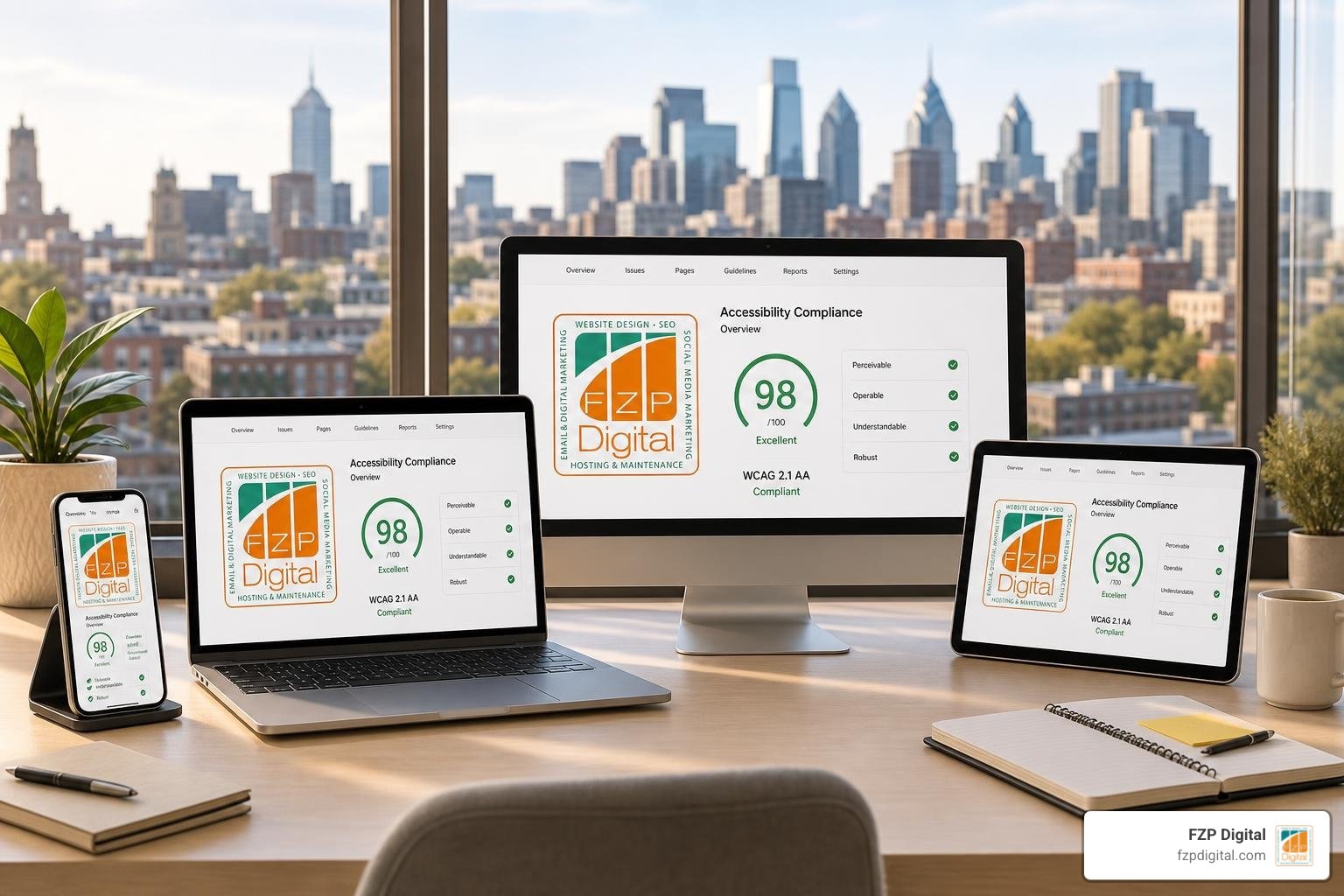
At FZP Digital, we don’t treat search visibility, mobile responsiveness, or accessibility as separate add-ons. They are the core pillars of our development process. You can dive deeper into these foundational elements in our Nonprofit Website Design Complete Guide.
Why Mobile Optimization and SEO are Crucial in Web Design for Nonprofit Organizations
Let’s talk about how people actually find your nonprofit. A massive 44% of all nonprofit website traffic comes from organic search results. That means nearly half of your potential supporters are opening Google, typing in a phrase related to your cause, and looking for a trusted organization to support.
If your website isn’t optimized for search engines, you are invisible to those searchers. SEO for nonprofits is a specialized discipline that requires careful keyword research, technical site speed optimization, and high-quality content creation.
Furthermore, because the majority of donors and volunteers browse on their mobile devices, Google ranks websites based on how well they perform on phones. A mobile-first design ensures your site looks stunning and functions perfectly whether someone is viewing it on a widescreen monitor in Downtown Philadelphia or an iPhone while riding the SEPTA. We lay out the strategic steps to capture this traffic in our guide: Go Digital Do Good Essential Marketing for Nonprofits.
Ensuring Accessibility for All Supporters
Roughly 15% of the world’s population lives with some form of disability. If your website isn’t built to accommodate screen readers, keyboard-only navigation, or proper color contrast, you are locked out of connecting with a significant portion of your community.
Web accessibility is not just a moral imperative; it is also a legal safeguard against digital ADA lawsuits. When we build a site, we adhere strictly to WCAG 2.1 AA standards. This means we implement:
- Proper semantic heading structures so screen readers can easily parse the page.
- Descriptive alt text for all images.
- Keyboard-navigable menus and forms.
- High-contrast color palettes that are easy on the eyes.
Choosing the Right Platform and Design Partner
Choosing how to build your website—and who to build it with—is one of the most important decisions your organization will make this year. The right choice will save you thousands of dollars and endless administrative headaches down the road.
To help you navigate this decision-making process, we’ve mapped out the key questions to ask potential partners in our guide, From Vision to Virtuous Site Hiring the Best for Your Nonprofits Web Development.
WordPress vs. Proprietary Platforms
You might be tempted by cheap, proprietary website builders that promise “drag-and-drop” simplicity. However, these platforms often lock you into rigid templates, charge high monthly fees, and make it incredibly difficult to export your data if you ever want to move.
That is why WordPress is the undisputed king of the nonprofit web, powering over 60% of nonprofit websites worldwide. WordPress is an open-source Content Management System (CMS), meaning you completely own your website, your code, and your data.
WordPress offers unmatched scalability and security when configured correctly. It integrates seamlessly with popular donor databases, event calendars, and newsletter tools. Best of all, it features an intuitive editor that allows your non-technical staff to make quick text and image updates in seconds. Learn how to leverage this platform for your cause in our guide, Crafting Your Cause How to Launch a Nonprofit Website with WordPress.
Selecting an Agency That Aligns with Your Budget
We believe in complete pricing transparency. Many agencies hide their pricing behind complex sales pitches, but we want you to know exactly what to expect.
Generally, professional nonprofit web design projects fall into three categories:
- Basic Nonprofit Site ($5,000 – $10,000): Ideal for local charities needing a 5-10 page site with a clean design, integrated donation forms, and essential SEO setup.
- Advanced Nonprofit Site ($10,000 – $20,000): Best for growing organizations requiring custom layouts, basic volunteer portals, event calendars, and multi-page impact storytelling.
- Enterprise Platform ($20,000+): Designed for large organizations needing complex integrations, member directories, multi-language support, or custom-coded interactive features.
To help you plan your budget effectively, we’ve put together FZP Digital’s Guide to Web Design Pricing.
If you want to compare our custom approach with other specialized agencies in the broader ecosystem, you can read more about industry standards via the Top 20+ Nonprofit Website Design Companies (And Hiring Tips).
Post-Launch Success: Maintenance, Measurement, and Pitfalls
Launching your website is a major milestone, but it is actually just the beginning of your digital journey. A website is a living, breathing tool that requires regular care to remain secure, fast, and effective.
| Maintenance Task | Recommended Frequency | Why It Matters |
|---|---|---|
| Plugin & Theme Updates | Weekly | Prevents security vulnerabilities and ensures software compatibility |
| Security Scanning | Daily | Detects and blocks malicious code or hacking attempts |
| Database Backups | Daily / Weekly | Ensures you can restore your site instantly if something goes wrong |
| Content & Image Updates | Monthly | Keeps your message fresh for visitors and signals activity to Google |
| Accessibility Auditing | Quarterly | Ensures new content remains compliant with WCAG standards |
Avoiding Common Pitfalls in Web Design for Nonprofit Organizations
The single biggest mistake we see nonprofits make is treating their website as a passive “information storage” warehouse. When you dump every flyer, newsletter, and board meeting minutes document onto your homepage, you create a cluttered mess that confuses visitors.
Instead, your website must be a guided experience. Every single page should have:
- A specific target audience in mind (e.g., a local donor in Newtown or a volunteer in Richboro).
- A clear emotional intention (e.g., inspiring empathy through a story).
- A natural, prominent next step (a clear Call to Action, or CTA, like “Donate Now” or “Sign Up to Volunteer”).
We outline how to structure this clean, conversion-focused architecture in our guide to Nonprofit Website Design Best Practices 2025.
Measuring Website ROI and Success
How do you know if your new website is actually delivering a return on your investment? By looking at real, behavioral data rather than guessing.
By integrating tools like Google Analytics and behavioral heatmaps, we can see exactly how users interact with your site. In fact, a data-driven UX optimization project can boost content downloads and form completions by over 90%. When you track metrics like donation form conversion rates, average session duration, and organic search traffic, you gain the insights needed to make smart, continuous improvements.
For a real-world example of how strategic digital marketing and structured web design can transform local community impact, read our deep dive into the Case Studies Bucks County Opportunity Council.
Frequently Asked Questions About Nonprofit Web Design
How much does a nonprofit website redesign typically cost?
A professional website redesign typically ranges from $5,000 for a basic, highly polished 5-10 page site, up to $25,000+ for enterprise-level platforms with advanced features like custom portals, interactive directories, or multi-language support. The final cost depends on your required page count, custom functionality, and software integration needs.
How long does it take to build a new nonprofit website?
Most custom nonprofit website projects take between 6 to 12 weeks from our initial kickoff meeting to the final launch. This timeline includes deep discovery, wireframing, custom visual design, WordPress development, content migration, rigorous testing across multiple devices, and training your team.
What ongoing maintenance should our nonprofit budget for?
Nonprofits should budget for ongoing technical maintenance, which includes secure hosting, daily backups, weekly plugin and theme updates, security monitoring, and occasional content support. This typically ranges from $100 to $500+ per month, depending on the complexity of your site and whether you choose to manage updates in-house or partner with an agency for peace of mind.
Partner with FZP Digital to Amplify Your Mission
Your nonprofit is doing incredible, life-changing work right here in Philadelphia, Bucks County, Newtown, and Richboro. You deserve a website that reflects that passion, builds immediate trust, and makes it incredibly easy for your community to support you.
At FZP Digital, we don’t believe in cookie-cutter templates or confusing technical jargon. Led by Fred Z. Poritsky, we combine real-world nonprofit financial experience with premium, responsive WordPress design to build websites that deliver measurable results.
Through our collaborative Develop . Design . Deliver process, we will work right alongside your team to craft a digital home you’ll be proud to share with the world.
Are you ready to stop being embarrassed by an outdated website and start amplifying your mission online?
Let’s build your impactful website today — get in touch with FZP Digital!