


The Ultimate Guide to Direct Mail Marketing Services
Direct Mail vs. Email Marketing: Which One Actually Works in 2026?
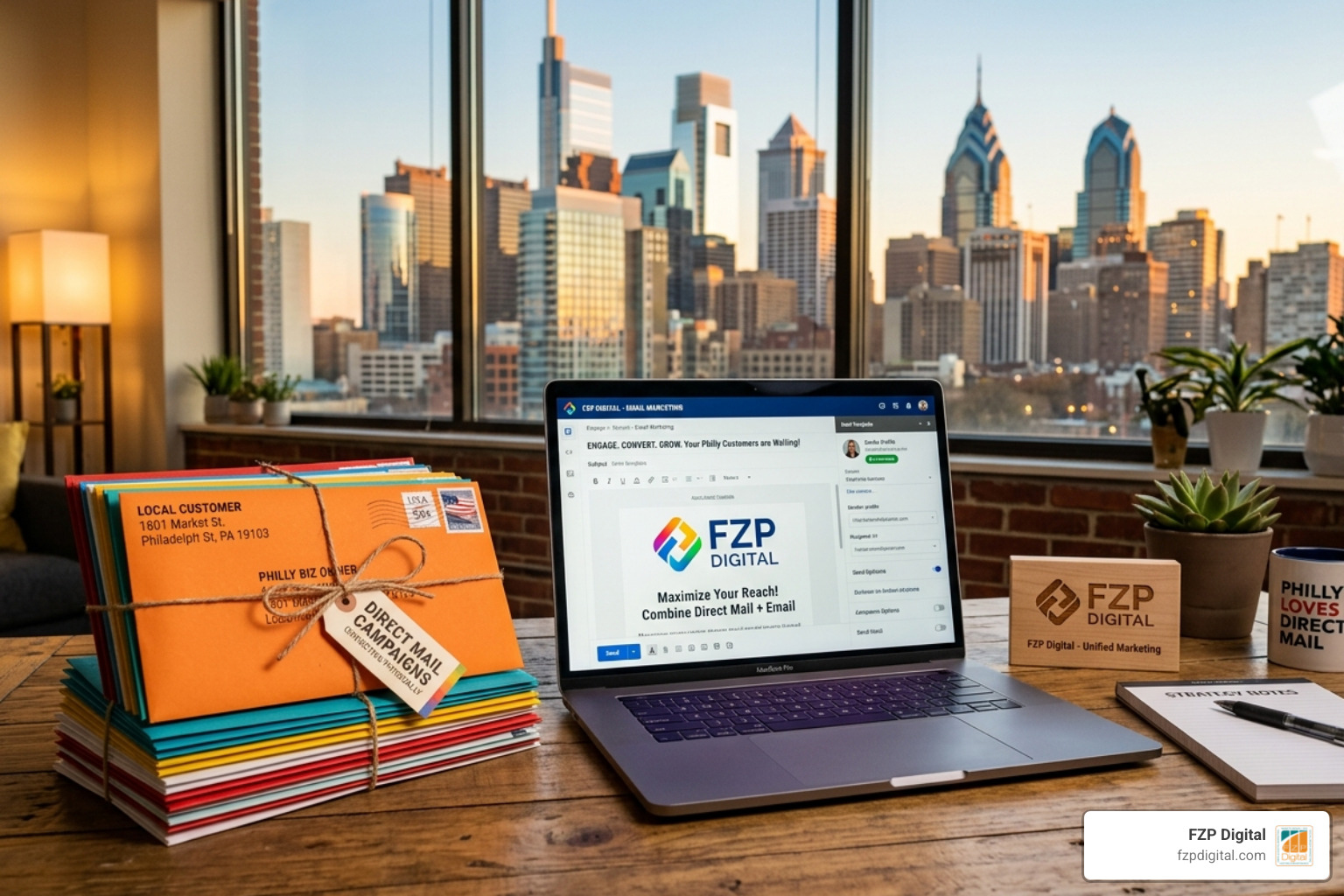
Direct mail email marketing — using physical mail and digital email together as a unified strategy — is one of the most powerful (and underused) approaches available to small and mid-sized businesses today.
If you’re trying to decide between the two, here’s the quick answer:
| Direct Mail | Email Marketing | |
|---|---|---|
| Avg. Response Rate | 4.4% | 0.12% |
| ROI per $1 spent | $7 | $28.50 |
| Best for | Trust-building, local targeting, high-value offers | Speed, scale, lead nurturing, urgency |
| Key strength | Tangible, memorable, cuts through digital noise | Low cost, instant delivery, easy segmentation |
| Used together? | ✅ Yes — campaigns combining both see up to 25% higher response rates |
Bottom line: Neither channel wins outright. The real opportunity is using them together.
Businesses that integrate direct mail and email don’t have to choose — they get the best of both worlds. And the data backs this up: combined campaigns hold 39% more of a customer’s attention than digital alone.
But here’s what most businesses miss: it’s not just about sending a postcard and an email. It’s about timing them right, personalizing both, and making them feel like one seamless conversation with your customer.
That’s exactly what this guide is about.
I’m Fred Z. Poritsky, founder of FZP Digital, and I’ve spent years helping businesses across Philadelphia and Bucks County build smarter marketing strategies — including direct mail email marketing campaigns that actually move the needle. In the sections ahead, I’ll walk you through everything you need to know to make these two channels work together powerfully.
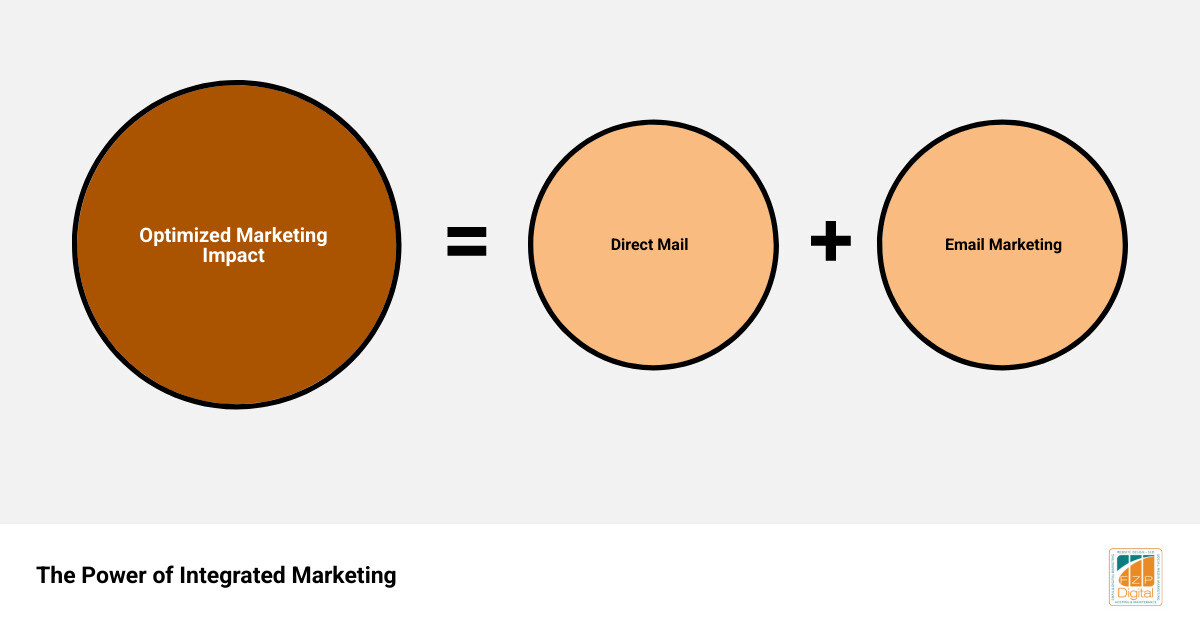
Direct mail email marketing terms to know:
Direct Mail vs. Email: The 2026 Comparison
When we sit down with business owners in Newtown or Richboro, the question often comes up: “Is direct mail still worth it?” In April 2026, the answer is a resounding yes, but it looks different than it did a decade ago. While our digital lives are more saturated than ever—with hundreds of billions of emails flying around the globe daily—the physical mailbox has become a place of less competition and higher focus.
Research shows that direct mail engagement ranges from 2.7% to 4.4%, which absolutely dwarfs the average email engagement of 0.6%. Why? Because a physical piece of mail requires a “mail moment.” You have to touch it, look at it, and decide what to do with it. An email, on the other hand, can be swiped into the trash in half a second.
However, we can’t ignore the ROI. Email marketing remains the king of efficiency, bringing in an average of $28.50 for every dollar spent. Direct mail sits at a median ROI of 27% in the U.S., or roughly $7 for every $1 spent. Email vs Direct Mail: Pick One or Use Both? The secret isn’t picking the “cheaper” one; it’s understanding how the tangibility of mail builds the trust that makes your emails more effective.
Key Advantages and Disadvantages
Every medium has its superpowers. Direct mail’s biggest strength is its physical touch. It bypasses spam filters entirely and has a much longer shelf life. Think about it: a beautiful postcard might sit on a kitchen counter in Philadelphia for weeks, acting like a tiny billboard for your brand. It’s also perceived as more professional and trustworthy, especially for high-value offers.
On the flip side, email is the champion of instant delivery and cost-effectiveness. You can send a message to thousands of people in seconds. It allows for incredibly dynamic personalization and tracking, letting you see exactly who clicked what in real-time. The disadvantage? The “inbox deluge.” Your message is competing with 120+ other emails your customer receives that day.
When to Choose One Over the Other
So, when should you reach for the stamps instead of the “send” button?
- Choose Direct Mail for: Building deep trust, targeting specific local neighborhoods (like Every Door Direct Mail in Bucks County), promoting high-end luxury products, or reaching C-suite decision-makers who have digital gatekeepers.
- Choose Email for: Urgent updates, flash sales, nurturing new leads through a drip sequence, or sending frequent, low-cost reminders to your existing “house list.”
Why Direct Mail Email Marketing is the Secret to Better ROI
At FZP Digital, we believe the magic happens in the “and,” not the “or.” Using direct mail email marketing as a combined force creates a synergistic effect that digital-only campaigns just can’t match. When a customer sees your brand in their mailbox and then sees a follow-up in their inbox, it reinforces brand recall.
In fact, merging email and direct mail for powerful holiday marketing has shown that businesses can increase their order value by more than $3 and see response rates hit 25% when the two are used in tandem. You aren’t just sending more ads; you’re creating a multi-sensory brand experience.
The Power of Direct Mail Email Marketing in Multi-Channel Campaigns
Did you know that 72% of consumers prefer to connect with brands through multiple channels before they actually make a purchase? They want to see you on social media, get your email, and maybe find a flyer in their mail. This multi-touch approach is exactly what powers successful B2B email marketing strategies. By integrating physical mail, you’re holding 39% more of that customer’s time. When attention is the most valuable currency, that’s a massive win for your business.
Improving Campaign Effectiveness Through Integration
Integration is about more than just matching colors and fonts (though that’s important too!). It’s about using your data wisely. For example, your “house list”—the people who have already bought from you—will always perform better. Statistics show a house list email has a 21% open rate compared to just 16.4% for a prospect list.
When you use direct mail email marketing together, you can use the mailer to “warm up” the prospect and then use email to close the deal. We see this all the time in our Email Marketing category of services; the two channels act like a tag team, with direct mail handling the introduction and email handling the follow-up.
Proven Strategies for Your Integrated Campaigns
Ready to launch? You need a plan that coordinates timing and messaging. A common mistake we see is sending everything at once. Instead, think of it as a journey.
Personalizing Your Direct Mail Email Marketing for Maximum Impact
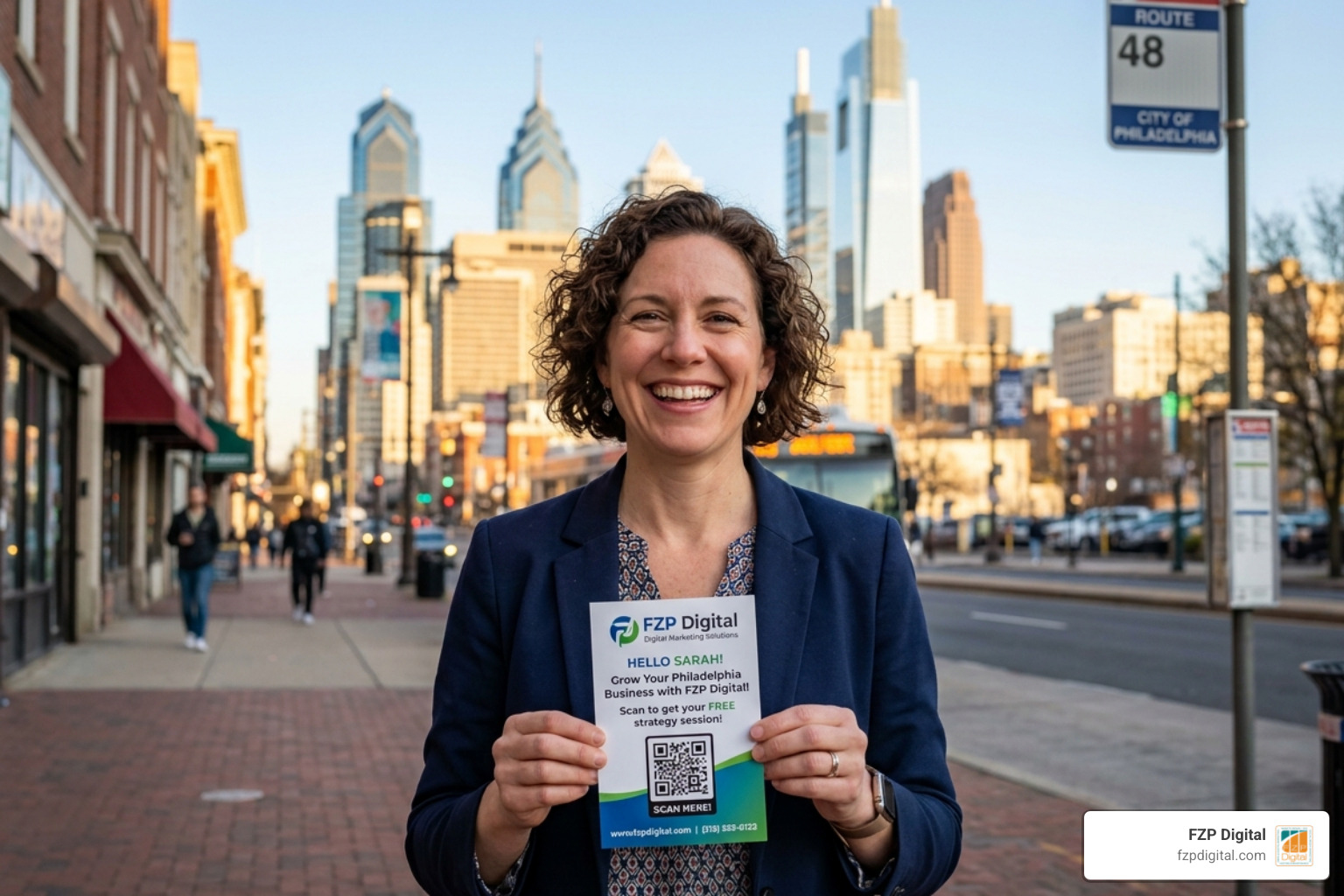
Personalization is the “secret sauce.” We’re not just talking about putting a name in the subject line—though that does increase unique click rates by 27%. We’re talking about variable data printing. Imagine sending a postcard that mentions the recipient’s specific neighborhood in Philadelphia or their last purchase. One company achieved a staggering 9.7% conversion rate simply by personalizing direct mail with the customer’s name and location. When you combine this with building a high-quality email list from scratch, your marketing becomes a precision tool rather than a blunt instrument.
Real-World Success Stories and Case Studies
We’ve seen incredible success with “triggered” campaigns. For example, a customer abandons a high-value cart on your website. You send an immediate recovery email. If they don’t act within 24 hours, an automated system triggers a personalized postcard with a special “we miss you” discount to be mailed out. This creates a tangible reminder that stays on their desk. Maximizing campaign success often comes down to these “if-this-then-that” scenarios that bridge the gap between their screen and their front door.
High-Tech Tools for Bridging the Physical and Digital Gap
The days of “spray and pray” mailing are over. Today, we have high-tech tools that make direct mail as trackable as a digital ad.
The Role of Direct Mail Automation
Direct mail automation allows us to sync physical mailers directly with your CRM (Customer Relationship Management) system. This means we can set up “programmatic mail” that sends out a postcard automatically based on a digital interaction. It removes the manual logistics and ensures your timing is always perfect. No more licking envelopes—just smart, data-driven outreach.
Leveraging USPS Informed Delivery
One of the coolest tools in our 2026 toolkit is USPS Informed Delivery. This service has over 32 million subscribers who receive a daily email preview of the mail arriving in their box. As a marketer, you can add a digital “ride-along” image and a clickable CTA (Call to Action) to that preview. This effectively turns a physical piece of mail into a digital ad before the customer even walks to their mailbox! It’s a brilliant way to capture that “mail moment” twice.
Measuring Success and Overcoming Integration Hurdles
You can’t improve what you don’t measure. For every direct mail email marketing campaign, we use UTM parameters on digital links and unique QR codes or pURLs (personalized URLs) on physical mailers. This allows us to see exactly which channel drove the final conversion.
Best Practices for Timing and Segmentation
Timing is everything. A proven strategy is to send the direct mail piece first, then follow up with a series of 2-4 emails starting about a week later. For the emails, Tuesdays at 11 a.m. EST often see the highest engagement. By segmenting your audience based on their “channel propensity”—basically, which way they prefer to hear from you—you can avoid overwhelming them and keep your brand in their good graces.
Overcoming Common Integration Challenges
The biggest hurdle is often “data silos”—when your mailing list and your email list don’t talk to each other. We solve this by using unified platforms that keep your customer data in one place. Communication between your creative and logistics teams is also key to ensuring that the message the customer sees on their phone matches exactly what they hold in their hand.
Frequently Asked Questions
Is direct mail more effective than email?
It depends on your goal! Direct mail has a much higher response rate (4.4% vs 0.12%) and builds more trust. However, email has a higher ROI because it is so much cheaper to send. They are most effective when used together.
How do I track direct mail in a digital campaign?
We use unique QR codes, personalized URLs (pURLs), or special coupon codes that are specific to the mailer. When a customer uses those, we know exactly which piece of mail prompted the action.
What is the best timing for a combined campaign?
We usually recommend sending the physical mailer first to establish trust and “prime” the customer. Follow up with an email about 7 days later to remind them of the offer while the mailer is likely still in their home.
Conclusion
At the end of the day, marketing is about starting a conversation. Whether that conversation starts on a screen in Downtown Philadelphia or with a postcard in a mailbox in Newtown, the goal is the same: to show your customers that you understand their needs and have the solution.
At FZP Digital, our “Develop. Design. Deliver.” process is built to help you navigate these complex choices. We don’t just build websites or send emails; we build integrated systems that help your business grow. If you’re feeling overwhelmed by the technical side of SEO or the logistics of multi-channel marketing, you don’t have to do it alone. Expert guidance can turn these challenges into your biggest competitive advantages.
Ready to see how direct mail email marketing can transform your results? We’d love to help you design a campaign that delivers. Get more info about our digital marketing services and let’s start growing your presence in Philadelphia and beyond!