

Why Your Business Needs a Professional Brand Identity
What Is a Professional Brand Identity and Why Does Your Business Need One?
Professional brand identity is the complete system of visual, verbal, and experiential signals that tells the world who you are, what you stand for, and why you’re worth choosing over everyone else.
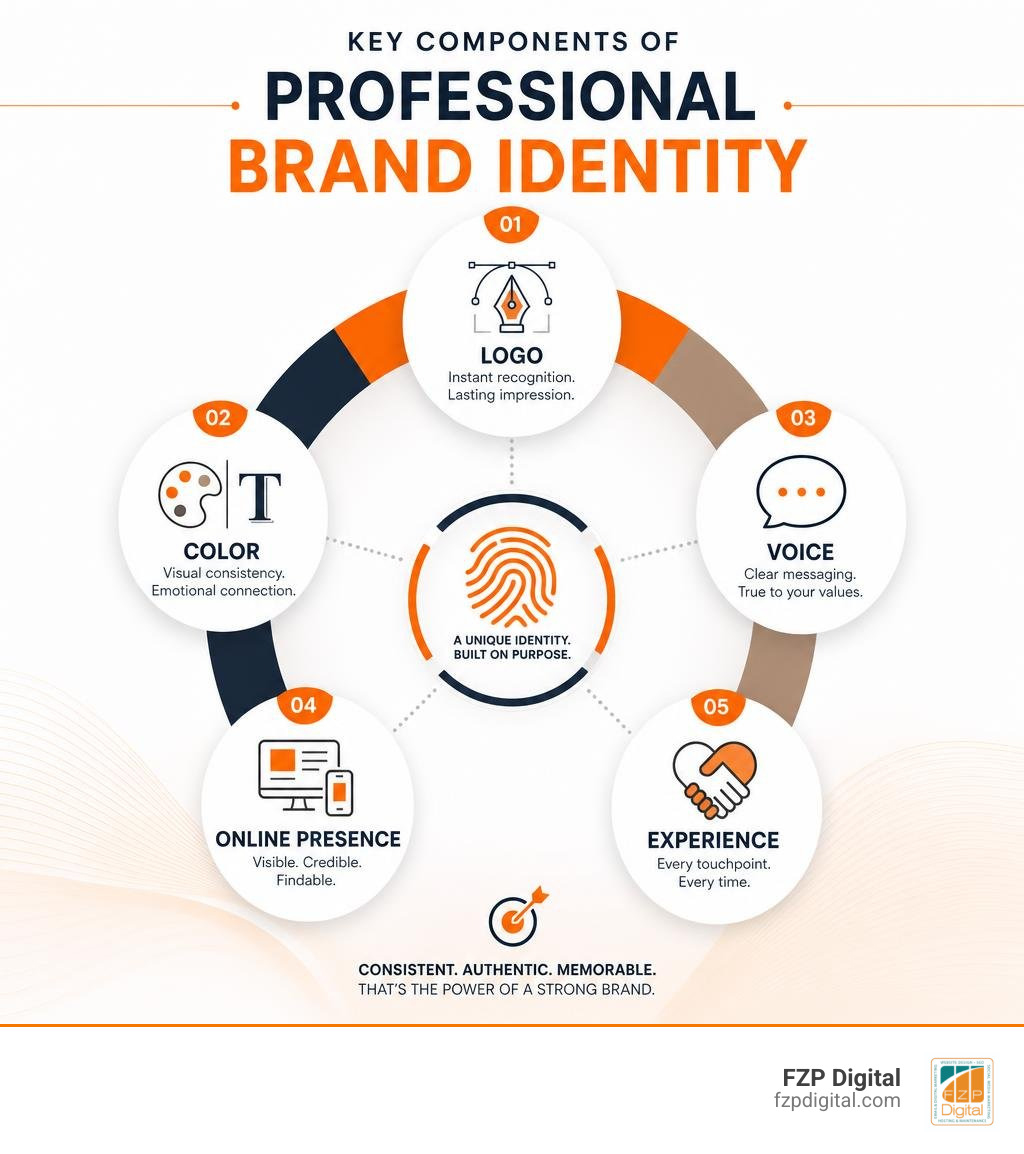
If you’re looking for a quick answer, here’s what a strong professional brand identity includes:
| Element | What It Does |
|---|---|
| Logo & Visual System | Creates instant recognition across every platform |
| Color Palette & Typography | Builds visual consistency and emotional association |
| Brand Voice & Messaging | Communicates your values clearly to your target audience |
| Online Presence | Establishes credibility where clients and recruiters search first |
| Customer Experience | Ensures every touchpoint delivers on your brand promise |
Here’s the hard truth: most employers, clients, and potential partners look you up online before they ever speak to you. And if what they find doesn’t reflect your real value, you’ve already lost the room.
Think about Apple’s “Think Different,” Nike’s “Just Do It,” or Coca-Cola’s unmistakable red. Those brands don’t just look consistent — they feel consistent at every single touchpoint. That’s the power of a professional brand identity done right.
And it’s not just for Fortune 500 companies. Whether you’re a Philadelphia-area small business, a nonprofit, or a solo professional, your brand either builds trust immediately — or quietly costs you clients every single day.
I’m Fred Z. Poritsky, founder of FZP Digital, and my background spans nonprofit financial management, digital marketing, and decades of creative thinking shaped by a lifelong passion for music — all of which give me a uniquely right-brain-meets-left-brain perspective on professional brand identity. I’ve helped CPAs, attorneys, nonprofits, and businesses across Philadelphia transform their digital presence into something that genuinely reflects their value and drives real growth.
Terms related to Professional brand identity:
- What is brand identity in graphic design
- Brand identity design
- What does a brand identity designer do
Have you ever wondered why two companies offering the exact same service can charge vastly different prices? Or why customers flock to one local consultant while ignoring another with identical credentials?
The secret almost always comes down to professional brand identity.
At its core, a professional brand identity is the deliberate articulation of your core values, technical strengths, visual presentation, and distinct personality. It is how you package and present your professional reputation both in person and across the digital universe. It goes far beyond having a neat business card or a catchy tagline; it encompasses every single interaction a potential client, partner, or hire has with your business.
Why does your business need one right now? Because in a hyper-competitive marketplace, business credibility and pricing power don’t just happen by accident. They are earned through perceived value.
When your visual assets, website, and tone of voice look polished, strategic, and cohesive, prospects subconsciously attribute higher quality to your underlying services. In fact, major enterprise rebrands consistently demonstrate this financial engine in action. When major global companies overhaul their customer touchpoints and visual identities, they frequently see double-digit revenue jumps in premium service tiers simply because their target audience perceives greater trust and reliability.
Building a strong identity allows you to:
- Command premium rates: When you present as a recognized authority, clients stop treating you like a commodity vendor and start treating you as an indispensable strategic partner.
- Shorten sales cycles: Clear positioning answers your prospects’ unspoken questions before they even hop on a phone call.
- Lower customer acquisition costs: Strong brands earn top-of-mind awareness, generating organic word-of-mouth referrals that reduce the need for constant paid advertising.
- Attract elite talent: High-performing professionals want to align themselves with organizations that look, feel, and act like market leaders.
If you want to dive deeper into how structured design directly shapes user perception, check out our dedicated guide on Brand Identity Design.
Professional Brand Identity vs. Corporate Identity
It is easy to mix up a professional brand identity with a corporate identity, but understanding the distinction is vital for accurate strategic differentiation.

A corporate brand identity represents an organization as an entity. Think of major enterprises whose brand equity rests in corporate governance, widespread consumer recognition, and multi-faceted product lines. Corporate branding focuses heavily on overarching market share, shareholder value, and institutional trust.
A professional brand identity, on the other hand, puts a human face on expertise. It bridges the gap between individual professional identity and organizational reputation management. Whether applied to an independent consultancy, a specialized law firm in Downtown Philadelphia, or an executive leader building authority within an industry, professional brand identity focuses heavily on direct human connection, personal relationships, subject-matter mastery, and practical problem-solving.
While corporate identity answers “What does this company sell?”, a professional brand identity answers “Why should I trust these specific experts to solve my problem?” When you blend human authenticity with polished professional design, you create a powerful emotional connection that corporate monoliths simply cannot duplicate.
Core Elements That Define Your Professional Brand Identity
Creating an unforgettable brand isn’t about throwing random colors at a canvas; it is an intentional, structured process. A comprehensive visual identity relies on several interconnected core elements working in total harmony:
- Logo Design & Marks: Your logo is the primary visual anchor of your entire brand ecosystem. It should be simple, highly scalable, and instantly recognizable — whether printed on a tiny smartphone icon or displayed on a massive billboard along I-95.
- Color Palette: Colors trigger powerful emotional associations. Forbes rankings highlight that world-class companies literally “own” visual signatures in the public mind — think of Coca-Cola’s dominant red or iconic athletic swooshes. Your core palette should feature primary brand colors paired with high-contrast secondary tones that comply with modern accessibility standards.
- Typography & Type Hierarchy: Fonts convey personality before a single word is read. Using distinct typography pairings — such as pairing a strong serif display header with a clean, readable sans-serif body font — establishes clear visual hierarchy and effortless legibility across web and print.
- Tone of Voice & Messaging Strategy: How do you speak to your audience? Is your tone authoritative yet approachable? Direct and educational? Your verbal identity dictates your website copy, email responses, social posts, and client proposals.
- Imagery & Visual Style: Standard stock photos featuring overly staged handshakes or generic boardroom meeting shots look dated and sterile. Modern professional branding favors authentic, candid, documentary-style photography that humanizes your team.
For an inspiring breakdown of how visual choices directly inform brand personality, designer Sydney Michuda shares fantastic practical design frameworks in her video guide How Do I Design my Brand Identity – Sydney Michuda.
How to Identify Strengths and Build an Authentic Brand Strategy
Before you start choosing fonts or drafting website copy, you have to do some foundational groundwork. An effective brand strategy isn’t something you pull out of thin air — it is rooted in deep self-discovery and authentic positioning.

If your brand strategy isn’t authentic, keeping up the act across every client interaction becomes exhausting. True brand authority happens when your external visual representation aligns perfectly with your internal expertise and values.
If you’d like a structured, step-by-step roadmap to guide this phase, explore our detailed resource on How To Develop A Unique Brand Identity The 9 Step Guide.
Uncovering Your Unique Professional Strengths
How do you figure out what makes your professional brand uniquely valuable? Start by looking at data you already have right in front of you.
- Audit Past Performance Reviews and Feedback: Look back at client testimonials, annual performance reviews, or informal thank-you emails. What specific phrases keep showing up? Are clients praising your meticulous attention to detail, your lightning-fast response times, or your talent for translating complex legal jargon into simple language?
- Conduct Peer Perception Audits: Ask 5 to 10 colleagues, former clients, or industry peers a simple question: “What are the top three strengths or qualities you associate with my work?” You might be surprised by how clearly others see your unique edge.
- Identify Your Energy Drivers: What projects or problem-solving tasks can you lose yourself in for hours without feeling burnt out? Your natural passions usually highlight where your highest skills lie.
- Define Your Non-Negotiable Core Values: What principles guide how you do business? Whether it’s radical transparency, community philanthropy, or uncompromising quality, your core values serve as the decision-making compass for your brand messaging.
Steps to Develop Your Professional Brand Identity Online and Offline
Once you’ve nailed down your core strengths and authentic voice, it’s time to bring your brand to life across digital and in-person channels.
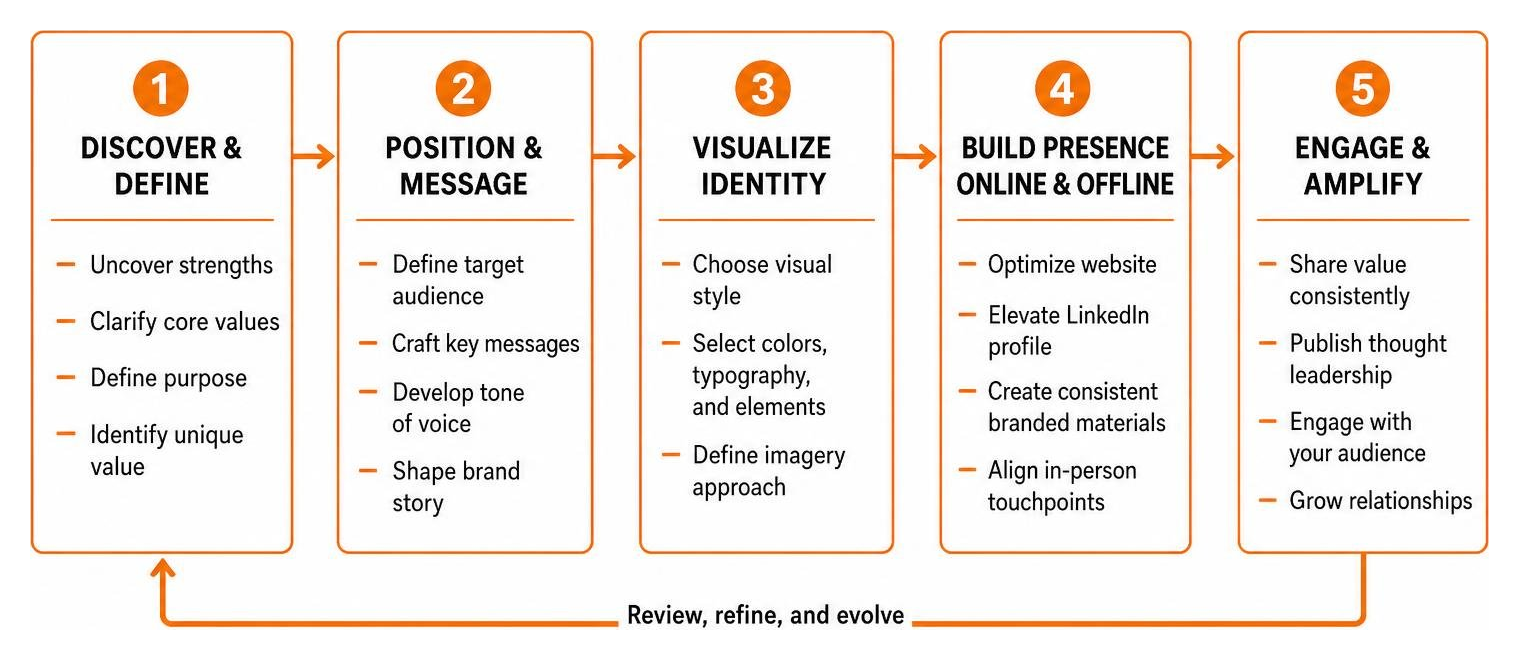
Here is how you turn your authentic positioning into a tangible, high-impact presence:
- Optimize Your Digital HQ (Website & Social Media): Your website is the digital front door to your business. It needs clean navigation, clear messaging, fast loading times, and intuitive responsive design on mobile devices.
- Elevate Your LinkedIn Presence: LinkedIn is the undisputed king of professional networking. Industry research shows that over 90% of recruiters and decision-makers use LinkedIn to evaluate candidates and potential business partners. Even more striking? Profile owners with high-quality executive headshots receive 14 times more profile views than those without! Ensure your headline highlights your specific value proposition rather than just a dry job title.
- Publish Thought Leadership Consistently: Aim to share insights, industry commentary, or case studies at least once a week. Whether you write articles on LinkedIn or publish detailed guides on your company blog, regular publishing builds lasting domain authority.
- Master In-Person Touchpoints: Personal branding isn’t restricted to screens. Statistics reveal that 85% of all positions and major business partnerships are filled through direct networking. Prepare a crisp 30-second elevator pitch, attend regional industry events in Philadelphia or Bucks County, and make sure your offline demeanor matches your polished online persona.
- Seek Speaking & Media Opportunities: Offer brief educational workshops, volunteer for local business panels, or guest star on industry podcasts. Teaching others is one of the fastest ways to solidify your authority.
Maintaining Brand Consistency Across Every Touchpoint
Imagine visiting a sleek, beautifully designed modern website, only to receive a client onboarding PDF that looks like it was created in 1998 with mismatched fonts and stretched logos.
That sudden disconnect is called visual drift, and it instantly erodes audience trust!
Consistency is the absolute backbone of brand building. When your visual aesthetic, tone of voice, and service delivery align across every physical and digital channel, you build deep cognitive recognition in the minds of your target market.
To protect your business from inconsistent design execution, review our guide on The Brand Police Rules For WordPress Website Brand Consistency.
Creating Dynamic Guidelines and Asset Libraries
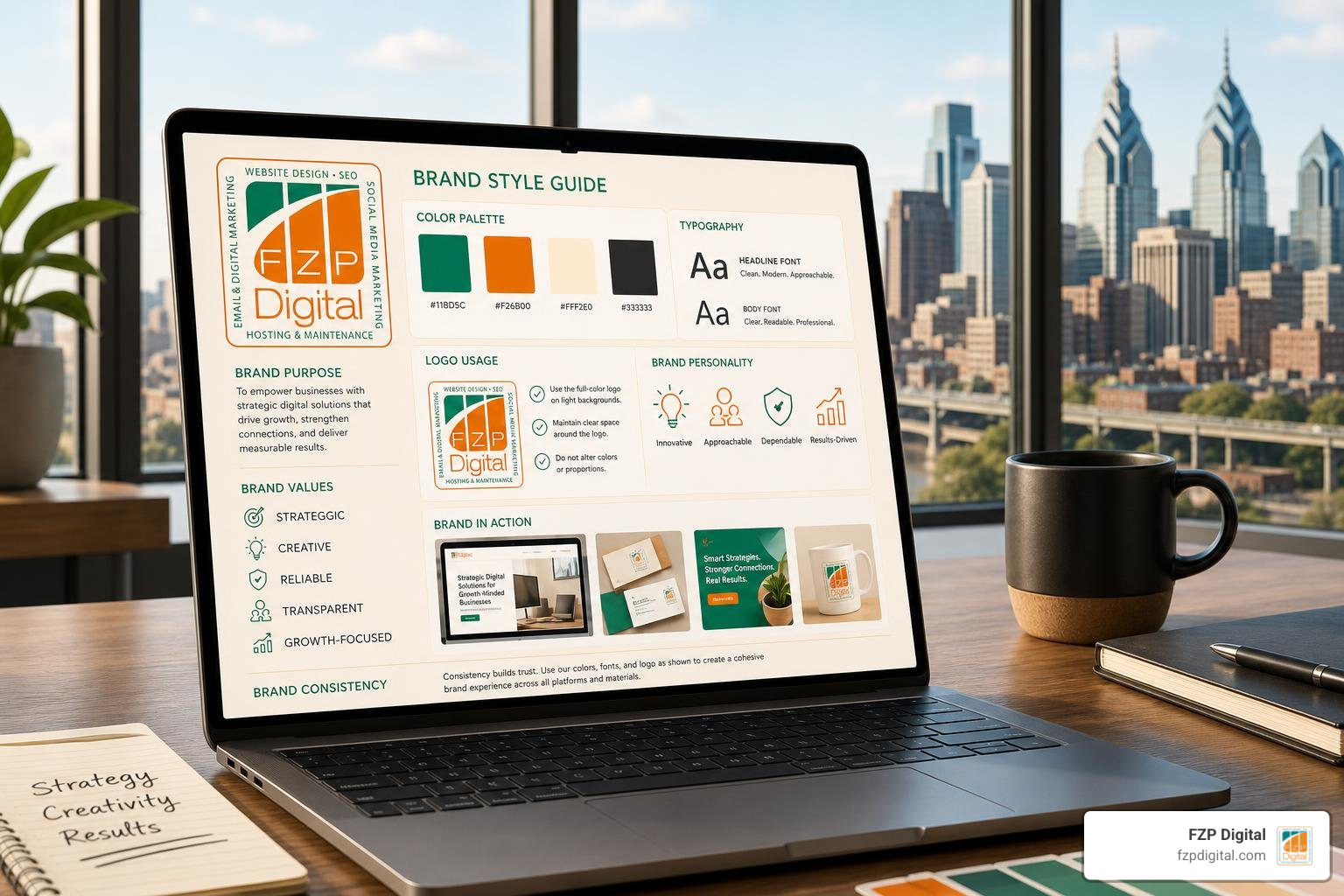
How do scaling businesses and busy professionals maintain flawless consistency without losing their minds? By establishing dynamic, web-accessible brand guides and standardized asset libraries.
Gone are the days of burying a static 100-page PDF brand guide in a forgotten Google Drive folder that nobody opens. Modern organizations rely on flexible, living brand systems:
- Design Tokens & System Libraries: Leading technology and design environments export core design parameters — such as exact color HEX codes, spacing scales, and typography hierarchies — as universal tokens (CSS variables, JSON) that integrate directly into websites, email templates, and software tools.
- Clear Space & Usage Rules: Enterprise identity standards, like the publicly published CrowdStrike Brand Identity guidelines, mandate strict rules for asset usage. For example, maintaining clear-space padding equal to at least 20% of a logo’s total width ensures your mark is never crowded by surrounding text or background elements.
- Modern AI-Powered Brand Tools: Innovative platforms like Glyph – AI Brand Identity Platform are changing how emerging businesses build cohesive visual memory. By defining structured brand guidelines, light/dark color palettes, and code tokens upfront, businesses ensure their digital tools and web assets look intentionally designed rather than pieced together.
Whether you’re setting up a simple style guide or an enterprise-grade digital library, having centralized rules ensures your entire team creates “on-brand” materials effortlessly.
Avoiding Common Branding Pitfalls
As you build and refine your professional brand identity, keep an eye out for these frequent mistakes that can derail your hard work:
- Focusing Only on Surface Visuals: A pretty logo cannot fix poor customer service or broken operational systems. Your visual promises must always match your operational capabilities.
- Making Empty Promises or Using Excessive Buzzwords: Phrases like “industry-leading hyper-innovative synergies” mean nothing to modern buyers. Speak plainly, solve real problems, and highlight authentic human benefits.
- Inconsistent Tone Across Channels: Being warm and friendly on social media but cold and clinical in email interactions creates confusion. Define your verbal tone guidelines and stick to them everywhere.
- Clinging to Overused Clichés: Steer clear of cheesy stock photos (like generic handshakes, fake meeting high-fives, or floating globe graphic overlays). Authentic candid photography always wins.
- Failing to Adapt: As your services expand or market expectations change, your brand needs to evolve alongside you. Don’t let your brand identity get stuck in a visual time capsule.
Measuring, Auditing, and Refining Your Brand Over Time
A great brand identity isn’t something you build once, launch, and forget about forever. It is a living strategic asset that requires regular monitoring, periodic audits, and continuous refinement.
If you want to understand how a professional studio evaluates brand health and executes updates, read our deep-dive on Beyond The Logo What A Brand Identity Design Studio Actually Does.
Auditing Your Online Search Presence and Feedback
When was the last time you opened an incognito browser window and Googled your name or your business?
If you haven’t done it recently, do it today! Regular search audits are essential for active reputation management:
- Review Search Engine Results Pages (SERPs): Check the first two pages of Google results for your business name. Are your website, Google Business Profile, and professional social profiles ranking at the top? Are the meta descriptions clean and persuasive?
- Audit Social Media Sentiment and Mention Signals: Keep tabs on what clients and peers are saying about you across industry forums, Google Reviews, and LinkedIn discussions.
- Cross-Reference Performance Feedback: Pay close attention to client exit surveys and workplace performance reviews. Are clients naturally using the exact words and strengths you set out to be known for? If there’s a disconnect between how you think you’re perceived and how you’re actually perceived, it’s time to refine your messaging.
Evolving Your Identity as Your Business Grows
Rebranding or updating your identity doesn’t mean burning everything down to the ground. In fact, most successful brand updates are evolutionary rather than revolutionary.
Take global IT giant Wipro, for example. Their public Brand Guide details how they carefully balance world-class technological expertise with an authentic commitment to social responsibility — highlighting that 66% of the company’s economic interest is held by a philanthropic trust. As their global impact expanded, their visual identity and messaging evolved to reflect that deeper purpose.
You should consider refreshing your professional brand identity when:
- Your core target audience or service offerings have shifted significantly.
- Your visual assets look dated compared to modern industry standards.
- You are expanding into new geographic markets (like growing from Bucks County into Downtown Philadelphia).
- Your business has outgrown its original positioning and needs to reflect a higher level of authority.
Frequently Asked Questions About Professional Brand Identity
What is the difference between personal branding and professional brand identity?
While these two terms are often used interchangeably, they have slightly different scopes. A personal brand focuses primarily on an individual person — their personal lifestyle, opinions, individual career journey, and personal audience.
A professional brand identity, however, focuses directly on career expertise, business values, technical capabilities, and structured market positioning. It translates individual reputation into commercial trust, making it ideal for business owners, executives, service providers, and growing firms.
How long does it take to build a recognizable professional brand identity?
Building foundational visual assets (logo design, typography, color palettes, and website design) typically takes 4 to 8 weeks when working with an experienced design agency.
However, establishing widespread market recognition and trust is an ongoing journey. With consistent content creation, active networking, and uniform visual application, most businesses begin noticing significant shifts in prospective client perception within 3 to 6 months.
How do I know if it is time to refresh my professional brand identity?
It is usually time for a brand refresh if:
- You feel embarrassed to direct prospective clients to your current website.
- Your current pricing no longer matches the high quality of work you deliver.
- You are losing deals to competitors whose visual presentation looks far more modern and professional.
- Your business focus has shifted, but your visual identity still reflects what you were doing five years ago.
Conclusion: Partner with FZP Digital to Elevate Your Business Identity
Building a magnetic, highly profitable professional brand identity isn’t about guesswork — it’s about strategic alignment. When your authentic strengths, crisp visual systems, responsive website, and target messaging work seamlessly together, growing your business becomes remarkably straightforward.
At FZP Digital, we know that professional service providers, local business owners, and nonprofits in Richboro, Newtown, Philadelphia, and Downtown Philadelphia don’t just need a “pretty logo.” You need a high-impact digital presence that commands respect, outranks the competition, and turns casual website visitors into loyal, long-term clients.
Led by Fred Z. Poritsky, our team brings a collaborative “Develop . Design . Deliver” process to every engagement. We take the time to deeply understand your unique strengths, refine your visual assets, and build custom, responsive WordPress websites optimized for top organic search performance. And when it comes to web infrastructure, we guide you toward rock-solid managed hosting solutions like GoDaddy and WP Engine to guarantee fast, secure performance for your visitors.
Ready to stop blending in and start standing out as the clear authority in your industry? Explore our dedicated Branding Services today, and let’s build a brand identity that truly reflects your success!