

Understanding the Fundamentals: How Local SEO Works
When you look closely at how local seo works, search engines act like ultra-fast local matchmakers. Every time someone types a query into Google—or speaks it into a phone—crawlers scan a pre-compiled index of billions of pages and listings. Instead of serving static, nationwide lists, search engine algorithms continuously calculate localized intent to display tailored, geographic options.
To get a clear picture of how local SEO works, it helps to realize that Google actually runs two algorithms side by side: one for standard organic website listings (the traditional “blue links”) and one for map-based features. Understanding this distinction is a game-changer for businesses targeting local markets because it creates an opportunity for double visibility on the exact same search page. If you’re running a regional company, exploring Local SEO for Service Businesses That Actually Works shows how combining these systems can dramatically boost your inquiry rates.
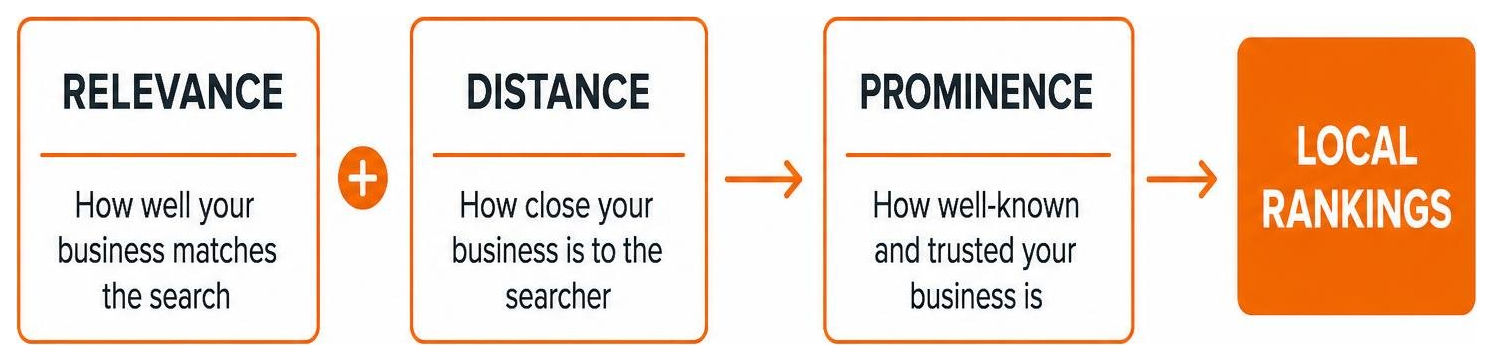
To organize these results, search engines rely on three core pillars:
- Relevance: How well your business profile and website content match what someone is searching for.
- Distance (Proximity): How physically close your business location (or defined service area) is to the coordinates of the person searching.
- Prominence: How well-known, well-reviewed, and authoritative your business appears across the web compared to competitors.
How Local SEO Works for Google Map Packs
The most coveted real estate on any local results page is the Google Local Pack (often called the Map Pack)—the map graphic displaying three prominent local business listings right near the top of the search engine results page.
Securing a spot in this top-three unit requires an active, fully completed Google Business Profile (GBP). Google evaluates precise geographic coordinates, selected primary and secondary business categories, operating hours, user interactions, and customer reviews to determine who gets featured.
Because space in the Map Pack is so limited, taking advantage of a detailed guide to ranking in local search helps ensure you do not miss baseline setup steps like picking exact secondary categories or setting accurate business operating hours.
How Local SEO Works with AI and GEO in 2026
Local search has evolved beyond matching simple keywords like “plumber in Newtown.” Today’s generative engines and artificial intelligence tools use Generative Engine Optimization (GEO) to process conversational search queries and decipher implicit location intent.
For instance, if someone asks an AI assistant, “Where can I get a quiet coffee and do laptop work right now?”, the engine recognizes that “right now” implies open business hours, “quiet/laptop work” relates to customer sentiment and review text, and the request naturally implies a business within physical driving distance. AI engines evaluate your website’s content, review sentiments, and profile activity to match these complex natural language queries even when no specific city name was typed in.
Core Components of an Effective Local SEO Strategy
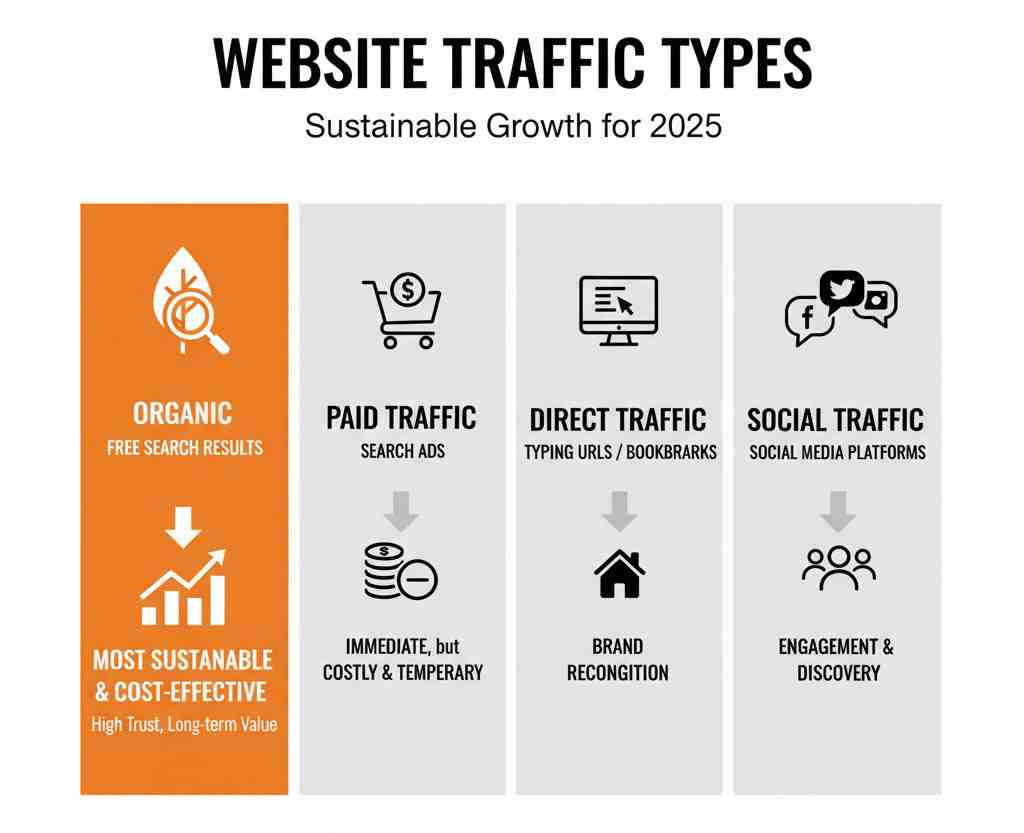
Building a dependable local search presence requires connecting several moving parts. At FZP Digital, we look at local search as an integrated ecosystem where every asset reinforces the others.
If you want a step-by-step framework to launch these elements smoothly, check out The Simple Guide to Winning at Local SEO. A successful strategy relies on five primary pillars:
- Google Business Profile Optimization: Completing every available profile field, choosing exact categories, and uploading high-resolution photos regularly.
- NAP Consistency: Standardizing your Name, Address, and Phone number across every directory online.
- Review Management: Actively earning positive customer feedback and responding to all reviews promptly.
- On-Page Web Optimization: Structuring localized landing pages with Schema markup and quick page loading times.
- Local Link Building: Earning trust signals through local community partnerships, news mentions, and area business networks.
Local Keyword Research and Intent Analysis
Finding the right terms for local campaigns differs from national keyword research. Instead of focusing only on high-volume broad keywords, local keyword research targets localized intent—terms that signal a searcher wants a provider nearby.
We recommend organizing your local keywords into three primary patterns:
- Service + Geographic Modifiers: Terms like “WordPress web design Richboro” or “commercial lawyer Bucks County.”
- “Near Me” Terms: Phrases like “digital marketing agency near me” or “best web developer nearby.”
- Hyper-Local Landmarks & Neighborhoods: Phrases incorporating local landmarks, zip codes, or popular district names (like “Downtown Philadelphia web agency”).
On-Page Optimization, Schema Markup, and Location Pages
Your website serves as the ultimate authority source for search crawlers. If you serve multiple areas—such as operating across Richboro, Newtown, and Downtown Philadelphia—you should create dedicated, unique location landing pages rather than squeezing every address onto a single page.
Each location page should feature indexable HTML text containing your standard NAP (Name, Address, Phone), embedded Google Maps, direct customer testimonials, and localized content describing your work in that immediate community.
To help search engine bots process your business data seamlessly, you should implement LocalBusiness Schema markup in your site code. Schema acts like an explicit digital business card that clearly tells search bots your precise physical coordinates, opening hours, accepted payment methods, and service regions. For a deeper look at regional site setup, read our guide on what is SEO in PA: Demystifying Search Engine Optimization for Local Success.
When designing these pages on managed platforms, performance matters greatly. Having built and optimized dozens of WordPress sites, Fred Z. Poritsky always emphasizes fast, clean hosting infrastructure. When choosing managed WordPress hosting providers to keep location pages loading quickly, we recommend GoDaddy and WP Engine as top options.
Local Link Building and Authority Signals
Backlinks—links from other websites pointing to yours—remain one of Google’s strongest ranking signals for organic search results. However, for local SEO, proximity and regional relevance matter just as much as domain authority.
Earning a backlink from a neighborhood blog, a regional chamber of commerce, or a sponsored youth sports league in Bucks County often provides a stronger local trust signal to Google than a generic link from an unrelated national site. You can also explore a complete local SEO guide to discover competitor link intersection techniques that reveal local directories and local media opportunities in your area.
Tracking Performance and Avoiding Common Mistakes
| Metric | Local SEO Focus | Standard National Organic SEO Focus |
|---|---|---|
| Primary Goal | Map Pack positions, local calls, direction requests | Nationwide organic positions, global website traffic |
| Geographic Scope | Zip-code, coordinate, and city-level accuracy | Country-wide or global averages |
| Primary Assets | Google Business Profile, Local Schema, Citations | High-volume blog content, global backlinks |
| Tracking Method | Coordinate grid heatmaps, call tracking, GBP Insights | Domain-level analytics, national keyword rank trackers |
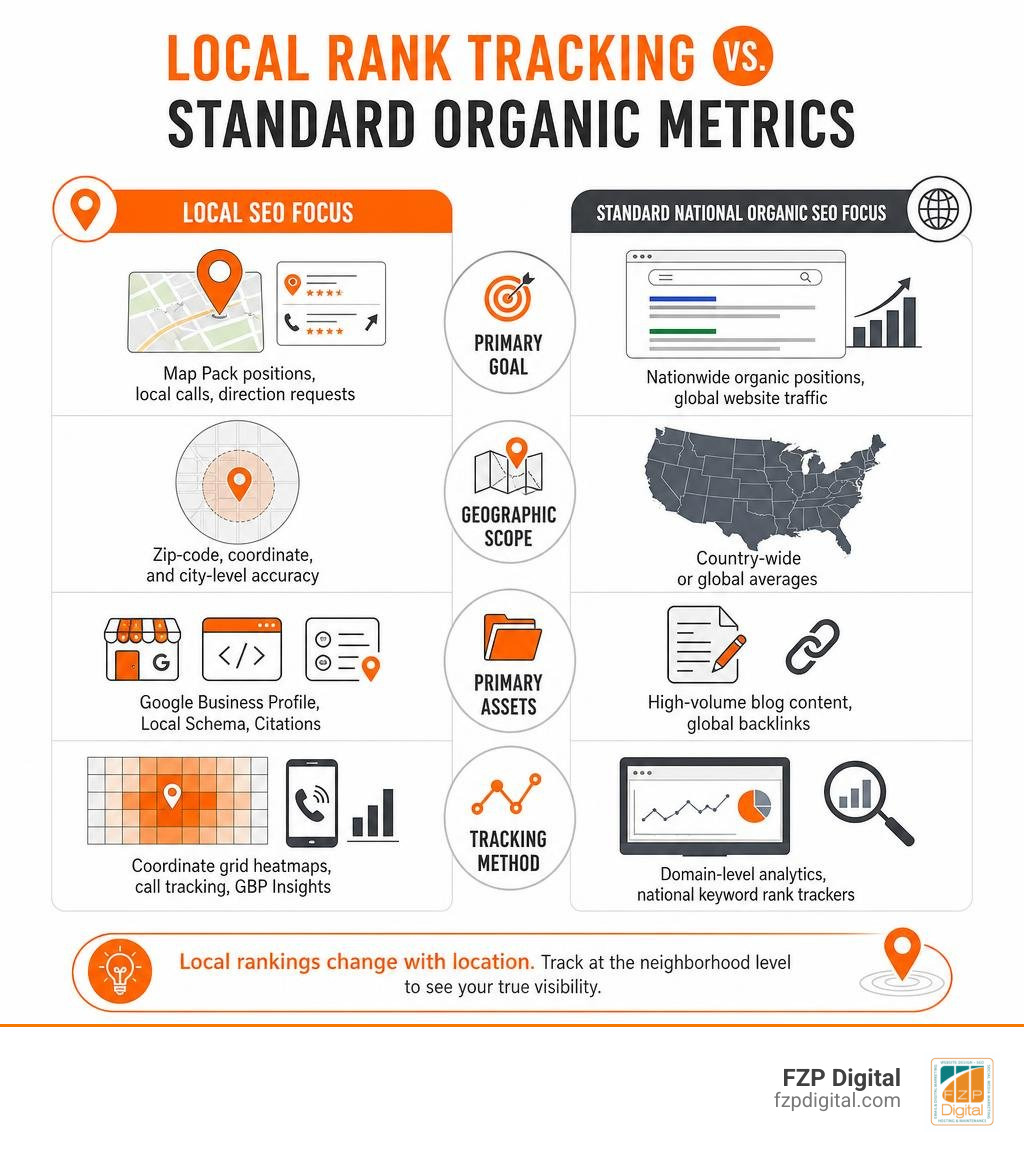
Because local rankings shift dramatically depending on where a searcher is physically standing, relying on national average rank tracking can give you a false sense of security. Tracking local performance requires zip-code level rank tracking or coordinate-grid heatmaps to see how far your Map Pack visibility extends around your physical office.
Common local SEO mistakes that can severely hurt your visibility include:
- Keyword Stuffing Profile Names: Adding promotional keywords to your official Google Business Profile name (e.g., writing “FZP Digital – Best Cheap Web Design Agency”) can trigger sudden account suspensions.
- Inconsistent NAP Data: Having conflicting street addresses or old phone numbers across platforms creates search engine confusion and erodes trust.
- Ignoring Review Responses: Failing to respond to customer reviews—or reacting defensively to negative feedback—hurts your engagement signals and turns away potential leads.
- Neglecting Search Spam: Allowing competitors who use fake addresses, P.O. boxes, or keyword-stuffed business names to occupy top spots without filing spam redressal reports with Google.
To safeguard your brand and ensure you build a durable presence, check out our insights on local SEO strategies and ranking guide and learn how to put your business on the map with a top local SEO company.
Building a Scalable Local Search Strategy
Achieving high local search rankings isn’t something that happens overnight—it requires a steady, structured rollout. Here is a practical roadmap to keep your optimization efforts on schedule:
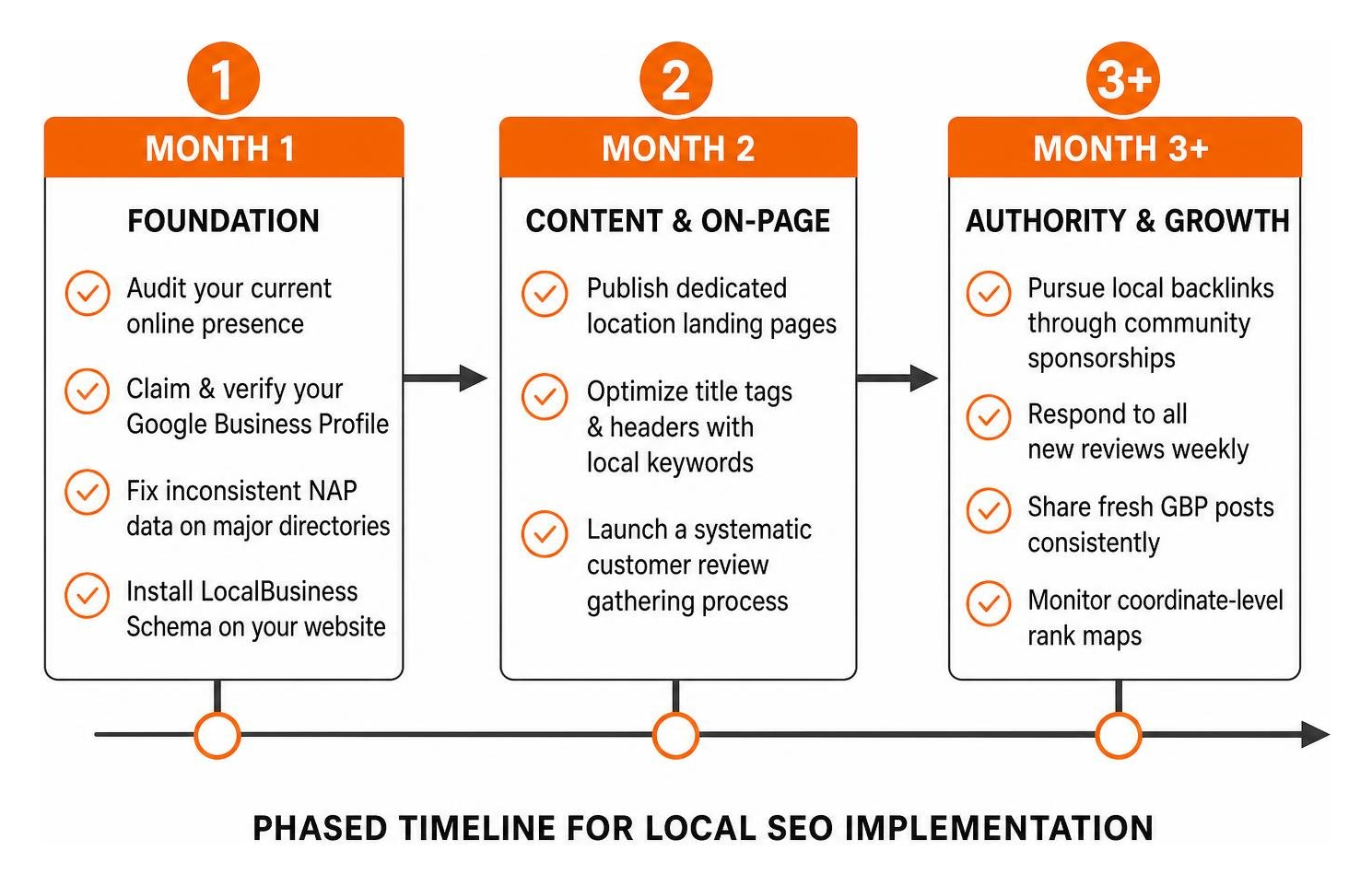
- Month 1 (Foundation): Audit your current online presence, claim and verify your Google Business Profile, fix inconsistent NAP data on major directories, and install
LocalBusinessSchema on your website. - Month 2 (Content & On-Page): Publish dedicated location landing pages, optimize site title tags and header elements with local keywords, and launch a systematic customer review gathering process.
- Month 3+ (Authority & Growth): Pursue local backlinks through community sponsorships, respond to all new reviews weekly, share fresh GBP posts, and monitor your coordinate-level rank maps.
If you’d like to see these concepts in action, check out this helpful Building a Local SEO Strategy Video Guide. For businesses targeting competitive metro markets, our Local SEO Philadelphia Complete Guide provides tailored insights. You can also explore the best local SEO optimization services to help you dominate your neighborhood.
Frequently Asked Questions About Local SEO
How long does it typically take to see results from local SEO efforts?
While timing varies depending on market competition and existing site authority, most businesses begin seeing measurable movement in 60 to 90 days. Initial technical fixes, Google Business Profile optimizations, and NAP consistency cleanup usually show early signals within 2 to 4 weeks. However, compounding gains—such as dominating competitive local Map Packs and building local link authority—typically take 3 to 6 months of steady effort.
What is NAP consistency and why is it critical for local rankings?
NAP stands for Name, Address, and Phone number. Consistency means that your core contact information appears in the exact same format across every digital footprint, including your website, Google Business Profile, Facebook, Yelp, and local data aggregators. Search engines rely on consistent NAP data to confirm your business is legitimate and physically located where you claim. Discrepancy—like using “Suite 100” on one site and “Ste #100” or an old phone number on another—can confuse search bots and lower your prominence scores.
Do multi-location businesses need separate web pages for each location?
Yes! If your business operates across multiple physical locations or distinct service territories (for example, serving Richboro, Newtown, and Downtown Philadelphia), creating dedicated location pages is essential. Each page should feature custom, non-duplicate content, localized customer reviews, specific staff highlights, embedded Google Maps, and unique LocalBusiness Schema markup. This gives search engines clear geographic relevance for every specific market you serve.
Conclusion
Understanding how local seo works gives you a major advantage in attracting nearby customers who are actively looking to buy. By aligning your business with Google’s core algorithm pillars—relevance, distance, and prominence—you transform your digital footprint into an effective, long-term customer magnet. From fine-tuning your Google Business Profile to publishing dedicated location pages, every step builds search authority that competitors can’t easily replicate.
At FZP Digital, we believe in a collaborative, straightforward approach to digital growth: Develop . Design . Deliver. Whether you are looking to revamp a responsive WordPress website or want to dominate local search results in Richboro, Newtown, or Philadelphia, we are here to help you stand out in your community.
Ready to expand your local footprint and bring in more qualified leads? Boost your local reach with affordable SEO services and partner with our team today!