

The Best Direct Email Marketing Strategy Guide
Why a Strong Direct Email Marketing Strategy Is Your Business’s Most Valuable Asset

A direct email marketing strategy is one of the highest-ROI tools available to any small or medium-sized business — and if you’re not using it intentionally, you’re likely leaving real money on the table.
Here’s a quick snapshot of what makes it work:
| Element | What It Means for You |
|---|---|
| Targeted messaging | Send the right offer to the right person at the right time |
| Personalization | Use names, purchase history, and behavior to make emails feel 1-on-1 |
| Measurable results | Track open rates, clicks, and conversions with precision |
| Exceptional ROI | Email generates up to $42 for every $1 spent |
| Owned audience | Unlike social media, no algorithm can take your list away |
Think about it this way: a TV ad or a billboard says the same thing to everyone who sees it. A direct email can say something completely different to a loyal customer in South Philly versus a brand-new lead who just visited your website.
That’s the power of direct email marketing — and it hasn’t lost relevance despite the rise of social media. With 4.6 billion email users expected worldwide by 2025, your audience is already in their inbox. The question is whether you’re showing up there strategically.
The average email open rate across all industries sits at 17.92%. But businesses that nail their segmentation, personalization, and content? They blow past that number.
This guide walks you through every piece of a winning strategy — from building your list to crafting subject lines that actually get clicked, to staying out of the spam folder.
I’m Fred Z. Poritsky, founder of FZP Digital, and I’ve spent years helping Philadelphia-area businesses — from law firms to nonprofits to retailers — develop and execute a direct email marketing strategy that drives real growth alongside their broader digital presence. Let’s dig in.
Related content about direct email marketing strategy:
What is Direct Email Marketing and Why Does It Matter?
At its heart, direct email marketing is the practice of sending promotional materials, updates, or offers directly to a specific group of people who have opted in to hear from you. Unlike a broad social media post that might get buried by an algorithm, this is a direct line of communication from your business to your customer’s inbox.
It is often called “direct response” marketing because the goal is usually to get the recipient to take a specific action—whether that’s buying a product, signing up for a webinar, or simply reading a new blog post. According to Direct Email Marketing: Definition, Strategy, and Best Practices, it is one of the most powerful ways to establish a lasting relationship between your brand and your customers.
Why does it matter so much? Because it’s personal. While a billboard in Downtown Philadelphia might be seen by thousands of people, it remains the same regardless of who is looking at it. A direct email, however, can be tailored to address the recipient by name and offer them something they actually care about based on their past behavior.
Direct Email vs. General Marketing Channels
When we talk about “general” marketing, we’re usually talking about mass media like TV, radio, or billboards. These are great for brand awareness, but they lack the surgical precision of a direct email marketing strategy.
You might also wonder how this differs from traditional direct mail (the physical postcards and catalogs you get in your mailbox). While both are “direct,” they have very different strengths. Direct mail is tangible and often feels more “official,” boasting an impressive open rate of over 90%. However, it’s expensive to print and ship. Direct email, on the other hand, is incredibly cost-effective and provides instant data.
| Feature | Direct Mail (Physical) | Direct Email (Digital) |
|---|---|---|
| Cost per piece | $0.50 – $3.00 | $0.01 – $0.05 |
| Response Rate | 4% – 5% | 0.5% – 1% |
| ROI | ~$27 per $1 spent | $36 – $42 per $1 spent |
| Speed | Days/Weeks | Instant |
| Tracking | QR codes/PURLs | Clicks, Opens, Heatmaps |
As you can see, while physical mail has its place (especially for high-value luxury items or local Richboro services), email is the engine that drives consistent, scalable growth. For a deeper look at how this works in the professional world, check out our guide on B2B Email Marketing Strategies and Examples for Success.
Building Your Direct Email Marketing Strategy from the Ground Up
You wouldn’t build a house in Newtown without a blueprint, right? The same goes for your email marketing. You need a solid foundation before you start hitting “send.”
First, you need SMART goals. Instead of saying “I want more sales,” try “I want to increase our eCommerce revenue by 15% over the next six months using abandoned cart recovery emails.” This gives us something measurable to aim for.
Next, you have to define your audience. Who are they? Where do they live? What are their pain points? If you’re a local business in Bucks County, your messaging might focus on community and local reliability. If you’re a national brand, it might focus more on convenience and price.
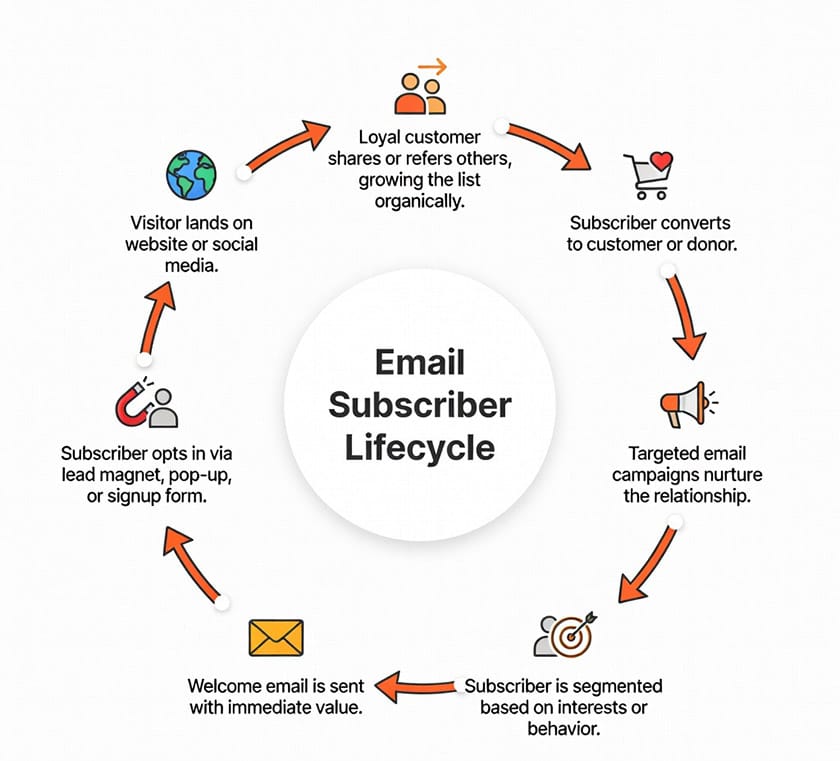
To get started, you’ll need a list. If you’re starting from zero, don’t worry! We’ve put together a comprehensive resource on How to Build an Email List from Scratch that covers everything from lead magnets to opt-in forms.
Essential Steps for a Winning Direct Email Marketing Strategy
Once you have the basics down, follow these essential steps:
- Choose the Right Platform: Tools like Mailchimp, Constant Contact, or Adobe Campaign help you manage your list and design beautiful emails. This Guide to Direct Email Marketing is a great place to see what these tools can do.
- Practice Good List Hygiene: Don’t keep people on your list who never open your emails. It hurts your “sender reputation” and makes it more likely you’ll end up in the spam folder.
- Create Irresistible Lead Magnets: Give people a reason to sign up. Whether it’s a “10% off your first order” coupon or a free eBook on Philadelphia SEO tips, value is key.
- Get Clear Consent: Always use an opt-in process. Not only is it the law (more on that later), but it ensures you’re only talking to people who actually want to hear from you.
Segmentation and Personalization Tactics
This is where the magic happens. Sending the same email to everyone is a recipe for high unsubscribe rates. Instead, you should segment your list.
Segmentation means breaking your big list into smaller groups based on:
- Demographics: Age, gender, or location (like separating your Newtown customers from your Philadelphia ones).
- Purchase History: If someone just bought a coffee machine, send them an email about the best coffee beans—not another coffee machine!
- Engagement: Send a special “we miss you” discount to people who haven’t opened an email in 60 days.
Personalization goes beyond just using their first name in the subject line (though that helps!). It’s about dynamic content. This means the images or offers inside the email change based on who is looking at it.
Want a clever way to grow that list? Learn How to Turn Your Chatbot into a Lead Generating Machine to capture emails while you sleep!
Crafting Content That Actually Converts
You’ve got the strategy and the segments. Now, what do you actually say?
Your email has two jobs. Job #1 is to get opened. Job #2 is to get the click.
The subject line is your first impression. If it’s boring, your email is going straight to the trash. Keep them short (under 50 characters) and interesting. Use curiosity (“You won’t believe what we just launched…”) or urgency (“Only 4 hours left!”).
The preheader is that little bit of text that shows up after the subject line in your inbox. Think of it as a subtitle. If your subject line is the hook, the preheader is the “reason to believe.”
According to the Direct Email Marketing Guide from Shopify, most people read emails on their phones while they’re on the go. This means your design must be mobile-responsive. If your email looks like a wall of tiny text on an iPhone, no one is going to read it.
Mastering the Direct Email Marketing Strategy Hook
The “hook” is the very first sentence of your email. You have about two seconds to convince someone to keep reading.
- The Psychology of “Why”: Tell them exactly why they are receiving this. “Because you’re a loyal customer in Richboro, we wanted you to be the first to know…”
- The Value Proposition: What’s in it for them? Don’t talk about yourself; talk about how you can solve their problem.
- Curiosity: Ask a question that makes them want to find the answer in the next paragraph.
Calls to Action and Mobile Optimization
Your Call to Action (CTA) is the most important part of the email body. It should be a clear, bright button that tells the user exactly what to do.
- Use One Primary URL: Don’t confuse people with five different links. Pick one goal and stick to it.
- Button Design: Make sure the button is large enough to be tapped by a thumb on a small screen.
- Scannability: Use bullet points, short sentences, and plenty of white space. Most people “skim” emails rather than reading them word-for-word.
Measuring Success and Avoiding the Spam Folder
How do you know if your direct email marketing strategy is actually working? You have to look at the data.
Most email platforms provide a dashboard that shows you exactly how many people opened your email and what they clicked on. If you’re not seeing the results you want, it’s time to A/B test. This is where you send two versions of the same email (maybe with different subject lines) to a small part of your list to see which one performs better.
For more tips on refining these numbers, check out our email marketing category for the latest industry updates.
Key Metrics to Track
- Open Rate: The percentage of people who opened the email. The industry average is around 17.92%, but a good goal is 20-40%.
- Click-Through Rate (CTR): The percentage of people who clicked a link inside. Aim for 2-5%.
- Conversion Rate: The percentage of people who actually completed the goal (like making a purchase).
- Bounce Rate: The percentage of emails that couldn’t be delivered. If this is high, your list might be “dirty” or outdated.
- ROI: (Revenue from Campaign – Cost of Campaign) / Cost of Campaign. This tells you the actual dollar value of your efforts.
Compliance and Deliverability
You can have the best email in the world, but it doesn’t matter if it ends up in the spam folder. To stay in Gmail’s good graces, you must follow the CAN-SPAM Act (and GDPR if you have customers in Europe).
This means:
- Don’t use deceptive subject lines. (Don’t say “RE: Your Order” if they didn’t order anything).
- Include your physical address. (Ours would be in Newtown or Philadelphia!).
- Include an easy “Unsubscribe” link. It’s better to let someone leave than to have them mark you as spam.
- Monitor your Sender Reputation. If too many people flag your emails, providers like Outlook and Gmail will start blocking you entirely.
As noted in the Moosend guide to direct email marketing, maintaining a clean, permission-based list is the single best thing you can do for your deliverability.
Frequently Asked Questions about Direct Email Marketing
How does direct email marketing differ from cold emailing?
This is a common point of confusion! Cold emailing is when you reach out to someone who has no prior relationship with your business. It’s a sales tactic used to start a conversation. Direct email marketing is permission-based. These are people who have signed up for your newsletter, bought from you before, or downloaded a lead magnet. Because they already know who you are, the “intent” is different, and the response rates are usually much higher.
What is a good open rate for my industry?
While the overall average is 17.92%, it varies wildly. For example, nonprofits and education-based emails often see open rates above 25%, while retail might be slightly lower due to the high volume of promotional mail consumers receive. The best benchmark is your own past performance—always aim to beat your last campaign!
How often should I send marketing emails?
Consistency is more important than frequency. For most small businesses in the Philadelphia area, 2 to 3 times per month is the “sweet spot.” It’s enough to stay top-of-mind without being annoying. If you have a lot of great content, you can go weekly, but make sure your “value-to-pitch” ratio is healthy. For every promotional email, try to send one that is purely helpful or educational.
Conclusion: Taking Your Digital Presence to the Next Level
Mastering a direct email marketing strategy isn’t something that happens overnight, but it is one of the most rewarding investments you can make for your business. It allows you to own your audience, build deep relationships, and drive sales with a level of precision that other channels just can’t match.
At FZP Digital, we believe in a collaborative “Develop . Design . Deliver” process. Whether you’re in Newtown, Richboro, or Downtown Philadelphia, we’re here to help you navigate the complexities of digital marketing—from premium WordPress design to high-converting email campaigns.
The digital world can feel overwhelming, especially when you’re trying to balance SEO, social media, and email all at once. That’s why having an expert partner like Fred Z. Poritsky in your corner can make all the difference. We don’t just set up tools; we build strategies that reflect your unique brand and speak directly to your local customers.
Ready to stop guessing and start growing? Let’s work together to turn your email list into your most profitable asset.
Explore our Digital Marketing Services and let’s start a conversation today!