

A Practical Guide to Brand Identity Design Pricing Options

How Much Should You Charge for Brand Identity Design?
For how much to charge for brand identity design, use the scope as your starting point: a basic identity project commonly falls around $3,000 to $15,000 for an independent designer, while a more complete system from a boutique studio often lands between $15,000 and $50,000. Senior specialists and agencies serving larger organizations can charge substantially more when research, strategy, many applications, and rollout support are involved.
A practical way to set your quote is to price three things:
- The strategic work: discovery, audience research, positioning, and messaging.
- The identity assets: logo suite, color palette, typography, graphic elements, and guidelines.
- The implementation work: templates, signage, packaging, social graphics, website direction, and other real-world applications.
A logo is one asset. A brand identity is the visual language that makes every touchpoint feel connected. A full brand system adds the rules, tools, and rollout support needed to keep that language consistent as the organization grows.
The right price is not simply the number of hours you expect to spend. It should reflect the project’s complexity, the decisions you are responsible for making, the value of a clearer market position, and the cost of getting the work wrong. For Philadelphia-area businesses and nonprofits, a cohesive identity can make a professional website, search presence, fundraising campaign, or client pitch far more credible.
I’m Fred Z. Poritsky, founder of FZP Digital, and my background in nonprofit financial management, web design, and digital marketing helps me look at how much to charge for brand identity design through both a creative and business lens. Let’s start by separating the logo, identity, and full brand system so you can price the work your client actually needs.
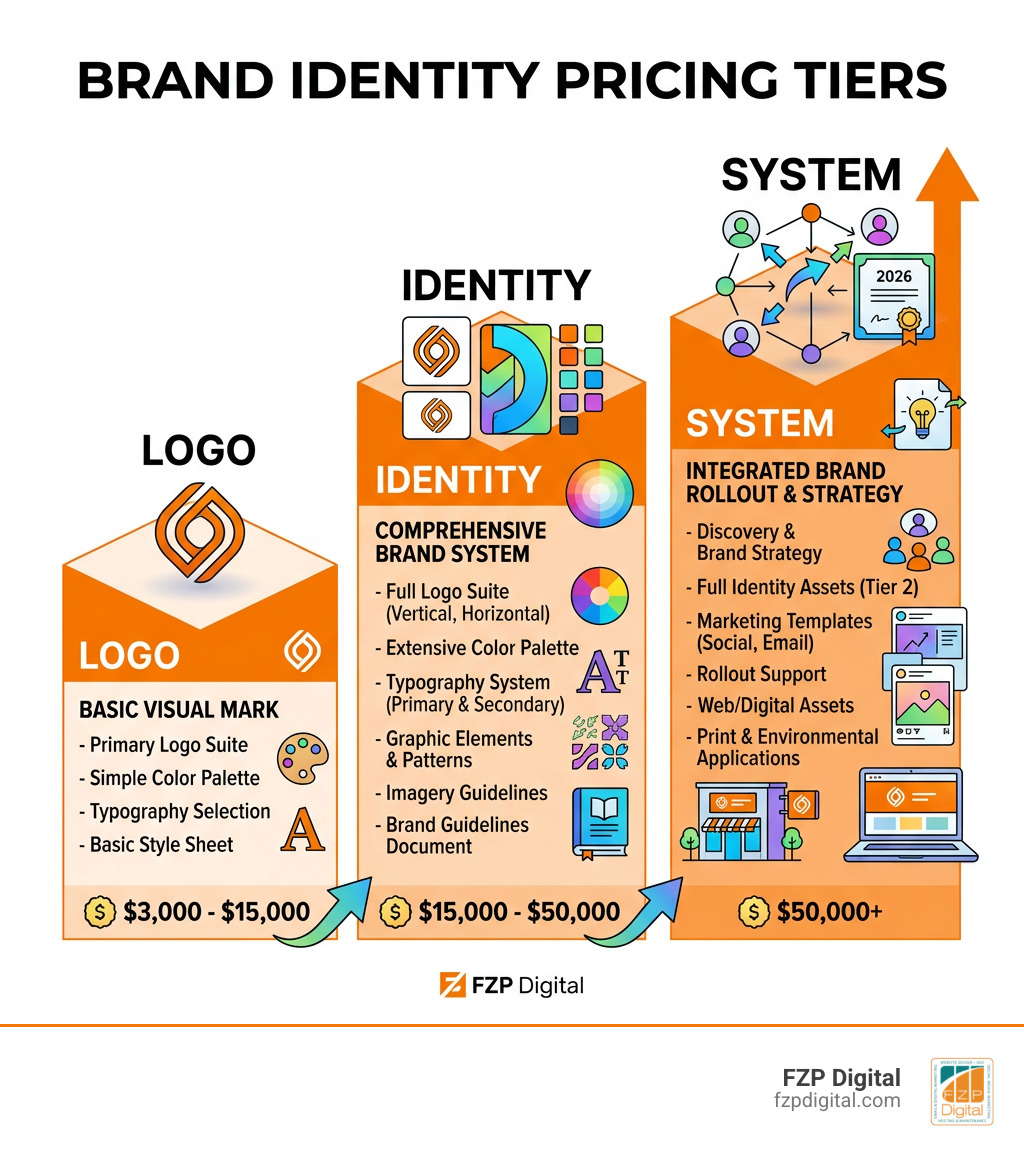
Quick look at how much to charge for brand identity design:
Defining Scope: Logo vs. Brand Identity vs. Brand System
Have you ever had a prospective client ask for a “quick logo,” only to discover they actually need a multi-channel visual system, pitch deck templates, and cohesive web styling?
Misalignment between what a client asks for and what they actually need is the number one reason creative projects lose margin. When pricing brand work, your first job is establishing clear boundaries between distinct tiers of service. Gaining a solid grasp on understanding brand identity layers helps ensure you never underquote a complex project as a simple graphic deliverable.
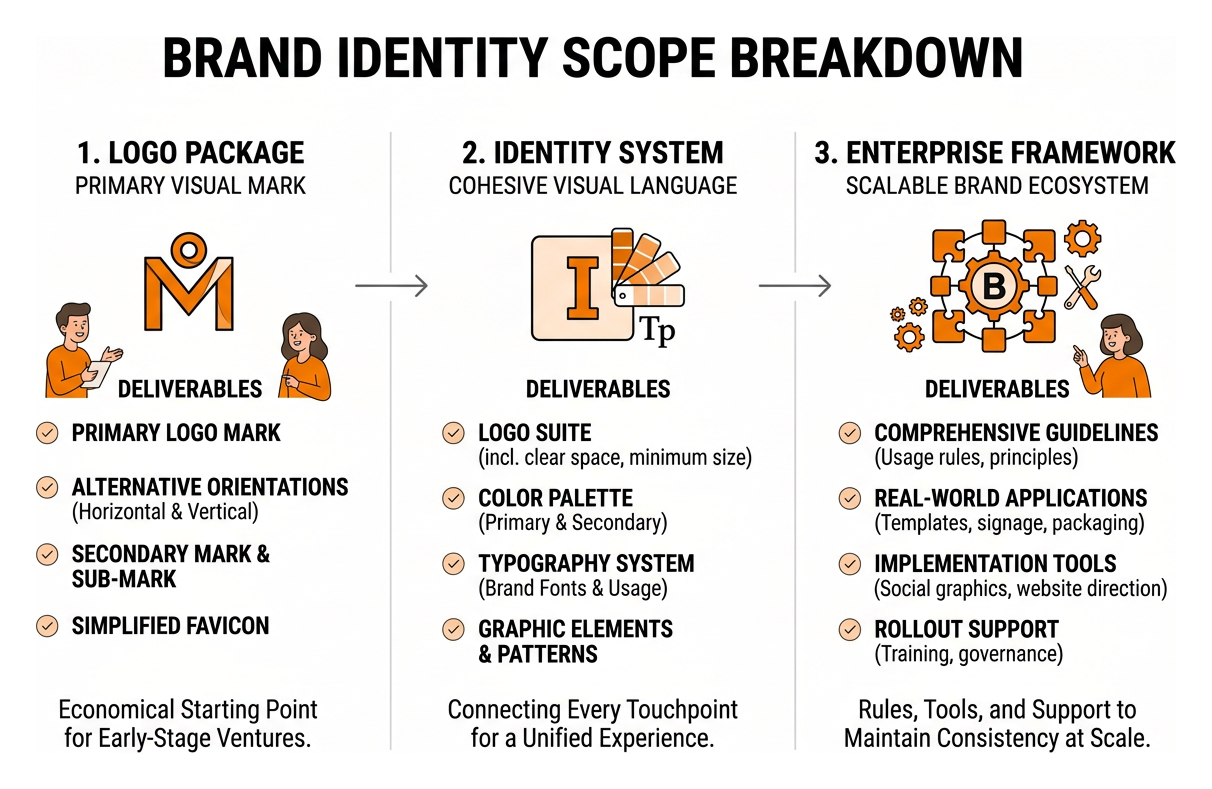
To set profitable rates, we divide branding deliverables into three distinct scope categories. Establishing these visual identity structures right from the start protects your team’s time and gives your client absolute clarity on what they are buying.
Scope 1: Standalone Logo Packages
A standalone logo package is strictly focused on the primary visual mark. This scope works well for early-stage ventures that need an economical starting point before building out a full marketing engine. When producing early stage logo design, deliverables typically include:
- Primary logo mark and alternative orientations (horizontal and vertical lockups)
- Secondary mark, sub-mark, or simplified favicon
- Basic color variations (full color, inverted white, solid black)
- Standard digital and print file exports (SVG, PNG, EPS, PDF)
Because this package intentionally excludes comprehensive market research, custom brand patterns, extended collateral, and deep typography rules, it sits at the most accessible price point.
Scope 2: Full Brand Identity Packages
A full brand identity is not just a mark—it is an entire visual toolkit. This is where most growing businesses find their sweet spot. Investing in comprehensive brand identity design gives a company everything required to present a unified face to the world across physical and digital channels.
Deliverables at this level include:
- Complete logo suite with responsive variations
- Curated color palettes with primary, secondary, and functional accent colors (HEX, RGB, CMYK, Pantone)
- Typography hierarchy, pairing rules, and web-safe fallbacks
- Custom graphic elements, icons, photography style direction, and textural patterns
- Core marketing collateral mockups (business cards, email signatures, social media profile templates)
- A comprehensive style guide (typically a 15- to 30-page PDF document)
Scope 3: Comprehensive Brand Systems
An enterprise-grade brand system is engineered for scale, consistency, and multi-team governance. When organizations manage hundreds of marketing assets across multiple departments, simple style guides are not enough.
Comprehensive brand systems include:
- Multi-channel rollout plans across environmental, product, and digital spaces
- Custom digital design tokens integrated directly with front-end codebases
- Interactive component libraries and extensive digital asset management setups
- Detailed brand architecture systems for parent brands and sub-products
- In-depth brand bibles (50+ pages) governing editorial voice, accessibility standards, and co-branding guidelines
How Much to Charge for Brand Identity Design: 2026 Benchmark Rates
Pricing across the design industry varies based on market reputation, client scale, and geographic location. Below are the current market benchmarks for professional branding services in 2026:
| Provider Tier | Scope 1: Logo Only | Scope 2: Full Brand Identity | Scope 3: Comprehensive Brand System |
|---|---|---|---|
| Emerging / Junior Solo Designer | $500 – $1,500 | $2,500 – $6,000 | $6,000 – $12,000 |
| Senior Independent Designer | $2,000 – $6,000 | $8,000 – $25,000 | $25,000 – $50,000+ |
| Boutique Studio / Specialist Agency | $5,000 – $12,000 | $15,000 – $50,000 | $50,000 – $150,000+ |
| Mid-Market to Enterprise Agency | $15,000 – $40,000 | $50,000 – $150,000 | $150,000 – $500,000+ |
Checking current 2026 brand identity rate benchmarks reveals that clients are increasingly willing to pay a premium for strategic clarity rather than raw asset volume. For a deeper breakdown of these figures, read our guide on unmasking brand identity service costs.
Independent and Solo Designer Rates
Solo practitioners set their pricing around experience, portfolio depth, and client risk profile. An emerging designer might charge $3,000 to $5,000 for a solid brand identity package, while an established solo designer with a decade of proven case studies can easily command $15,000 to $25,000 or more.
Solo practitioners keep overhead low, allowing them to provide personalized attention and rapid turnaround times while still achieving healthy profit margins.
Boutique Studio and Agency Pricing
Boutique studios operate with multi-disciplinary teams—combining creative directors, visual designers, copywriters, and web developers. When reviewing and comparing brand design packages from studios, baseline rates for full identities typically start around $15,000 to $50,000.
This higher rate covers collaborative discovery sprints, cross-functional reviews, competitive audits, and interactive stakeholder workshops that ensure buy-in across executive leadership.
Brand Refresh vs. Full Rebrand Pricing
Not every client needs a blank-slate reinvention. Understanding the difference between a refresh and a rebrand is critical for accurate pricing:
- Brand Refresh ($6,000 – $15,000+): Focuses on modernizing an existing visual identity while preserving established market equity. This involves redrawing and optimizing existing logos, refining typography pairings, updating color contrast for digital accessibility, and producing updated brand documentation.
- Full Rebrand ($20,000 – $75,000+): Represents a ground-up transformation driven by fundamental business shifts, mergers, or new market expansions. It requires extensive competitive research, positioning narrative development, complete logo overhauls, and massive asset migration across digital platforms, signage, and print materials.
Core Pricing Models: Hourly, Fixed-Fee, and Value-Based
How you bill for your work directly influences your profitability and project relationships. Choosing the right pricing model helps align your incentives with your client’s goals.

Hourly Billing vs. Fixed Project Pricing
Hourly billing is one of the most common traps in creative services. Why penalize yourself for working efficiently? When you become faster and more skilled at visual problem-solving, an hourly rate actually reduces your revenue for delivering higher-quality work in less time. Furthermore, clients dislike hourly billing because it introduces budget uncertainty.
Fixed-fee project pricing is almost always superior for brand identity work. By defining a clear scope upfront, the client knows their exact investment, and you are rewarded for your expertise, speed, and creative focus.
Implementing Value-Based Pricing for Business Impact
Value-based pricing sets project fees based on the tangible business outcome generated for the client rather than the time spent creating assets.
Consider the difference in commercial impact:
- Designing a brand identity for a local corner dry cleaner might help them stand out on their block, representing modest economic upside.
- Designing a brand identity for a venture-backed B2B software company preparing for a Series A funding round directly impacts their ability to close enterprise contracts and secure millions in investment capital.
When you use value-based pricing, you price the commercial transformation. If your strategic positioning and brand system help a mid-market business increase client acquisition rates, charging $30,000 to $60,000 represents an exceptional return on investment for their leadership team.
Proposal Architecture: Structuring Tiers and Value
When presenting a proposal, never send a single price tag. A single number forces the client into a binary decision: “Can we afford this designer, yes or no?”
Presenting tiered options shifts their mindset from “Should we hire this team?” to “Which level of partnership best fits our goals?” This approach aligns naturally with our step-by-step framework for developing unique brand identities.
How Much to Charge for Brand Identity Design Using Tiered Packages
A proven framework involves presenting three distinct ambition tiers:
- Tier 1: Core Foundation (The Baseline)
- Includes: Strategic discovery questionnaire, core logo suite, primary typography, essential color palette, and a 10-page brand guide.
- Purpose: Provides a safe, budget-conscious option that still covers all fundamental needs.
- Tier 2: Growth System (The Recommended Standard)
- Includes: Everything in Tier 1 plus full messaging direction, secondary brand marks, custom graphic patterns, iconography library, social media kit, digital ad templates, and a 25-page brand guide.
- Purpose: Designed to be the most attractive, comprehensive package for the majority of clients.
- Tier 3: Market Leader (The Premium Anchor)
- Includes: Everything in Tier 2 plus in-depth competitor narrative audits, pitch deck master templates, packaging or signage specifications, environmental mockups, complete digital rollout guidelines, and custom front-end design token integration.
- Purpose: Anchors the value of the proposal, making Tier 2 feel accessible while capturing clients who demand an exhaustive enterprise solution.
Integrating Strategy and ‘Line Item Zero’
In modern branding, visual execution has become faster thanks to advanced digital tools, but the strategic narrative—the core positioning argument that convinces customers to choose you over a competitor—remains the most valuable component of any engagement.
This positioning foundation is often referred to as the Line Item Zero strategic narrative. Line Item Zero is the critical strategic thinking that answers:
- Why does this business exist in its current market category?
- What specific customer friction does it eliminate?
- Why should a buyer pay a premium for this service today?
Without this narrative foundation, visual identity design is merely decoration. When quoting projects, always ensure the strategy phase is positioned as the essential foundation upon which all creative design is built.
Margin Protection: Scope Control and Legal Terms
Protecting your profit margin requires clear boundaries, detailed contract language, and established workflows for handling client requests.
Investing in a professional brand identity is a significant milestone for any organization, which is why clear legal terms build mutual respect from day one.
Common Mistakes in How Much to Charge for Brand Identity Design
Avoid these five common pricing pitfalls that drain profitability:
- Offering Unlimited Revisions: Open-ended revision cycles stall timelines, destroy morale, and turn profitable projects into financial losses.
- Quoting Before Discovery: Giving a firm quote during a casual initial conversation before fully uncovering project complexity almost always leads to underpricing.
- Treating Strategy as a Free Add-On: Giving away hours of strategic workshops, audience analysis, and positioning research without billing for discovery dilutes your agency value.
- Failing to Define Deliverable Formats: Unclear file specifications result in endless post-launch requests for custom file exports, vector conversions, and specialized software templates.
- Ignoring Rush Deadlines: Agreeing to compress a six-week identity process into a two-week sprint without adding a rush fee (typically a 25% to 50% premium) strains creative teams.
Managing Scope Creep, Revisions, and Change Orders
To maintain project health and protect your margins, include these specific operational safeguards in every proposal and contract:
- Defined Revision Rounds: Structure your workflow into phased milestones (e.g., Discovery, Concept Development, Refinement). Limit the concept phase to two consolidated rounds of feedback.
- Consolidated Stakeholder Feedback: Require the client to appoint a single project lead who consolidates and resolves conflicting internal team opinions before submitting change requests.
- Clear Change Order Triggers: Clearly state in your terms that any request outside the original scope—such as additional logo concepts, extra collateral templates, or sudden naming changes—will receive a formal change order quote with an additional fee before work begins.
Frequently Asked Questions About Brand Identity Pricing
How many revision rounds should be included in a brand identity quote?
Standard industry practice is to include two consolidated revision rounds during the concept development phase and one final refinement round for minor adjustments. Any feedback requested after milestone sign-off is billed at your standard hourly rate or structured under a separate change order.
Should brand strategy be priced separately or bundled with design?
Brand strategy can be bundled directly into your core identity packages or offered as a standalone pre-project discovery engagement. For mid-market and enterprise clients, selling a standalone strategy sprint ($3,000 to $10,000) is an effective way to establish positioning before scoping the full visual rollout.
How should font licensing and asset usage rights affect pricing?
Your design fee covers the creative labor and intellectual property transfer for the custom visual marks you create. However, third-party assets—such as commercial desktop font licenses, web font pageview subscriptions, and stock photography—should always be purchased directly by the client to ensure proper legal ownership and compliance.
Conclusion
Determining how to price brand identity design comes down to understanding the real business impact of your creative work. When you stop viewing yourself as a decorator who draws logos and start positioning your services as a strategic partner who builds market clarity, your pricing structure will naturally reflect that value.
At FZP Digital, we believe great branding goes hand-in-hand with functional, high-performing digital marketing. Our collaborative “Develop . Design . Deliver” process helps businesses throughout Philadelphia, Bucks County, and beyond turn strategic identities into powerful, responsive WordPress websites that drive search visibility and long-term business growth. When building and hosting these platforms for optimal speed, security, and search performance, we rely on top managed WordPress hosting solutions—FZP Digital recommends GoDaddy and WP Engine for reliable, scalable infrastructure.
If you’re ready to refine your company’s visual voice, clarify your market positioning, and build an identity that turns casual visitors into loyal brand advocates, explore our strategic branding solutions today. Let’s create something exceptional together!